
• fr
  • en

Concevoir les politiques rurales pour faire face aux défis de la transition, réunion du projet RUSTIK

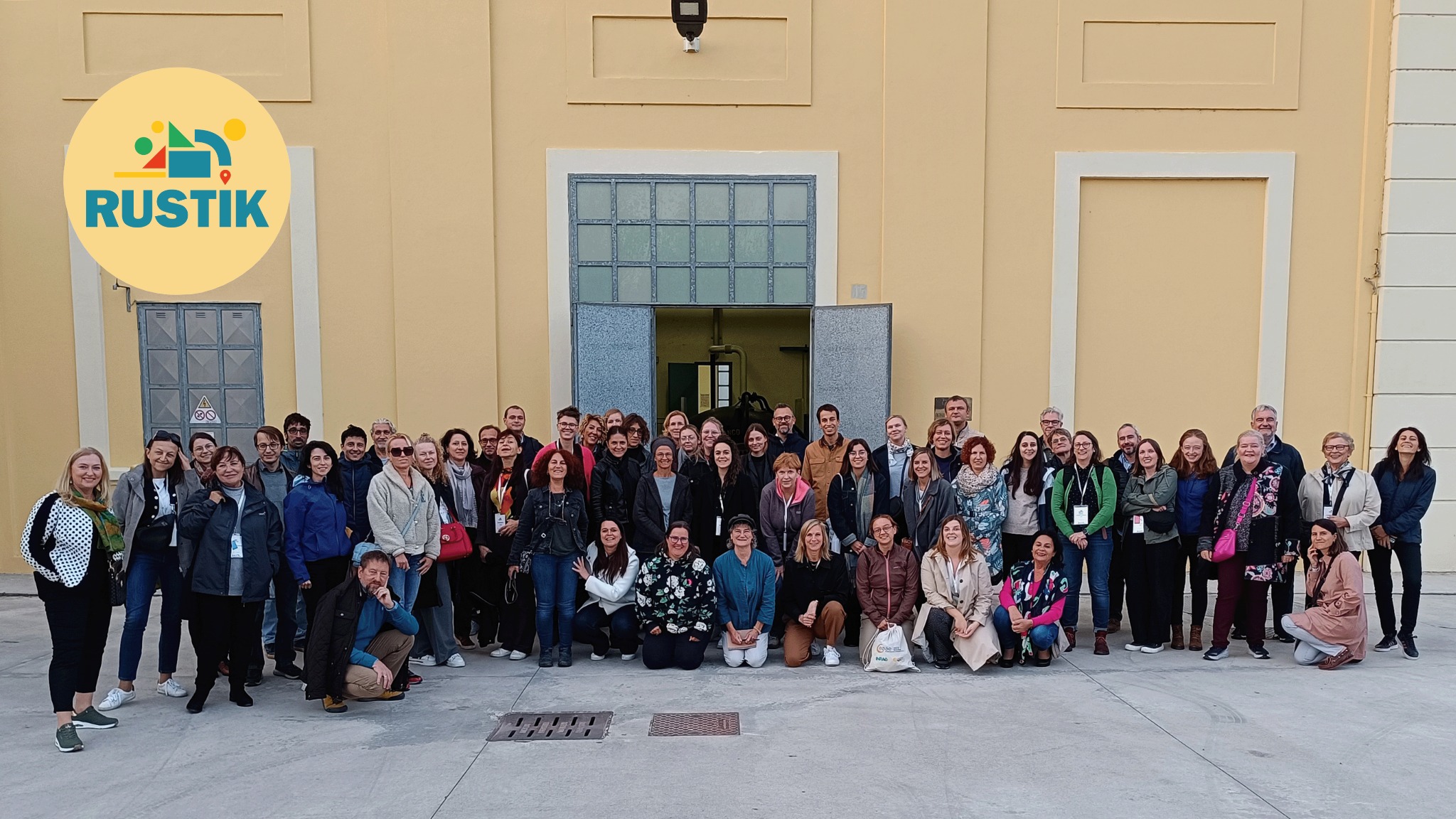
Les partenaires de RUSTIK se sont réunis à Parme (Italie) du 16 au 19 octobre 2023 pour la réunion annuelle du projet organisée par le CREA, le Conseil pour la Recherche Agricole. Un an après le début du projet, les partenaires ont eu l’occasion de présenter et de faire le point sur les progrès réalisés dans tous les Work Packages et de planifier les prochaines étapes pour l’année à venir.

Une journée entière a également été consacrée à des activités de mise en réseau entre les 14 Living Labs du projet. Au cœur du projet RUSTIK, ces laboratoires vivants rassemblent des administrations locales, des décideurs politiques, des acteurs de la société civile et des acteurs économiques des communautés rurales. Leur objectif est d’identifier les besoins en informations pour l’élaboration des politiques rurales et de tester de nouvelles méthodes de collecte et d’analyse des données afin d’améliorer les initiatives politiques. Ce fut donc un moment opportun pour les Living Labs de partager les défis rencontrés au cours de leur premier cycle de collecte de données, d’entretiens et de discussions de groupe. Pour eux, l’année écoulée a été riche en collaboration avec les parties prenantes locales et les partenaires universitaires de RUSTIK afin de déterminer sur quelle transition il convient de se concentrer pour les prochaines expérimentations : transition socio-économique, climatique et environnementale ou numérique.

La réunion a également été l’occasion de replacer RUSTIK dans le contexte européen en discutant avec les membres du Comité Consultatif du Pacte Rural et de la Vision à Long Terme pour les Zones Rurales. Afin de contribuer à la réalisation de la Vision Rurale, un rapport sur le test rural (rural proofing) et ses aspects méthodologiques ainsi que ses implications pour les parties prenantes sera bientôt publié dans le cadre du projet RUSTIK. Il passera en revue les instruments et les expériences de test rural dans les pays européens et non-européens afin de fournir une méthodologie solide qui sera ensuite discutée et testée dans les Living Labs du projet. Euromontana se penchera sur le test rural lors de son Assemblée Générale en novembre 2022 et a invité RUSTIK à présenter les résultats de sa recherche sur le sujet.

L’hôte, CREA Conseil pour la Recherche Agricole, et le partenaire du projet OI North Italian Industrial Tomatoes, ont également organisé une visite de l’usine de tomates Mutti, suivie d’une explication des systèmes d’irrigation de la Food Valley. Ce fut l’occasion de découvrir les défis agricoles et environnementaux de cette région qui possède l’une des plus fortes densités d’AOP et d’IGP en Europe.
En savoir plus

RUSTIK est un projet Horizon Europe visant à permettre aux acteurs des communautés rurales et aux décideurs politiques de concevoir de meilleures stratégies, initiatives et politiques favorisant les transitions durables des zones rurales. Les 14 Living Labs situés dans 8 pays de l’UE et 2 pays tiers, y compris des zones montagneuses telles que la Nockregion – Oberkärnten dans les Alpes autrichiennes et Garfagnana dans les Appenins italiens, sont au cœur de ce projet. Le projet se poursuivra jusqu’en août 2026. Dans le cadre du projet, Euromontana dirige les activités de dissémination et jouera un rôle actif dans l’utilisation des outils et résultats du projet dans les politiques régionale et locales.

Pour en savoir plus sur le projet RUSTIK, vous pouvez suivre le projet sur ses réseaux sociaux (Facebook, X précédemment Twitter, LinkedIn) et vous abonner à la newsletter du projet.

Share
24 octobre 2023

Euromontana sur Facebook

6 days ago

Euromontana
❄️ Winter may seem to have arrived, but climate change is shortening the season and making snowfall less reliable...leaving mountain resorts with a stark choice: close or adapt?⛰️ Head to Austria to discover how the Sankt Corona ski resort has responded to this challenge and turned a climate risk into a regional asset, as part of the Interreg Alpine Space - TranStat project: www.euromontana.org/sankt-coronas-response-to-climate-change-diversifying-tourism-for-a-resilient...👉 Explore our good practices database: www.euromontana.org/good-practices-database/ Photo credits © Wexl Arena St. Corona am Wechsel ... See MoreSee Less
View on Facebook

4 weeks ago

Euromontana
🎄𝗘𝘂𝗿𝗼𝗺𝗼𝗻𝘁𝗮𝗻𝗮 𝘄𝗶𝘀𝗵𝗲𝘀 𝘆𝗼𝘂 𝗺𝗼𝘂𝗻𝘁𝗮𝗶𝗻𝒔 𝗼𝗳 𝗵𝗮𝗽𝗽𝗶𝗻𝗲𝘀𝘀 𝗳𝗼𝗿 𝟮𝟬𝟮𝟲🎅 After a year full of events, encounters, political challenges and new collaborations, it is time for the secretariat to take a short break. We will meet again soon in 2026 to continue our actions and make the voice of mountain areas heard by the EU! 🏔️ But in the meantime, let's take a step back and look at the year 2025 before it comes to an end!This year, together we: 📃 celebrated the 30th anniversary of the Krakow Declaration, which paved the way for the creation of our network, and renewed our commitment to mountain areas 🔗 www.euromontana.org/thirty-years-on-calling-for-a-stronger-european-commitments-to-its-mountains/ 🤝 launched an Alliance for European Mountains, between elected representatives of the European Committee of the Regions and the European Parliament 🔗https://www.euromontana.org/press-release-alliance-for-european-mountains-launched-mountains-need-europe-and-europe-needs-mountains/ 👩‍🏫 collaborated on more than seven European research projects with our members and other partners all over Europe🧊 highlighted water-related challenges during this International Year of Glacier Preservation (hashtag#IYGP2025)🔗 www.euromontana.org/european-manifesto-for-a-governance-of-glaciers-and-connected-resources/👋 welcomed new members, including from Montenegro and Italy🌱 visited initiatives across Europe promoting resilience in our mountain territories, through research projects or by hosting our board of directors in Trento (Cooperazione Trentina) and Krakow (Małopolska)• and much more!Thank you to all our partners, members and friends of Euromontana for this wonderful year! ... See MoreSee Less
View on Facebook

4 weeks ago

Euromontana
⏮️ Last week, on 11 December, we celebrated International Mountain Day, established in 2002 by the United Nations to remind us of the role mountains play in many aspects of sustainable living 🌱 On this occasion, we were featured in an article by the Food and Agriculture Organization of the United Nations (FAO) Liaison Office with the European Union alongside other EU regions, sharing our vision of what mountains mean to their people, cultures, and economies 🏔️ 🗣️ Our "voices form a vivid mosaic—a portrait of landscapes that shape identity, heritage, and sustainable futures."Have a look 👉https://www.fao.org/brussels/news/news-detail/international-mountain-day--voices-from-the-peaks/en ... See MoreSee Less
View on Facebook

4 weeks ago

Euromontana
👩‍🌾 We are currently attending the EU Agri-Food Days, organised by the European Commission and DG AGRI, which are taking place in Brussels over the course of three days!We heard from the president of the European Commission Ursula von der Leyen and the European Commissioner for Food and Agriculture, Christophe Hansen, and attended numerous high-level political sessions with stakeholders in the sector 🗣️ The agenda included discussions on achieving a robust and contemporary CAP to ensure food security across the EU, establishing fair remuneration schemes within the food chain, and fostering a resilient agri-food sector 👩‍🌾 🌱 Euromontana will continue to play an active role in promoting a future CAP that benefits those most in need and supports the territorial development of rural areas in the face of climate change and generational renewal challenges 🏔️ 👉 Read our policy position on generational renewal within the CAP and our other contributions to the next European budget: www.euromontana.org/meeting-the-challenges-of-generational-renewal-shaping-the-future-of-mountain... EU Food & Farming ... See MoreSee Less
View on Facebook

1 month ago

Euromontana
🧊 Glaciers matter for water, food and livelihoods in mountains and beyond. This is what we are highlighting this year on 11 December, International Mountain Day.Every year, this day provides an opportunity to emphasise the crucial importance of these areas in terms of natural resources, biodiversity, identity, cultural heritage, ways of life, and more resilient models. However, all of this is under threat from climate change, poorly targeted funding and negative perceptions of pastoral professions.Today, we are putting the spotlight on these endangered ice giants throughout our mountain ranges!Did you know that: 💧The Alps alone provide 40% of Europe's fresh water?💡Glacier retreat will reduce hydroelectric energy production by an average of 10% in the Alps and by up to 35% by 2070 compared to today?🌱68% of irrigated agricultural land in the plains depends directly on water runoff from the mountains? ⛰️By 2034 the Pyrenees will be ice-free?📢An appropriate governance of glacier is needed to counteract the rapid changes!🧊 By signing the manifesto for better European governance of glaciers alongside 80 other organisations, we are calling for immediate and targeted political responses to the economic, social and environmental impacts of climate change.Have a look 👉 www.euromontana.org/european-manifesto-for-a-governance-of-glaciers-and-connected-resources/ #IMD2025 #InternationalMountainDay #MountainsMatterMountain Partnership ... See MoreSee Less
View on Facebook

Euromontana sur Twitter