
• fr
  • en

GEOPOS : La géo-localisation du bétail par satellite

Contexte

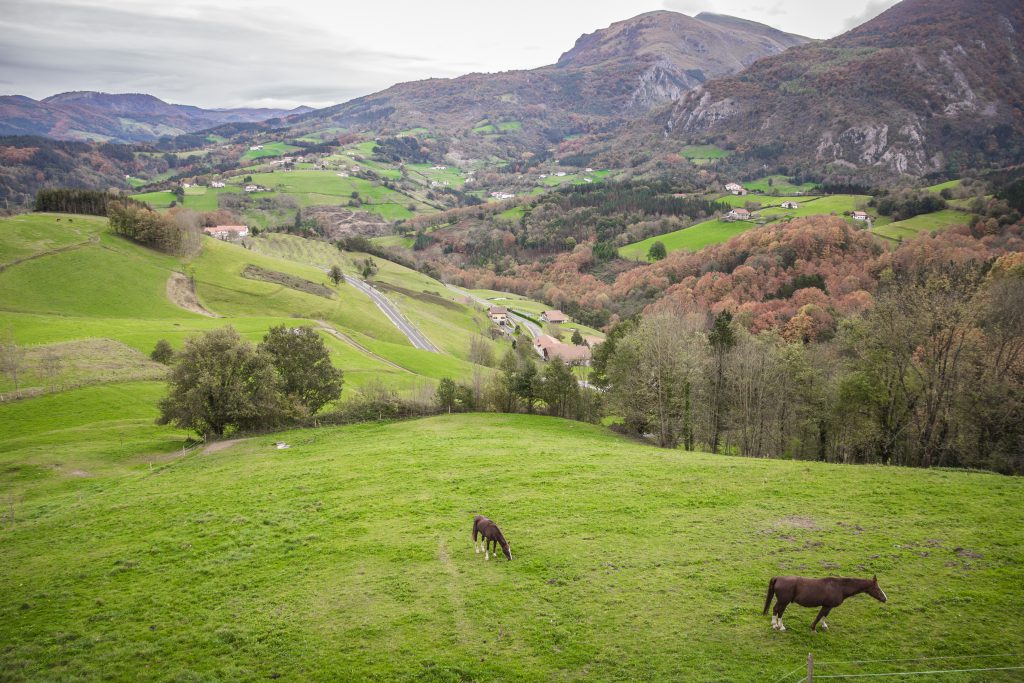
En raison de la topographie montagneuse du Pays Basque, les éleveurs de bétail perdent souvent beaucoup de temps à chercher leur troupeau dans les montagnes, tous les jours, ce qui est particulièrement stressant pour les agriculteurs à temps partiel. Ainsi, les éleveurs ont exprimé un besoin de changement dans la gestion du bétail. Ce besoin a été détecté par l’équipe du Réseau Sectoriel de la Fondation HAZI, la fondation publique du gouvernement basque pour le développement rural et côtier. En réponse, HAZI a développé, en étroite collaboration avec certains agriculteurs, GEOPOS, un dispositif de géolocalisation du bétail.
Elaboration d’un nouveau dispositif GEOPOS

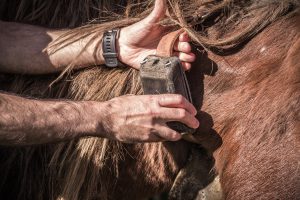
Le test de l’appareil a été effectué dans des conditions réelles dans les montagnes grâce à une coopération étroite entre les techniciens et les éleveurs. Après plusieurs essais avec différents types de périphériques pour essayer de l’adapter aux conditions climatiques et géographiques, il a été possible d’obtenir un collier robuste, petit et léger avec de grandes caractéristiques, notamment :

  • Des panneaux photovoltaïques, ainsi que des batteries de haute performance, offrant une autonomie illimitée, ce qui permet au fermier d’oublier de charger l’appareil ;
  • Un système d’alarme contactant l’agriculteur via SMS ou e-mail dans le cas où le bétail entre et/ou sort de la parcelle, dans le cas d’inactivité ou de batterie faible …
  • Un suivi du troupeau grâce à une plate-forme technologique (disponible à la fois pour les ordinateurs et les téléphones mobiles), de sorte que l’agriculteur peut vérifier à chaque instant où se trouve le troupeau.
Les impacts positifs pour les agriculteurs

A ce jour, les appareils GEOPOS sont utilisés par une vingtaine d’agriculteurs de petite et moyenne taille, avec une production extensive de bétail. Le dispositif a permis d’améliorer les conditions de travail pour ces agriculteurs grâce à :

  • L’économie de temps pour les agriculteurs, car ils ne sont plus obligés d’aller tous les jours dans leurs terres.
  • La réduction des coûts, en particulier en économisant de l’essence dans les déplacements inutiles en voiture.
  • La contribution à la recherche sur le comportement des animaux, car les dispositifs montrent les types de mouvements du bétail et ceux-ci peuvent être analysés dans différentes phases de croissance, saisons, conditions météorologiques …

 Ce cas a été l’une des études de cas présentées par HAZI dans le projet Agrispin, un réseau thématique analysant les services de soutien à l’innovation dans l’agriculture, financé par Horizon 2020.

Share
22 mai 2017

Euromontana sur Facebook

1 week ago

Euromontana
🐏 Join us next week for an inspiring online exchange dedicated to revitalizing pastoralism in Europe’s mountain and rural regions, ad part of the LIFE Programme project ShepForBio !This forum "Shepherding Futures: Training, Innovation, and Rural Revival" will bring together pastoral schools, experts, and practitioners to explore new approaches to training, knowledge sharing, and business innovation in extensive livestock systems 👀👉 Discover real-world experiences and case studies that show how shepherds’ education, ecological stewardship, and rural entrepreneurship can go hand in hand, ensuring a resilient and sustainable future for pastoral communities.📅 4 December from 2:00 p.m. to 4:00 p.m.📍 Online www.euromontana.org/third-forum-with-european-pastoral-schools-shepherding-futures/ ... See MoreSee Less
View on Facebook

1 month ago

Euromontana
👀𝗦𝗮𝘃𝗲 𝘁𝗵𝗲 𝗱𝗮𝘁𝗲 𝗳𝗼𝗿 𝘁𝗵𝗲 𝟮𝟬𝟮𝟲 𝗘𝘂𝗿𝗼𝗽𝗲𝗮𝗻 𝗠𝗼𝘂𝗻𝘁𝗮𝗶𝗻 𝗖𝗼𝗻𝘃𝗲𝗻𝘁𝗶𝗼𝗻!Join us in the heart of the Alps for the 14th edition of the European Mountain Convention, organized by SUACI Montagn'Alpes and Euromontana, under the theme of extensive livestock farming and pastoral practices 👩‍🌾 🏔️ Taking place during the International Year of Rangelands and Pastoralism 2026, the event will bring together farmers, researchers, policymakers, practitioners and mountain stakeholders from across Europe in the iconic Mont-Blanc region 📍 🔎 Over three days, participants will explore the social, environmental, and economic challenges and opportunities of extensive livestock farming in mountain areas. 👉 When? 9, 10 & 11 June 2026👉 Where? Sallanches, Haute-Savoie, France 🤔 Expect study visits, interactive workshops, political plenary sessions and more! Visit the webpage: www.euromontana.org/xiii-european-mountain-convention-home/In the meantime, stay informed! Subscribe to the dedicated EMC 2026 mailing list to make sure you don’t miss any key updates, from programme details to the opening of registrations docs.google.com/forms/d/e/1FAIpQLSdsn28sgP9hVQ4qUO-pu5hwcETjxh5lk6zAqi0PElPJqk-YMQ/viewform?usp=h... #IYRP2026 #EMC2026 ... See MoreSee Less
View on Facebook

2 months ago

Euromontana
In case you missed the news, Euromontana is turning3️⃣0️⃣!We celebrate the signing of the Krakow Declaration, a major milestone in the creation of our network 🥳 To renew its ambitions and reflect on the progress made, our network gathered in early September in Krakow, where it all began ⏮️ 👣 To retrace the first steps of our association, Robert Duclos, our first president, joined the celebration with this message. Watch it here (FR, EN) 👉https://www.youtube.com/watch?v=23r4KO7V6Ws ... See MoreSee Less
View on Facebook

3 months ago

Euromontana
📍 Live from Krakow, where the Małopolska Region is successfully hosting the 30th anniversary celebrations of the Euromontana network! 🥳 ⏮️ In 1995, Euromontana made a commitment through the Krakow Declaration to protect the communities, landscapes and cultures of these territories, to build cooperation across borders and to demand respect for the specific challenges and contributions of mountain areas. Today, 30 years later, more than 120 stakeholders from all over Europe have gathered in Krakow to renew their commitment to sustainable mountain areas by signing the new Krakow Declaration 2025 ✒️ Read the full Declaration in French and English here👉https://www.euromontana.org/thirty-years-on-calling-for-a-stronger-european-commitments-to-its-mountains/ ... See MoreSee Less
View on Facebook

Euromontana sur Twitter