
• fr
  • en

Etudes de cas PEGASUS : les premiers résultats sont maintenant disponibles

PEGASUS (Biens et services publics des écosystèmes liés à la gestion des terres – Libérer les synergies) vise à transformer les approches de la gestion des terres rurales en déverrouillant les synergies entre les avantages économiques, sociaux et environnementaux fournis par l’agriculture et de la sylviculture. Ce projet Horizon 2020 financé par la Commission européenne étudie de nouvelles façons de penser sur la manière dont les exploitations agricoles et les forêts sont gérées.

UtskriftLa première phase des travaux de PEGASUS concernant des études de cas est maintenant terminée ! Entre mars et juillet 2016, nos dix équipes PEGASUS effectué 34 études de cas dans dix pays de l’UE. Elles constituent une source riche d’informations sur les différentes façons dont les exploitations agricoles et les forêts sont gérées pour obtenir des résultats environnementaux et sociaux très diversifiés. Les résultats préliminaires de ces travaux ont fait l’objet de discussions animées lors d’une réunion de 3 jours en Estonie fin juin.

Les partenaires PEGASUS ont exploré les problèmes rencontrés par les acteurs locaux pour assurer efficacement les services environnementaux et sociaux dans différents contextes (ou « systèmes socio-écologiques »). Nous avons comparé la nature et les caractéristiques des solutions qui ont permis aux acteurs locaux de surmonter les facteurs de blocage et de développer des projets fructueux – soit en améliorant la prestation des avantages environnementaux et sociaux de l’agriculture et de la sylviculture, soit en réduisant l’apparition de pratiques dommageables.

Une sélection de ces études de cas sera approfondie dans les prochains mois, pendant la deuxième phase des travaux. À cette fin, les équipes PEGASUS ont toutes choisi une étude de cas à examiner plus en profondeur au cours de l’automne. Pendant ce temps, une série de fiches d’information ont été publiées sur le site internet de PEGASUS pour présenter les principaux résultats des travaux entrepris jusqu’à présent. Vous trouverez également le rapport de synthèse de la première phase des études de cas sur ce lien.

Les études de cas traitant plus particulièrement des zones montagneuses sont (rapports d’études de cas et fiches d’informations synthétiques en anglais uniquement) :

  • Les études de cas autrichiennes :
    • AT-1 « Un label pour l’agriculture biologique dans la région de montagne de Murau »,
    • AT-2 « Les systèmes socio-écologiques de la Réserve de biosphère Lungau (région de Salzbourg) »
    • AT-3 « La sylviculture de montagne et les biens publics dans les zones de montagne autrichiennes »
  • Une étude de cas tchèque : CZ-1 « Le paiement des services écosystémiques des prairies riches en biodiversité »
  • Les études de cas françaises :
    • FR-1 « Agriculture et sylviculture en Pays de Langres »
    • FR-2 « Volvic »
    • FR-3 « Agriculture et sylviculture dans le Parc National des Cévennes »
  • Les études de cas italiennes :
    • IT-1 « Chaînes d’approvisionnement de produits à base de tomates transformées dans le Nord de l’Italie »
    • IT-4 « Produits de niche et tourisme en Toscane »
  • Les études de cas slovènes :
    • Sl-1 « Agro-foresterie en Slovénie sub-alpine »
    • Sl-3 « Stratégies de développement basées sur l’agriculture dans des zones frappées par la crise économique »
  • Une étude de cas au Royaume-Uni : UK-3 « Partenariat multi-acteurs pour une gestion durable des hautes terres dans la région des North Pennines »
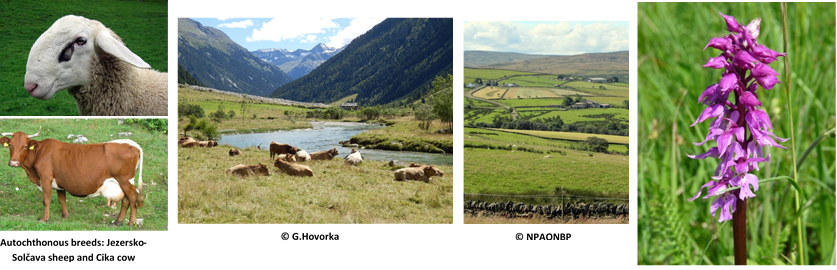
Pegasus CS photos

Share
25 octobre 2016

Euromontana sur Facebook

3 days ago

Euromontana
🧊 Glaciers matter for water, food and livelihoods in mountains and beyond. This is what we are highlighting this year on 11 December, International Mountain Day.Every year, this day provides an opportunity to emphasise the crucial importance of these areas in terms of natural resources, biodiversity, identity, cultural heritage, ways of life, and more resilient models. However, all of this is under threat from climate change, poorly targeted funding and negative perceptions of pastoral professions.Today, we are putting the spotlight on these endangered ice giants throughout our mountain ranges!Did you know that: 💧The Alps alone provide 40% of Europe's fresh water?💡Glacier retreat will reduce hydroelectric energy production by an average of 10% in the Alps and by up to 35% by 2070 compared to today?🌱68% of irrigated agricultural land in the plains depends directly on water runoff from the mountains? ⛰️By 2034 the Pyrenees will be ice-free?📢An appropriate governance of glacier is needed to counteract the rapid changes!🧊 By signing the manifesto for better European governance of glaciers alongside 80 other organisations, we are calling for immediate and targeted political responses to the economic, social and environmental impacts of climate change.Have a look 👉 www.euromontana.org/european-manifesto-for-a-governance-of-glaciers-and-connected-resources/ #IMD2025 #InternationalMountainDay #MountainsMatterMountain Partnership ... See MoreSee Less
View on Facebook

1 week ago

Euromontana
Euromontana was pleased to take part as an observer in the 16th Meeting of the Carpathian Convention Implementation Committee in Belgrade on 2–3 December. We were represented by Rey Adrian - Radu, Vice-President of Euromontana and President of Asociatia RoMontana ⛰️We welcomed the opportunity to underline the importance of stronger cooperation between European mountain regions, especially ahead of the International Year of Rangelands and Pastoralists 2026 (IYRP2026), and to explore avenues for joint work on sustainable land management, resilient rural territories and pastoral practices 🌱 🐑 🐄 🤝 We look forward to continuing our collaboration with the Carpathian Convention and its members to protect mountain ecosystems and support the vitality of mountain communities across Europe!Photo Credits: SCC; Ministry of Environmental Protection of the Republic of Serbia. ... See MoreSee Less
View on Facebook

3 weeks ago

Euromontana
🐏 Join us next week for an inspiring online exchange dedicated to revitalizing pastoralism in Europe’s mountain and rural regions, ad part of the LIFE Programme project ShepForBio !This forum "Shepherding Futures: Training, Innovation, and Rural Revival" will bring together pastoral schools, experts, and practitioners to explore new approaches to training, knowledge sharing, and business innovation in extensive livestock systems 👀👉 Discover real-world experiences and case studies that show how shepherds’ education, ecological stewardship, and rural entrepreneurship can go hand in hand, ensuring a resilient and sustainable future for pastoral communities.📅 4 December from 2:00 p.m. to 4:00 p.m.📍 Online www.euromontana.org/third-forum-with-european-pastoral-schools-shepherding-futures/ ... See MoreSee Less
View on Facebook

2 months ago

Euromontana
👀𝗦𝗮𝘃𝗲 𝘁𝗵𝗲 𝗱𝗮𝘁𝗲 𝗳𝗼𝗿 𝘁𝗵𝗲 𝟮𝟬𝟮𝟲 𝗘𝘂𝗿𝗼𝗽𝗲𝗮𝗻 𝗠𝗼𝘂𝗻𝘁𝗮𝗶𝗻 𝗖𝗼𝗻𝘃𝗲𝗻𝘁𝗶𝗼𝗻!Join us in the heart of the Alps for the 14th edition of the European Mountain Convention, organized by SUACI Montagn'Alpes and Euromontana, under the theme of extensive livestock farming and pastoral practices 👩‍🌾 🏔️ Taking place during the International Year of Rangelands and Pastoralism 2026, the event will bring together farmers, researchers, policymakers, practitioners and mountain stakeholders from across Europe in the iconic Mont-Blanc region 📍 🔎 Over three days, participants will explore the social, environmental, and economic challenges and opportunities of extensive livestock farming in mountain areas. 👉 When? 9, 10 & 11 June 2026👉 Where? Sallanches, Haute-Savoie, France 🤔 Expect study visits, interactive workshops, political plenary sessions and more! Visit the webpage: www.euromontana.org/xiii-european-mountain-convention-home/In the meantime, stay informed! Subscribe to the dedicated EMC 2026 mailing list to make sure you don’t miss any key updates, from programme details to the opening of registrations docs.google.com/forms/d/e/1FAIpQLSdsn28sgP9hVQ4qUO-pu5hwcETjxh5lk6zAqi0PElPJqk-YMQ/viewform?usp=h... #IYRP2026 #EMC2026 ... See MoreSee Less
View on Facebook

Euromontana sur Twitter