



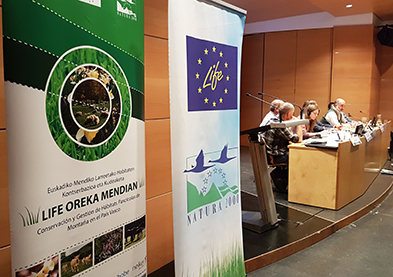
 Le 26 novembre 2018, le projet LIFE OREKA MENDIAN a organisé son séminaire à mi-parcours sur « Le rôle du berger. Tradition et technologie pour la conservation des pâturages de montagne« , à Vitoria-Gasteiz, au Pays Basque espagnol.
Au cours de la matinée, différentes problématiques ont été discutées en rapport avec les changements actuels dans l’utilisation des pâturages de montagne pour l’agriculture et l’élevage, et les problèmes de conservation qui en découlent, tels que comment endiguer un nombre croissant d’incendies sauvages dus au changement climatique avec une déprise du pastoralisme dans les montagnes ?
 Différentes mesures qui existent au niveau européen pour promouvoir la durabilité des exploitations de montagne, ainsi que des exemples concrets de leur application, ont été présentés par Euromontana. Et le projet LIFE VIVA GRASS, de Lituanie, a été invité à présenter son outil de planification intégrée qui vise à prévenir la perte de prairies à haute valeur naturelle en fournissant des modèles de gestion économiquement viable de la biodiversité des prairies aux gestionnaires des terres et aux décideurs.
Tout au long de l’après-midi, des présentations ont été faites sur les avancées les plus significatives du projet OREKA MENDIAN, notamment sa base de données SIGPASTOS, et sur les outils de suivi les plus innovants que le projet utilise tant pour la conservation des habitats pastoraux que pour soutenir les activités d’élevage. Certains des outils présentés ont été mis en application le lendemain, lors d’une visite sur le terrain dans le parc naturel d’Aizkorri-Aratz.
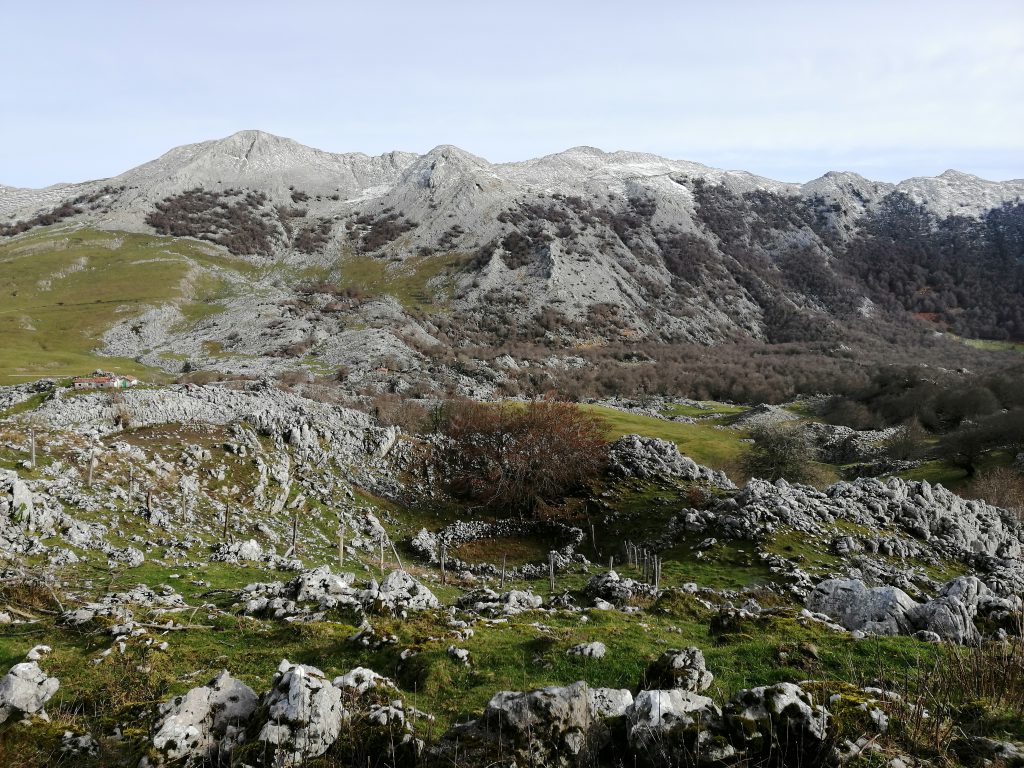
En effet, la visite d’étude a commencé par une visite du Parketxe (maison d’accueil) du parc naturel d’Aizkorri-Aratz. Les participants ont ensuite été emmenés dans des véhicules tout-terrain vers les zones pastorales altitudinales.
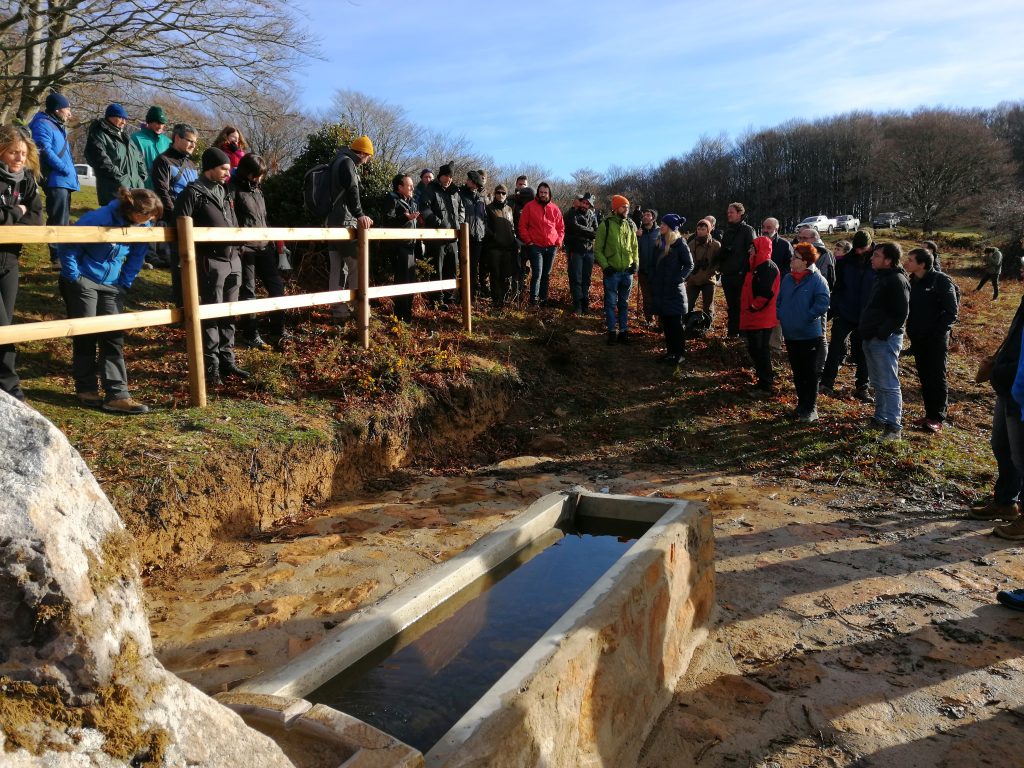 Les véhicules se sont d’abord arrêtés dans la région d’Álava pour montrer aux participants une zone où la Diputación Foral de Álava avait éclairci les broussailles selon un motif en mosaïque, dans le but de récupérer les pâturages de montagne et les landes acidophiles, ainsi que de créer un point d’eau pour encourager la présence animale dans cette zone qui est actuellement sous-utilisée.
L’étape suivante fut les champs d’Urbia, où María Eugenia Amenabar, directrice de la Parzonería General de Gipuzkoa et d’Alava, a expliqué l’utilisation traditionnelle des pâturages et les problèmes auxquels les bergers de la région sont confrontés aujourd’hui. 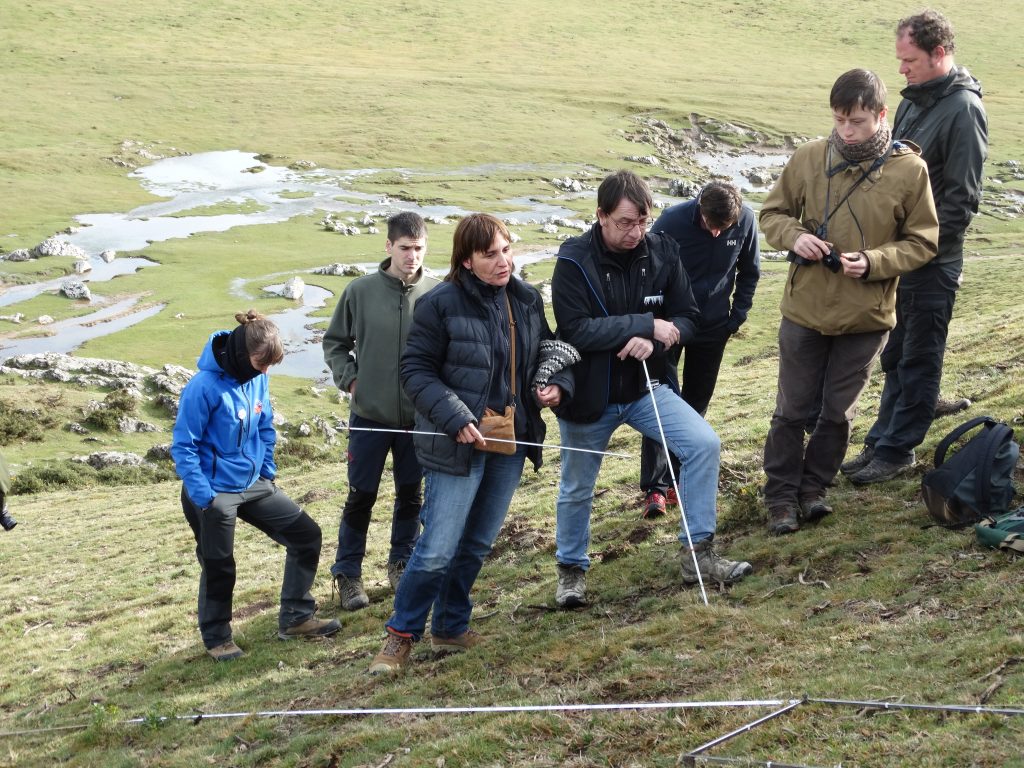 Cette zone couverte d’ajoncs a été éclaircie par la Diputación Foral de Gipuzkoa en 2015 et 2017, et contient maintenant plusieurs parcelles de suivi du projet LIFE. Isabel Albizu (NEIKER) et Vicente Ferrer (Belardi) ont expliqué la méthodologie utilisée pour le suivi.
Dans le même temps, la société ARC a survolé la même zone à l’aide d’un drone, car cette technique d’échantillonnage photographique très précise sera utilisée dans le cadre du projet pour tester une nouvelle méthode de surveillance du développement des garrigues qui complète l’échantillonnage floristique des transects dans les parcelles de suivi mentionnées précédemment.
Enfin, les bergers Mikel Etxezarreta et Eli Arrillaga nous ont ouvert les portes de leur fromagerie et nous ont expliqué en détail leur vie quotidienne et comment est fabriqué le fromage portant la mention de qualité basque Mendiko Gazta dans la fromagerie du village.
 Le séminaire a attiré un grand nombre de personnes. Neuf conférenciers et plus de 100 participants aux intérêts très différents ont assisté à la conférence, venant d’horizons très divers (universitaires, spécialistes des institutions basques, centres de recherche agricole, associations de développement rural, éleveurs, ONG, etc.)
Les présentations sont disponibles ci-dessous.
Présentations
- Le berger, le pastoralisme et la durabilité de l’élevage de montagne (Koldo Osoro. SERIDA)
- Quelles mesures de soutien pour le pastoralisme ? Exemples européens (Lauren Mosdale. EUROMONTANA)
- Le berger du XXIe siècle (Batis Otaegi. ARTZAIN ESKOLA)
- Exemples d’Innovation pour la durabilité des exploitations de montagne (Iker Elosegi. EHLG)
- LIFE VIVA GRASS : planification intégrée et services écosystémiques des pâturages (Zymantas Morkvenas y Justas Gulbinas. BALTIC ENVIRONMENTAL FORUM)
- Principales Progressions du projet (Amelia Ortubay. HAZI FUNDAZIOA)
- SIGPASTOS (Javier Pérez. HAZI FUNDAZIOA)
- Suivi de restauration de tourbières de couverture par télédétection (Guaduneth Chico. Universidad NOTTINGHAM TRENT)
- Suivi avec colliers GPS : bénéfices pour le berger et pour la science (Isabel Albizu. NEIKER-TECNALIA)
- Suivi de l’embroussaillement grâce à LIDAR et aux drones (Daniel Sáenz. HAZI FUNDAZIOA)


