
• fr
  • en

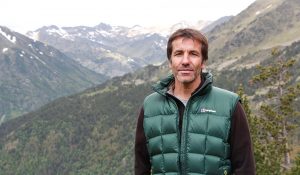
L’interview du mois: Rencontre avec Bernat Claramunt du CREAF (Espagne)

CREAF est l’abréviation de Ecological and Forestry Applications Research Centre, c’est un centre de recherche public indépendant qui mène des recherches dans le domaine de l’écologie des terres. Fondé en 1987 en Catalogne, en Espagne, le CREAF est un consortium formé de deux universités (Universitat Autònoma de Barcelona et l’Université de Barcelone), de l’IRTA, du gouvernement de Catalogne, de l’Institut d’études catalanes et de la CSIC. Son objectif principal est de générer de nouvelles connaissances et de créer des outils innovants dans le domaine de l’écologie des terres, y compris dans les zones de montagne.

En 2016, le CREAF a décidé de rejoindre Euromontana. Nous avons rencontré Bernat Claramunt López, chercheur, pour en savoir plus sur leurs recherches en foresterie et en montagne et leur implication au niveau local et européen.

Euromontana : Pourriez-vous nous expliquer quel est l’objectif du CREAF et quel est votre espoir pour les zones de montagne ?
Bernat: « L’objectif principal du CREAF est de générer de nouvelles connaissances et de créer des outils innovants pour l’écologie des terres. Grâce à notre recherche, nous fournissons des informations précieuses pour la prise de décision en matière de plannification et de gestion environnementale du territoire. Par exemple, nous travaillons sur la façon dont les forêts se régénèrent après un incendie ou comment les changements de paysage affectent la biodiversité. Le centre ne cible pas spécifiquement les zones de montagne dans ses activités de recherche mais beaucoup de nos projets de recherche se déroulent dans des forêts situées principalement dans des zones montagneuses. Par ailleurs, deux chercheurs du CREAF ont fait partie du comité scientifique de l’Observatoire Pyrénéen sur les Changements Climatiques (OPCC) et un chercheur a participé à la rédaction de l’Agenda Stratégique de Recherche « Montagnes pour l’Europe (MRI) ».

Avez-vous un exemple d’outils innovants que vous avez créés et qui pourraient être utilisés dans les zones de montagne ?
« Plusieurs chercheurs du CREAF travaillent sur le développement d’outils informatiques tels que les SIG. SIG signifie Système d’Information Géographique, c’est un système qui permet la consultation et l’analyse d’une grande quantité d’informations sur notre patrimoine naturel. Cet outil pourrait également être utilisé dans les zones de montagne. »

Pourquoi avez-vous décidé de rejoindre Euromontana en 2016 ?
« Nous avons rejoint le réseau d’Euromontana après les Xème Assises européennes de la montagne, à Bragança, au Portugal, où nous avons rencontré les membres et le réseau. Nous avons été attirés par l’approche d’Euromontana réunissant un large éventail d’acteurs de la montagne. Nous travaillons souvent dans une « bulle scientifique » sans être en contact avec des parties prenantes d’autres secteurs. Nous avons pensé que ce serait un avantage pour les chercheurs du CREAF de travailler plus souvent avec d’autres acteurs européens de la montagne. »

Comment est-ce qu’Euromontana soutient le travail du CREAF ?
« L’objectif du CREAF est de travailler comme un pont entre le monde universitaire, les administrations et la société, en promouvant la sensibilisation et l’échange de connaissances dans le cadre de ses activités, au niveau local, régional et mondial. De cette façon, Euromontana est le réseau européen parfait pour nous. Certains chercheurs du CREAF ont commencé à utiliser la plateforme projets sur le site d’Euromontana pour échanger avec d’autres, trouver de nouveaux partenaires et partager leurs résultats. »

Le CREAF a été impliqué dans la création d’un nouveau réseau pour la recherche européenne sur la montagne appelé NEMOR. Pourriez-vous nous en dire plus à ce sujet ?
NEMOR est le réseau pour la recherche européenne sur la montagne. Il a été créé il y a quelques mois après les changements survenus au sein du MRI (Mountain Research Initiative) qui ne pouvaient plus mener de travail de suivi après la publication du Programme de recherche stratégique. Nous voulions poursuivre la discussion sur la recherche spécifique sur la montagne en Europe et améliorer la recherche. Euromontana, avec Martin Price, a contribué à la création de cette initiative et a accueilli le réseau avec la participation active des chercheurs de la montagne. J’ai pris la tête de l’initiative depuis octobre 2017. Notre plan court est d’essayer de développer des visions stratégiques pour l’avenir et convaincre les décideurs que la recherche dans les zones de montagne peut aider et est fondamentalement importante non seulement pour les zones de montagne mais pour tout le monde.

Share
26 janvier 2018

Euromontana sur Facebook

6 days ago

Euromontana
❄️ Winter may seem to have arrived, but climate change is shortening the season and making snowfall less reliable...leaving mountain resorts with a stark choice: close or adapt?⛰️ Head to Austria to discover how the Sankt Corona ski resort has responded to this challenge and turned a climate risk into a regional asset, as part of the Interreg Alpine Space - TranStat project: www.euromontana.org/sankt-coronas-response-to-climate-change-diversifying-tourism-for-a-resilient...👉 Explore our good practices database: www.euromontana.org/good-practices-database/ Photo credits © Wexl Arena St. Corona am Wechsel ... See MoreSee Less
View on Facebook

4 weeks ago

Euromontana
🎄𝗘𝘂𝗿𝗼𝗺𝗼𝗻𝘁𝗮𝗻𝗮 𝘄𝗶𝘀𝗵𝗲𝘀 𝘆𝗼𝘂 𝗺𝗼𝘂𝗻𝘁𝗮𝗶𝗻𝒔 𝗼𝗳 𝗵𝗮𝗽𝗽𝗶𝗻𝗲𝘀𝘀 𝗳𝗼𝗿 𝟮𝟬𝟮𝟲🎅 After a year full of events, encounters, political challenges and new collaborations, it is time for the secretariat to take a short break. We will meet again soon in 2026 to continue our actions and make the voice of mountain areas heard by the EU! 🏔️ But in the meantime, let's take a step back and look at the year 2025 before it comes to an end!This year, together we: 📃 celebrated the 30th anniversary of the Krakow Declaration, which paved the way for the creation of our network, and renewed our commitment to mountain areas 🔗 www.euromontana.org/thirty-years-on-calling-for-a-stronger-european-commitments-to-its-mountains/ 🤝 launched an Alliance for European Mountains, between elected representatives of the European Committee of the Regions and the European Parliament 🔗https://www.euromontana.org/press-release-alliance-for-european-mountains-launched-mountains-need-europe-and-europe-needs-mountains/ 👩‍🏫 collaborated on more than seven European research projects with our members and other partners all over Europe🧊 highlighted water-related challenges during this International Year of Glacier Preservation (hashtag#IYGP2025)🔗 www.euromontana.org/european-manifesto-for-a-governance-of-glaciers-and-connected-resources/👋 welcomed new members, including from Montenegro and Italy🌱 visited initiatives across Europe promoting resilience in our mountain territories, through research projects or by hosting our board of directors in Trento (Cooperazione Trentina) and Krakow (Małopolska)• and much more!Thank you to all our partners, members and friends of Euromontana for this wonderful year! ... See MoreSee Less
View on Facebook

4 weeks ago

Euromontana
⏮️ Last week, on 11 December, we celebrated International Mountain Day, established in 2002 by the United Nations to remind us of the role mountains play in many aspects of sustainable living 🌱 On this occasion, we were featured in an article by the Food and Agriculture Organization of the United Nations (FAO) Liaison Office with the European Union alongside other EU regions, sharing our vision of what mountains mean to their people, cultures, and economies 🏔️ 🗣️ Our "voices form a vivid mosaic—a portrait of landscapes that shape identity, heritage, and sustainable futures."Have a look 👉https://www.fao.org/brussels/news/news-detail/international-mountain-day--voices-from-the-peaks/en ... See MoreSee Less
View on Facebook

4 weeks ago

Euromontana
👩‍🌾 We are currently attending the EU Agri-Food Days, organised by the European Commission and DG AGRI, which are taking place in Brussels over the course of three days!We heard from the president of the European Commission Ursula von der Leyen and the European Commissioner for Food and Agriculture, Christophe Hansen, and attended numerous high-level political sessions with stakeholders in the sector 🗣️ The agenda included discussions on achieving a robust and contemporary CAP to ensure food security across the EU, establishing fair remuneration schemes within the food chain, and fostering a resilient agri-food sector 👩‍🌾 🌱 Euromontana will continue to play an active role in promoting a future CAP that benefits those most in need and supports the territorial development of rural areas in the face of climate change and generational renewal challenges 🏔️ 👉 Read our policy position on generational renewal within the CAP and our other contributions to the next European budget: www.euromontana.org/meeting-the-challenges-of-generational-renewal-shaping-the-future-of-mountain... EU Food & Farming ... See MoreSee Less
View on Facebook

1 month ago

Euromontana
🧊 Glaciers matter for water, food and livelihoods in mountains and beyond. This is what we are highlighting this year on 11 December, International Mountain Day.Every year, this day provides an opportunity to emphasise the crucial importance of these areas in terms of natural resources, biodiversity, identity, cultural heritage, ways of life, and more resilient models. However, all of this is under threat from climate change, poorly targeted funding and negative perceptions of pastoral professions.Today, we are putting the spotlight on these endangered ice giants throughout our mountain ranges!Did you know that: 💧The Alps alone provide 40% of Europe's fresh water?💡Glacier retreat will reduce hydroelectric energy production by an average of 10% in the Alps and by up to 35% by 2070 compared to today?🌱68% of irrigated agricultural land in the plains depends directly on water runoff from the mountains? ⛰️By 2034 the Pyrenees will be ice-free?📢An appropriate governance of glacier is needed to counteract the rapid changes!🧊 By signing the manifesto for better European governance of glaciers alongside 80 other organisations, we are calling for immediate and targeted political responses to the economic, social and environmental impacts of climate change.Have a look 👉 www.euromontana.org/european-manifesto-for-a-governance-of-glaciers-and-connected-resources/ #IMD2025 #InternationalMountainDay #MountainsMatterMountain Partnership ... See MoreSee Less
View on Facebook

Euromontana sur Twitter