
• fr
  • en

Une nouvelle analyse d’experts sur les zones de montagne dans la politique de cohésion a été publiée

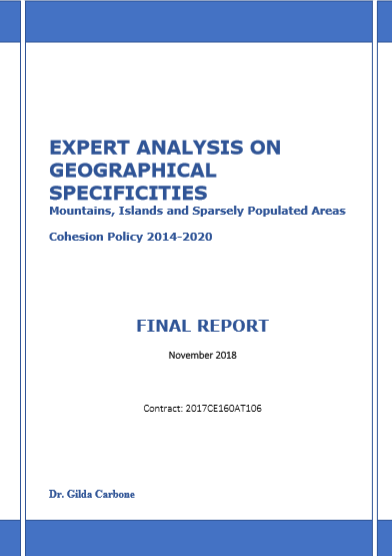
La DG REGIO a publié le rapport final de Gilda Carbone sur « L’analyse d’expert des spécificités géographiques : Montagnes, îles et zones à faible densité de population ». La DG REGIO a demandé à mieux comprendre comment les autorités de gestion prennent en compte les zones présentant des spécificités géographiques dans leur programmation et leur mise en œuvre.

Même si le rapport n’apporte pas de nouvelles informations essentielles, il confirme plusieurs conclusions qu’Euromontana avait également et confirme plusieurs positions qu’Euromontana a défendues publiquement.  En particulier, ce rapport a confirmé que même si les zones de montagne sont correctement prises en compte dans les accords de partenariat ou dans les programmes opérationnels, il existe un décalage entre la programmation et la mise en œuvre réelle. En outre, les possibilités offertes par les règlements ESIF (Fonds structurels et d’investissement européens) 2014-2020 (dérogation à la concentration thématique, ajustements du taux de cofinancement, etc). Le rapport encourage la mise en place d’appels spécifiques et d’allocations financières spécifiques pour les zones soumises à des contraintes géographiques et encourage la Commission à envisager à l’avenir des dispositions nouvelles et différentes pour répondre aux besoins de ces territoires.

Plus spécifiquement pour les zones de montagne, 13 États membres les mentionnent dans leurs accords de partenariat (AT, BG, HR, CY, FI, FR, EL, IT, PT, SI, ES, SE, UK). La coopération territoriale européenne est particulièrement importante pour ces zones, étant souvent des frontières entre deux ou plusieurs pays. Dans les programmes opérationnels analysés, aucun instrument financier spécifique n’a été mis en place pour les zones de montagne et seuls quelques exemples d’ITI et de CLLD existent, tels que le CLLD pour le programme de coopération entre l’Italie et l’Autriche ou deux ITI pour les programmes ALCOTRA dans les Alpes.

La possibilité d’augmenter les taux de cofinancement n’a été utilisée que dans le PO Massif Lorrain et Vosgien en France et en Croatie pour certains projets situés en zone de montagne.

Afin de mieux prendre en compte les spécificités de la montagne, les autorités de gestion ont proposé les solutions suivantes, qui sont en accord avec les propositions d’Euromontana:

– allouer des montants spécifiques aux zones de montagne ;

– allouer des sommes importantes aux services d’intérêt général ;

– une plus grande flexibilité des règles en matière d’aides d’État ;

– encourager et accroître la coopération ;

– tester de nouvelles actions en faveur de l’innovation, également avec le soutien d’instruments financiers ;

– fixer des objectifs thématiques spécifiques et des priorités d’investissement, y compris des indicateurs raisonnables ;

– renforcer le lien et les complémentarités avec le FEADER ;

– maintenir la possibilité d’attribuer des points supplémentaires pour des projets en zone de montagne.

La DG REGIO prépare actuellement du matériel imprimé et des panneaux d’exposition pour communiquer les principales conclusions de l’analyse ainsi que les meilleures pratiques et les parties prenantes pourront demander ce matériel pour leurs expositions ou manifestations.

Share
7 janvier 2019

Euromontana sur Facebook

2 days ago

Euromontana
🧊 Glaciers matter for water, food and livelihoods in mountains and beyond. This is what we are highlighting this year on 11 December, International Mountain Day.Every year, this day provides an opportunity to emphasise the crucial importance of these areas in terms of natural resources, biodiversity, identity, cultural heritage, ways of life, and more resilient models. However, all of this is under threat from climate change, poorly targeted funding and negative perceptions of pastoral professions.Today, we are putting the spotlight on these endangered ice giants throughout our mountain ranges!Did you know that: 💧The Alps alone provide 40% of Europe's fresh water?💡Glacier retreat will reduce hydroelectric energy production by an average of 10% in the Alps and by up to 35% by 2070 compared to today?🌱68% of irrigated agricultural land in the plains depends directly on water runoff from the mountains? ⛰️By 2034 the Pyrenees will be ice-free?📢An appropriate governance of glacier is needed to counteract the rapid changes!🧊 By signing the manifesto for better European governance of glaciers alongside 80 other organisations, we are calling for immediate and targeted political responses to the economic, social and environmental impacts of climate change.Have a look 👉 www.euromontana.org/european-manifesto-for-a-governance-of-glaciers-and-connected-resources/ #IMD2025 #InternationalMountainDay #MountainsMatterMountain Partnership ... See MoreSee Less
View on Facebook

1 week ago

Euromontana
Euromontana was pleased to take part as an observer in the 16th Meeting of the Carpathian Convention Implementation Committee in Belgrade on 2–3 December. We were represented by Rey Adrian - Radu, Vice-President of Euromontana and President of Asociatia RoMontana ⛰️We welcomed the opportunity to underline the importance of stronger cooperation between European mountain regions, especially ahead of the International Year of Rangelands and Pastoralists 2026 (IYRP2026), and to explore avenues for joint work on sustainable land management, resilient rural territories and pastoral practices 🌱 🐑 🐄 🤝 We look forward to continuing our collaboration with the Carpathian Convention and its members to protect mountain ecosystems and support the vitality of mountain communities across Europe!Photo Credits: SCC; Ministry of Environmental Protection of the Republic of Serbia. ... See MoreSee Less
View on Facebook

3 weeks ago

Euromontana
🐏 Join us next week for an inspiring online exchange dedicated to revitalizing pastoralism in Europe’s mountain and rural regions, ad part of the LIFE Programme project ShepForBio !This forum "Shepherding Futures: Training, Innovation, and Rural Revival" will bring together pastoral schools, experts, and practitioners to explore new approaches to training, knowledge sharing, and business innovation in extensive livestock systems 👀👉 Discover real-world experiences and case studies that show how shepherds’ education, ecological stewardship, and rural entrepreneurship can go hand in hand, ensuring a resilient and sustainable future for pastoral communities.📅 4 December from 2:00 p.m. to 4:00 p.m.📍 Online www.euromontana.org/third-forum-with-european-pastoral-schools-shepherding-futures/ ... See MoreSee Less
View on Facebook

2 months ago

Euromontana
👀𝗦𝗮𝘃𝗲 𝘁𝗵𝗲 𝗱𝗮𝘁𝗲 𝗳𝗼𝗿 𝘁𝗵𝗲 𝟮𝟬𝟮𝟲 𝗘𝘂𝗿𝗼𝗽𝗲𝗮𝗻 𝗠𝗼𝘂𝗻𝘁𝗮𝗶𝗻 𝗖𝗼𝗻𝘃𝗲𝗻𝘁𝗶𝗼𝗻!Join us in the heart of the Alps for the 14th edition of the European Mountain Convention, organized by SUACI Montagn'Alpes and Euromontana, under the theme of extensive livestock farming and pastoral practices 👩‍🌾 🏔️ Taking place during the International Year of Rangelands and Pastoralism 2026, the event will bring together farmers, researchers, policymakers, practitioners and mountain stakeholders from across Europe in the iconic Mont-Blanc region 📍 🔎 Over three days, participants will explore the social, environmental, and economic challenges and opportunities of extensive livestock farming in mountain areas. 👉 When? 9, 10 & 11 June 2026👉 Where? Sallanches, Haute-Savoie, France 🤔 Expect study visits, interactive workshops, political plenary sessions and more! Visit the webpage: www.euromontana.org/xiii-european-mountain-convention-home/In the meantime, stay informed! Subscribe to the dedicated EMC 2026 mailing list to make sure you don’t miss any key updates, from programme details to the opening of registrations docs.google.com/forms/d/e/1FAIpQLSdsn28sgP9hVQ4qUO-pu5hwcETjxh5lk6zAqi0PElPJqk-YMQ/viewform?usp=h... #IYRP2026 #EMC2026 ... See MoreSee Less
View on Facebook

Euromontana sur Twitter