
• fr
  • en

Les impacts économiques du patrimoine culturel matériel dans les pays montagneux

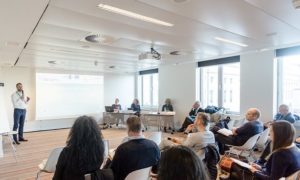
Pendant la Semaine Européenne des Régions et des Villes, le 10 octobre 2019, une session a été organisée par la DG AEC (Education, Jeunesse, Sport et Culture) et ESPON, pour aider à comprendre l’impact économique du patrimoine culturel matériel.

Cette session visait à reprendre le travail effectué par ESPON au cours de l’année écoulée sur le projet de recherche HERITAGE (Le patrimoine culturel matériel comme ressource stratégique de développement territorial : Cartographie des impacts à travers un ensemble d’indicateurs socio-économiques européens communs). Achevé en juillet 2019, le projet HERITAGE a produit un rapport soulignant les bénéfices économiques du patrimoine culturel matériel dans différents pays, y compris des pays de montagne comme la Norvège, la Roumanie, la Slovaquie, la Slovénie et l’Autriche. Les sites étudiés comprennent tous les sites ayant une valeur patrimoniale reconnue, qu’ils soient ou non juridiquement protégés par des cadres juridiques nationaux ou internationaux.

Les principaux résultats de l’étude montrent un impact économique important du patrimoine culturel matériel sur différents secteurs, tels que le tourisme et le bâtiment. Dans les pays étudiés, le patrimoine culturel matériel représenterait par exemple 2,1% de l’emploi total et 1% du chiffre d’affaires économique total.

Au sein de ces statistiques, il existe bien sûr des écarts entre les pays. Le secteur du tourisme en est un exemple intéressant, avec l’attractivité d’une région dépendant de la réputation des sites culturels. En Italie et en Autriche, respectivement 42% et 18% du chiffre d’affaires économique total du secteur du tourisme est lié aux sites du patrimoine culturel du pays. Si le taux est plus faible dans d’autres pays comme la Roumanie et la Slovénie, les bénéfices économiques du patrimoine culturel sur le secteur du tourisme augmentent constamment.
Le projet HERITAGE d’ESPON fournit des données intéressantes qui peuvent aider à gérer durablement le patrimoine culturel matériel dans les zones montagneuses, en particulier là où ces sites attirent un grand nombre de touristes et pourraient conduire à une pratique touristique excessive. Les chercheurs ont toutefois souligné la difficulté d’évaluer les impacts du patrimoine culturel matériel sur d’autres secteurs économiques, qui auraient pu être d’un grand intérêt pour les régions de montagne, comme l’artisanat.

La Commission européenne a également présenté le cadre européen d’action pour le patrimoine culturel et rappelé le succès de l’Année Européenne du Patrimoine Culturel en 2018, avec plus de 37 pays impliqués et 14.000 événements labellisés. Pendant l’Année Européenne du Patrimoine Culturel, Euromontana a organisé en septembre 2018 les XIème Assises Européennes de la Montagne à Vatra Dornei, Roumanie. Pour clore cet événement biannuel, les participants ont signé une déclaration appelant à une meilleure reconnaissance du patrimoine culturel et naturel de la montagne, un patrimoine non délocalisable, ancré dans l’identité montagnarde et qui contribue fortement à l’attractivité et au potentiel d’innovation des territoires de montagne.

Le patrimoine culturel et naturel est un enjeu crucial dans les zones de montagne, non seulement en raison des retombées économiques, mais aussi pour la préservation des paysages naturels et des savoir-faire traditionnels. Pour des exemples inspirants sur la façon de mettre en valeur le patrimoine culturel des montagnes, veuillez consulter le livret de bonnes pratiques d’Euromontana. Vous pouvez également en apprendre davantage sur l’initiative récemment lancée, visant à inscrire la transhumance sur la liste du patrimoine culturel immatériel de l’UNESCO.

Share
6 novembre 2019

Euromontana sur Facebook

6 days ago

Euromontana
❄️ Winter may seem to have arrived, but climate change is shortening the season and making snowfall less reliable...leaving mountain resorts with a stark choice: close or adapt?⛰️ Head to Austria to discover how the Sankt Corona ski resort has responded to this challenge and turned a climate risk into a regional asset, as part of the Interreg Alpine Space - TranStat project: www.euromontana.org/sankt-coronas-response-to-climate-change-diversifying-tourism-for-a-resilient...👉 Explore our good practices database: www.euromontana.org/good-practices-database/ Photo credits © Wexl Arena St. Corona am Wechsel ... See MoreSee Less
View on Facebook

4 weeks ago

Euromontana
🎄𝗘𝘂𝗿𝗼𝗺𝗼𝗻𝘁𝗮𝗻𝗮 𝘄𝗶𝘀𝗵𝗲𝘀 𝘆𝗼𝘂 𝗺𝗼𝘂𝗻𝘁𝗮𝗶𝗻𝒔 𝗼𝗳 𝗵𝗮𝗽𝗽𝗶𝗻𝗲𝘀𝘀 𝗳𝗼𝗿 𝟮𝟬𝟮𝟲🎅 After a year full of events, encounters, political challenges and new collaborations, it is time for the secretariat to take a short break. We will meet again soon in 2026 to continue our actions and make the voice of mountain areas heard by the EU! 🏔️ But in the meantime, let's take a step back and look at the year 2025 before it comes to an end!This year, together we: 📃 celebrated the 30th anniversary of the Krakow Declaration, which paved the way for the creation of our network, and renewed our commitment to mountain areas 🔗 www.euromontana.org/thirty-years-on-calling-for-a-stronger-european-commitments-to-its-mountains/ 🤝 launched an Alliance for European Mountains, between elected representatives of the European Committee of the Regions and the European Parliament 🔗https://www.euromontana.org/press-release-alliance-for-european-mountains-launched-mountains-need-europe-and-europe-needs-mountains/ 👩‍🏫 collaborated on more than seven European research projects with our members and other partners all over Europe🧊 highlighted water-related challenges during this International Year of Glacier Preservation (hashtag#IYGP2025)🔗 www.euromontana.org/european-manifesto-for-a-governance-of-glaciers-and-connected-resources/👋 welcomed new members, including from Montenegro and Italy🌱 visited initiatives across Europe promoting resilience in our mountain territories, through research projects or by hosting our board of directors in Trento (Cooperazione Trentina) and Krakow (Małopolska)• and much more!Thank you to all our partners, members and friends of Euromontana for this wonderful year! ... See MoreSee Less
View on Facebook

4 weeks ago

Euromontana
⏮️ Last week, on 11 December, we celebrated International Mountain Day, established in 2002 by the United Nations to remind us of the role mountains play in many aspects of sustainable living 🌱 On this occasion, we were featured in an article by the Food and Agriculture Organization of the United Nations (FAO) Liaison Office with the European Union alongside other EU regions, sharing our vision of what mountains mean to their people, cultures, and economies 🏔️ 🗣️ Our "voices form a vivid mosaic—a portrait of landscapes that shape identity, heritage, and sustainable futures."Have a look 👉https://www.fao.org/brussels/news/news-detail/international-mountain-day--voices-from-the-peaks/en ... See MoreSee Less
View on Facebook

4 weeks ago

Euromontana
👩‍🌾 We are currently attending the EU Agri-Food Days, organised by the European Commission and DG AGRI, which are taking place in Brussels over the course of three days!We heard from the president of the European Commission Ursula von der Leyen and the European Commissioner for Food and Agriculture, Christophe Hansen, and attended numerous high-level political sessions with stakeholders in the sector 🗣️ The agenda included discussions on achieving a robust and contemporary CAP to ensure food security across the EU, establishing fair remuneration schemes within the food chain, and fostering a resilient agri-food sector 👩‍🌾 🌱 Euromontana will continue to play an active role in promoting a future CAP that benefits those most in need and supports the territorial development of rural areas in the face of climate change and generational renewal challenges 🏔️ 👉 Read our policy position on generational renewal within the CAP and our other contributions to the next European budget: www.euromontana.org/meeting-the-challenges-of-generational-renewal-shaping-the-future-of-mountain... EU Food & Farming ... See MoreSee Less
View on Facebook

1 month ago

Euromontana
🧊 Glaciers matter for water, food and livelihoods in mountains and beyond. This is what we are highlighting this year on 11 December, International Mountain Day.Every year, this day provides an opportunity to emphasise the crucial importance of these areas in terms of natural resources, biodiversity, identity, cultural heritage, ways of life, and more resilient models. However, all of this is under threat from climate change, poorly targeted funding and negative perceptions of pastoral professions.Today, we are putting the spotlight on these endangered ice giants throughout our mountain ranges!Did you know that: 💧The Alps alone provide 40% of Europe's fresh water?💡Glacier retreat will reduce hydroelectric energy production by an average of 10% in the Alps and by up to 35% by 2070 compared to today?🌱68% of irrigated agricultural land in the plains depends directly on water runoff from the mountains? ⛰️By 2034 the Pyrenees will be ice-free?📢An appropriate governance of glacier is needed to counteract the rapid changes!🧊 By signing the manifesto for better European governance of glaciers alongside 80 other organisations, we are calling for immediate and targeted political responses to the economic, social and environmental impacts of climate change.Have a look 👉 www.euromontana.org/european-manifesto-for-a-governance-of-glaciers-and-connected-resources/ #IMD2025 #InternationalMountainDay #MountainsMatterMountain Partnership ... See MoreSee Less
View on Facebook

Euromontana sur Twitter