



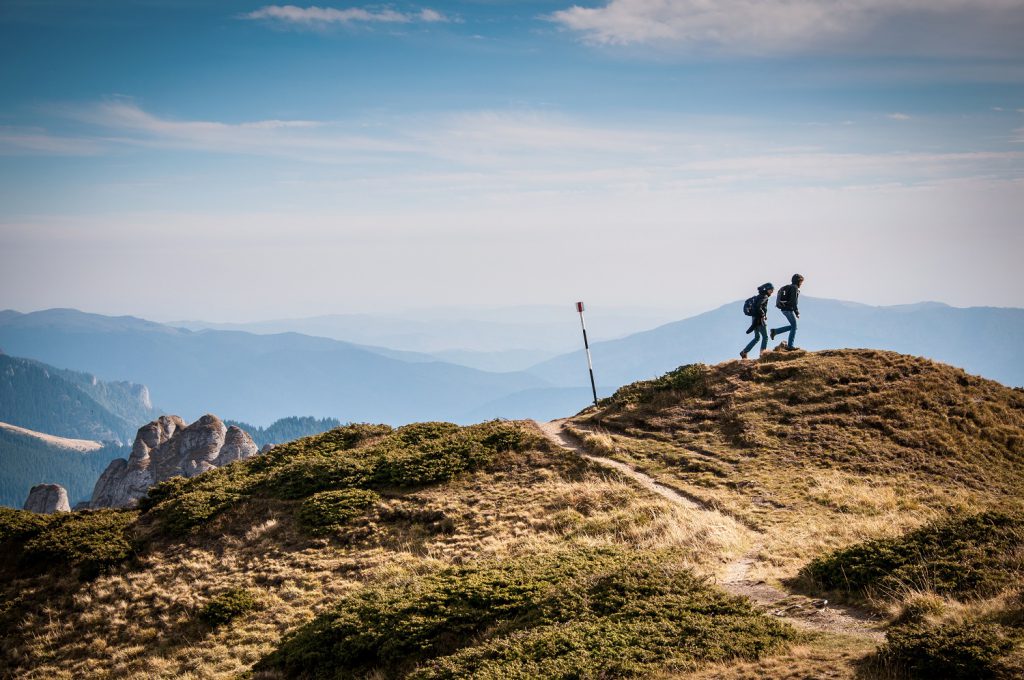
Les mois de juillet et août sont pour beaucoup synonymes de vacances… à la montagne.
En Europe, les touristes qui se rendent à la montagne pour leurs vacances sont de plus en plus nombreux ; 150 millions uniquement dans les Alpes ! En effet, l’afflux touristique est particulièrement important dans les communes de montagne et cela va en s’intensifiant depuis maintenant de nombreuses années. Cela soulève notamment la question de la pression environnementale du tourisme ainsi que la capacité d’accueil des territoires en termes d’hébergements et autres infrastructures. De plus, dans de nombreux pays européens, tels en France, Suisse et Allemagne, les touristes se rendant en montagne sont plus nombreux en été plutôt qu’en hiver, d’après le Rapport de la Convention Alpine « Le tourisme durable dans les Alpes » (2013).
Pour répondre à cette demande, les montagnes doivent continuellement s’adapter et proposer des activités de tourisme durable, tout en se rendant accessible à tous.
- Des activités de tourisme durable en montagne

Proposer des activités touristiques durables basées sur des valeurs naturelles et environnementales est fondamental pour les territoires de montagne qui cherchent à attirer des touristes sans dégrader l’environnement. C’est le cas du projet « Espubike » en Espagne qui propose une piste cyclable de 146 kilomètres, dans le Parc Régional de la Sierra Espuña. Le projet a eu un impact direct et positif sur l’économie locale puisqu’il a permis d’amener de nombreux visiteurs dans certains villages proches du Parc Régional.
- L’amélioration de l’efficacité énergétique des hôtels de montagnes
 Il est important que les hôtels et les restaurateurs qui accueillent les nombreux touristes puissent mettre en place des initiatives pour réduire leur consommation d’énergie dans une logique de développement durable. Les hôtels de montagne peuvent améliorer leur efficacité énergétique. C’est le cas de l’hôtel Cyprianerhof, situé près du massif du Rosengarten dans le Sudtyrol en Italie, qui a réussi à réduire ses coûts et économiser de l’énergie tout en proposant un environnement plus sain et un confort accru pour ses hôtes.
- Des montagnes accessibles à tous
 Rendre les montagnes accessibles à tous, signifie permettre à des personnes touchées par un handicap de pouvoir voyager en montagne. Rendre les montagnes accessibles est un grand défi, mais certaines destinations ont déjà développé des infrastructures et des services adaptés. C’est le cas de l’initiative « Trentino accessible », qui vise à accroître le nombre de touristes handicapés dans la région du Trentin, en Italie, et à montrer qu’ils sont une opportunité économique à tous les niveaux, ne devant plus être ainsi considérés comme une gêne. Par exemple, le projet a développé une application mobile informant les personnes handicapées des zones accessibles, ainsi qu’« Ibus voice », un système vocal informant les personnes aveugles des arrêts de bus. (Lire l’article ici).
De son côté, Euromontana est partenaire du projet européen Silver Tourism qui vise à former des experts dans le tourisme senior, pour rendre les montagnes accessibles également aux personnes âgées.
D’autres bonnes pratiques existent, jetez-y un œil :
- Un site internet qui répertorie les refuges de montagne
- Comment transformer d’anciens forts alpins en ressources touristiques
- Un fort militaire transformé en un musée ultra – moderne dans les montagnes italiennes
- Comment reconvertir un ancien parc industriel en un centre social dans un petit village
- Le rôle du tourisme rural dans les zones de montagne en tant que facteur de développement
- Des bonnes pratiques présentées aux Assises européennes de la Montagne qui ont eu lieu à Bragança (Portugal)
- Des trophées pour des projets touristiques dans les montagnes de la région Rhône-Alpes
- Guide de bonnes pratiques du projet DANTE sur les technologies de l’information et de la communication soutenant le tourisme dans les zones rurales et de montagne (en anglais)
Pour plus d’information, vous pouvez consulter notre page thématique « tourisme durable » et l’onglet « Documents et Liens utiles » qui vous redirige vers tous les articles et les bonnes pratiques rédigés par Euromontana, ainsi que les événements organisés sur le sujet.
21 août 2017


