



 Le projet PEGASUS a organisé une série de 3 ateliers régionaux dans différents pays européens au mois de novembre 2017 : à La Haye (Pays-Bas) le 16 novembre, à Lisbonne (Portugal) le 24 novembre et à Vienne (Autriche) le 30 novembre. Ces événements ont exploré comment les résultats issus du projet pourraient contribuer à l’élaboration des politiques futures et soutenir les acteurs sur le terrain. L’objectif est que ces discussions alimentent le débat sur la manière dont les politiques nationales et européennes, y compris la politique agricole commune, pourraient évoluer après 2020. Ainsi, le troisième atelier régional a été particulièrement opportun car il a eu lieu le lendemain de la publication par la Commission européenne de la Communication sur « L’avenir de l’alimentation et de l’agriculture ».
Les trois événements visaient à partager et à discuter des conclusions et des résultats émergents du projet PEGASUS. Plus précisément, les objectifs de ces séminaires étaient les suivants :
- Partager les résultats du projet à partir des 34 études de cas réalisées dans 10 États membres et présenter de nouvelles cartes de l’UE montrant les liens entre les systèmes de gestion agricole et forestier, et la fourniture de biens publics et de services écosystémiques ;
- Présenter les leçons et les recommandations politiques et pratiques ;
- Recevoir les commentaires des décideurs politiques nationaux et des parties prenantes de différents pays.
Chaque atelier s’est focalisé sur un angle différent des résultats de PEGASUS, présentant le plus d’intérêt pour la région de l’UE dans laquelle ils ont été discutés.
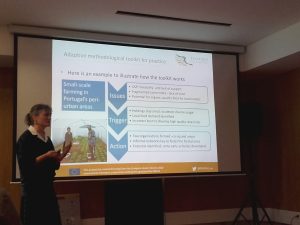 À La Haye, l’événement a mis l’accent sur les mécanismes de marché afin de tirer profit des avantages environnementaux et sociaux issus de l’agriculture et de la foresterie. Une des présentations novatrices de cet événement portait sur les principales leçons tirées de la mise en œuvre récente de l’approche collective néerlandaise pour les mesures agroenvironnementales et climatiques (AECM). L’approche néerlandaise est plutôt progressiste et plusieurs idées ont été avancées pour pousser la PAC dans une direction plus axée sur les résultats, avec des paiements ciblés.
À Lisbonne, l’accent a été mis sur le potentiel de l’action collective pour aider à produire des services environnementaux et sociaux. Les discussions ont été davantage liées à la nécessité de simplifier les mesures actuelles de la PAC et du développement rural en faveur des petits agriculteurs et des organisations de producteurs en particulier. Enfin, à Vienne, le séminaire était centré sur les zones reculées, y compris les zones de montagne, qui sont bien représentées dans un certain nombre d’études de cas PEGASUS (Autriche, Slovénie, Estonie, France, Royaume-Uni, etc.). Les présentations et le panel ont discuté des mesures de soutien aux services écosystémiques de montagne. Les discussions ont mis en évidence le fait que la montagne et d’autres zones avec des contraintes spécifiques dépendent fortement de la valeur qu’elles peuvent ajouter à leurs ressources naturelles à travers l’agriculture ou les activités forestières. Toutes les présentations de ces événements sont disponibles dans la section « Ressources » du site web de Pegasus.
Réservez la date !
La conférence finale du projet de PEGASUS se tiendra à Bruxelles le 7 février 2018. Si vous souhaitez participer pour en savoir plus sur les moyens concrets d’améliorer la fourniture de biens publics et de services écosystémiques par l’agriculture et la foresterie, veuillez vous enregistrer ici. Un email vous sera envoyé pour confirmer votre inscription.


