



 The PEGASUS project organised a series of 3 regional workshops in different countries of the EU during the month of November 2017: in The Hague (Netherlands) on 16 November, Lisbon (Portugal) on 24 November, and Vienna (Austria) on 30 November. These events explored how the findings emerging from the project could contribute to future policy-making and stakeholders on the ground. The intention is that these discussions will feed into the debate on how national and EU policies, including the Common Agricultural Policy, might evolve after 2020. In this way, the third regional workshop was particularly timely as it took place the day after the Communication on the “Future of Food & Farming” was released by the European Commission.
The three events aimed to share and discuss the emerging findings and outputs from the PEGASUS project. More specifically, the objectives of these seminars were to:
- Share the findings of the project from the 34 case studies carried out in 10 Member States and present new EU maps showing the linkages between agriculture and forest management systems and the delivery of public goods and ecosystem services;
- Present the lessons and recommendations for policy and practice;
- Receive feedback from national policy makers and stakeholders from different countries.
Each workshop took a different perspective to the PEGASUS findings, to be of most relevance to the EU meta-region in which these were discussed.
 In The Hague, the event focused on market-based mechanisms to deliver environmental and social benefits from agriculture and forestry. An innovative aspect of this event has been the presentation of key lessons from the recent implementation of the Dutch collective approach to agri-environmental and climate measures (AECM). The Dutch approach is rather progressive and several ideas were put forward to push the CAP in a more targeted and result-based direction.
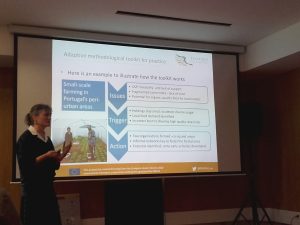
In Lisbon, the spotlight was on the potential of collective action to help deliver environmental and social outcomes. The discussions there were more related to the need to simplify the current CAP and Rural Development measures supporting small farmers and producers’ organisations in particular.In Lisbon, the spotlight was on the potential of collective action to help deliver environmental and social outcomes. Examples of collective actions in different European countries, which lead to successful implementation of practices supporting environmental and social benefits, were discussed and lessons learned identified. The discussions were more related to the need to simplify the current CAP and Rural Development measures, so that the room is created for different mechanisms to support farmers’ collaborations and producers’ organisations in particular.
Finally, in Vienna the seminar was centred on remote areas including mountain areas which have been an important topic in a number of the PEGASUS case studies (e.g. in Austria, Slovenia, Estonia, France, the UK, etc.). The presentations and the panel discussed measures supporting mountain ecosystem services. The discussions highlighted how mountain and other areas with specific constraints strongly depend on the value they can add to their natural resources through agriculture or forestry activities.
All the presentations of these events are available in the ‘Resources’ section of our website.
Save-the-date!
The final conference of the PEGASUS project will take place in Brussels on 7 February 2018. If you wish to attend it and learn more about the concrete ways to enhance the provision of public goods and ecosystem services by agriculture and forestry, please register here. An email will be sent to you to confirm your registration.


