
• fr
  • en

Valorisation des déchets agricoles par la bioéconomie à grande échelle en Norvège

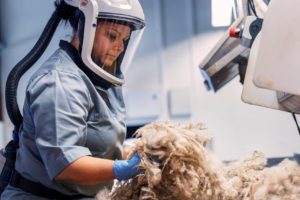
Il est fréquent que seuls la viande et les produits laitiers soient des productions valorisées des fermes de montagne. Pourtant, les sous-produits générés par la production de viande et de produits laitiers peuvent être transformés en produits de haute qualité, créant ainsi un revenu supplémentaire pour les exploitations. L’entreprise norvégienne Norilia veille à ce que les sous-produits soient transformés et réutilisés.
Crédits: Sune Eriksen

Norilia traite près de 80 % du volume annuel de laine norvégienne en collaborant avec l’Association Norvégienne des Eleveurs de Moutons et de Chèvres (NSG). En utilisant ces sous-produits, une valeur ajoutée est créée pour rendre l’agriculture plus rentable, tout en augmentant la durabilité du secteur car moins de ressources sont gaspillées grâce à cette approche de bioéconomie et d’économie circulaire. Alors que différentes initiatives existent dans les zones de montagne pour collecter et réutiliser les sous-produits animaux, la reconnaissance nationale de Norilia a permis d’étendre la circularité à l’ensemble du pays.


Tous les détails sur le fonctionnement de Norilia sont à retrouver dans notre bonne pratique. Retrouvez également d’autres exemples d’initiatives qui permettent de renforcer la durabilité environnementale, sociale et économique du pastoralisme dans le livret de bonnes pratiques et le rapport d’OREKA MENDIAN.

Share
3 novembre 2021

Euromontana sur Facebook

7 days ago

Euromontana
Today, Euromontana had the pleasure to take part in the journalist training course “Transizione ecologica nelle aree montane: biodiversità, cambiamento climatico e sviluppo sostenibile”, organised by Università della Montagna with the Ordine dei Giornalisti della Lombardia (the Lombardy Association of Journalists 📰)The course, bringing together 65+ participants, focused on how to better understand and report on ecological transition in mountain areas, from biodiversity and climate change to sustainable development ⛰️👉This matters because the way mountain areas are reported shapes the way they are understood and, ultimately, the way they are governed!We were pleased to join our member UNIMONT in this exchange. Prof. Anna Giorgi highlighted the need to change the way mountain areas are perceived, beyond fragility and marginality. Stefano Sala then showed how issues such as depopulation, winter tourism, climate change and public policy require a more nuanced reading of mountain realities 🔍 For Euromontana, Guillaume Corradino brought a European perspective to the discussion. He stressed that :1️⃣ mountains are not Europe’s margins, but diverse and complex living territories, and 2️⃣ stronger place-based policies and European cooperation are needed to move from recognition to implementation.Thanks again for the organization, the opportunity, and to all the participants 👏 ... See MoreSee Less
View on Facebook

3 weeks ago

Euromontana
⌛ Only a few days left to benefit from the early bird prices for the 2026 XIV #europeanmountainconvention (Sallanches, 30 June - 2 July) ! We’re already eagerly awaiting your visit to discuss the future of extensive livestock farming in mountain areas! 🌄Through plenary sessions, high-level panels, interactive workshops and field visits, the Convention aims to address the following topics:· Demographic renewal in agriculture, including pastoral schools· Shared land use and access to grazing land· The contribution of extensive livestock farming to risk prevention and adaptation to climate change· The role for digital innovation in a changing world· The living and working conditions· and more 👀 Registration, programme, and practical information 👇www.mountainconvention.eu #IYRP2026 #internationalyearofrangelandsandpastoralists Afficher la traduction ... See MoreSee Less
View on Facebook

Euromontana sur Twitter