
• fr
  • en

Valorisation of agricultural waste through large-scale bioeconomy in Norway

It is frequent that only meat and dairy products are valued outputs from mountain farms. Nonetheless, by-products generated in producing meat and dairy products can be transformed into high-quality products, thereby creating an additional income for farms. The Norwegian company Norilia ensures that by-products are refined and reused.
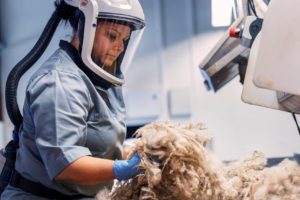
Credits: Sune Eriksen

Norilia handles nearly 80% of the annual Norwegian wool volume by working together with the Norwegian Association of Sheep and Goat Farmers (NSG). By using these by-products, added value is created to make agriculture more profitable, while also increasing the sector’s sustainability as less resources are wasted through this bio- and circular economy approach. While different initiatives exist in mountain areas to collect and reuse animal by-products, the national recognition of Norilia allowed to upscale circularity to the whole country.


Find out more on Norilia in our good practice. Other examples of initiatives that enhance the environmental, social and economic sustainability of pastoralism can be found in the OREKA MENDIAN’s booklet of good practices and report.

Share
3 November 2021

Euromontana sur Facebook

1 week ago

Euromontana
Today, Euromontana had the pleasure to take part in the journalist training course “Transizione ecologica nelle aree montane: biodiversità, cambiamento climatico e sviluppo sostenibile”, organised by Università della Montagna with the Ordine dei Giornalisti della Lombardia (the Lombardy Association of Journalists 📰)The course, bringing together 65+ participants, focused on how to better understand and report on ecological transition in mountain areas, from biodiversity and climate change to sustainable development ⛰️👉This matters because the way mountain areas are reported shapes the way they are understood and, ultimately, the way they are governed!We were pleased to join our member UNIMONT in this exchange. Prof. Anna Giorgi highlighted the need to change the way mountain areas are perceived, beyond fragility and marginality. Stefano Sala then showed how issues such as depopulation, winter tourism, climate change and public policy require a more nuanced reading of mountain realities 🔍 For Euromontana, Guillaume Corradino brought a European perspective to the discussion. He stressed that :1️⃣ mountains are not Europe’s margins, but diverse and complex living territories, and 2️⃣ stronger place-based policies and European cooperation are needed to move from recognition to implementation.Thanks again for the organization, the opportunity, and to all the participants 👏 ... See MoreSee Less
View on Facebook

3 weeks ago

Euromontana
⌛ Only a few days left to benefit from the early bird prices for the 2026 XIV #europeanmountainconvention (Sallanches, 30 June - 2 July) ! We’re already eagerly awaiting your visit to discuss the future of extensive livestock farming in mountain areas! 🌄Through plenary sessions, high-level panels, interactive workshops and field visits, the Convention aims to address the following topics:· Demographic renewal in agriculture, including pastoral schools· Shared land use and access to grazing land· The contribution of extensive livestock farming to risk prevention and adaptation to climate change· The role for digital innovation in a changing world· The living and working conditions· and more 👀 Registration, programme, and practical information 👇www.mountainconvention.eu #IYRP2026 #internationalyearofrangelandsandpastoralists Afficher la traduction ... See MoreSee Less
View on Facebook

Euromontana sur Twitter