
• fr
  • en

OREKA MENDIAN Booklet of good practices is out!

© LIFE OREKA MENDIAN

In April 2021, OREKA MENDIAN published a booklet of good practices showcasing 31 inspiring examples for the sustainable management of mountain grasslands gathered across 18 European countries. These good practices will inspire farmers, breeders and other local actors to increase the biodiversity of mountain grasslands, tackled climate change impacts and better market their products, among many others.

OREKA MENDIAN is a seven-year project (2016-2022) funded by the European Union’s LIFE Programme. It aims to develop a preservation strategy for mountain grasslands in the Basque country (France & Spain).


Why do we focus on mountain grasslands?

Grasslands cover 15.9% of the area of the EU-28 and represent the third most dominant ecosystem in Europe and one of the most widespread habitats in mountains. Besides being central to food production, mountain grasslands deliver a number of public goods and ecosystem services of great added value to the EU such as food production, carbon storage, recreational and cultural services.

Mountain grasslands have an important, yet under-recognised, role to play in achieving the UN Sustainable Development Goals and the EU Green Deal.

Nonetheless, mountain grasslands are seriously endangered by climate change and socio-economic pressures. Today, more than 75% of the grassland area in the EU-28 is considered to have an unfavourable conservation status.


Why support their sustainable management?

Permanent grasslands are the only habitat whose conservation status generally deteriorates when they are not managed. The state of mountain grasslands – and thus, the services and goods they provide – depends on environmental and socio-economic factors.

Changes in the environment and climatic conditions, unsustainable management practices and socio-economic changes are strongly affecting grasslands in European mountains. For this reason, to preserve mountain grasslands, we should consider all three dimensions of sustainability: the environment, the economy, and society.

The OREKA MENDIAN booklet is available in English, French and Spanish.


Want to know more?

In September 2021, the LIFE OREKA MENDIAN project will publish a study of the current status of mountain grasslands throughout Europe. If you want to know more about past Euromontana activities related to the OREKA MENDIAN project and pastoralism, check out on the project’s website at: www.lifeorekamendian.eu
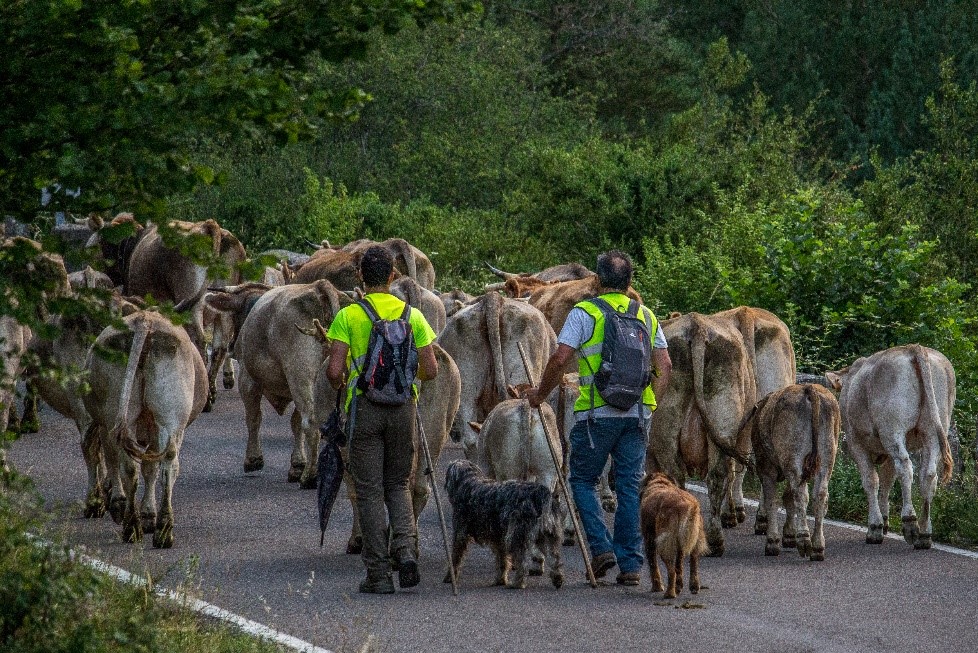
© Isabeau Ottolini
Share
20 April 2021

Euromontana sur Facebook

2 days ago

Euromontana
🇮🇹 Live from Edolo were Euromontana's Board of Directors is gathering for its first meeting of the year!Yesterday, the group reached the 3,000 m to witness the impact of climate change on tourism and on the Presena glacier, explained by Consortia Pontedilegno-Tonale, and then learned about the alteration of the alpine ecosystem from Stelvio National Park and Adamello Regional Park🏔👉Fauna, flora and local communities are affected by the shorter period of snow cover, which disturbs the habitats and physiological clocks of species, as well as the availability of water, predation cycles and the cultural landscape. In the afternoon, the visits continued with the FerroMiners (Miniera Ferrominers), who are bridging the diversification of tourism activities in the valley through the revitalisation of historical iron mining sites⛏️A big thanks to our member Università della Montagna for the organisation 👏 ... See MoreSee Less
View on Facebook

1 week ago

Euromontana
Today, Euromontana had the pleasure to take part in the journalist training course “Transizione ecologica nelle aree montane: biodiversità, cambiamento climatico e sviluppo sostenibile”, organised by Università della Montagna with the Ordine dei Giornalisti della Lombardia (the Lombardy Association of Journalists 📰)The course, bringing together 65+ participants, focused on how to better understand and report on ecological transition in mountain areas, from biodiversity and climate change to sustainable development ⛰️👉This matters because the way mountain areas are reported shapes the way they are understood and, ultimately, the way they are governed!We were pleased to join our member UNIMONT in this exchange. Prof. Anna Giorgi highlighted the need to change the way mountain areas are perceived, beyond fragility and marginality. Stefano Sala then showed how issues such as depopulation, winter tourism, climate change and public policy require a more nuanced reading of mountain realities 🔍 For Euromontana, Guillaume Corradino brought a European perspective to the discussion. He stressed that :1️⃣ mountains are not Europe’s margins, but diverse and complex living territories, and 2️⃣ stronger place-based policies and European cooperation are needed to move from recognition to implementation.Thanks again for the organization, the opportunity, and to all the participants 👏 ... See MoreSee Less
View on Facebook

Euromontana sur Twitter