
• fr
  • en

Des données intégrées pour anticiper les feux de forêt dans les montagnes méditerranéennes

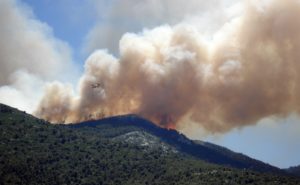
Le feu est la menace naturelle la plus importante pour les forêts des montagnes méditerranéennes. Leurs écosystèmes naturels, riches en arbustes, sont particulièrement vulnérables au feu et le changement climatique favorise les risques d’incendie en raison de l’augmentation des températures en été. Dans les montagnes de Troodos (Chypre) et de Grammos (Grèce), différents ensembles de données sur le climat, la flore et les incendies ont été combinés pour améliorer la gestion des incendies.

Différents outils existent pour prévenir les incendies de forêt dans les zones de montagne, tels que le brûlage dirigé, le pâturage ciblé (voir le livret de bonnes pratiques d’OREKA MENDIAN) ou le défrichage. L’utilisation de la technologie apporte une contribution importante à la prévision et à la gestion des incendies de forêt. De tels systèmes sont
particulièrement intéressants dans les zones de montagne moins accessibles. Pour d’autres exemples, vous pouvez consulter notre bonne pratique sur Cozzano (Corse, France), où deux stations météorologiques fournissent également aux pompiers locaux des informations telles que la force et la direction des vents et le cumul des précipitations.

Pour en savoir plus sur la manière dont les données sont collectées dans les montagnes de Trodoos et Grammos, lisez notre bonne pratique.

Share
29 juin 2021

Euromontana sur Facebook

7 days ago

Euromontana
Today, Euromontana had the pleasure to take part in the journalist training course “Transizione ecologica nelle aree montane: biodiversità, cambiamento climatico e sviluppo sostenibile”, organised by Università della Montagna with the Ordine dei Giornalisti della Lombardia (the Lombardy Association of Journalists 📰)The course, bringing together 65+ participants, focused on how to better understand and report on ecological transition in mountain areas, from biodiversity and climate change to sustainable development ⛰️👉This matters because the way mountain areas are reported shapes the way they are understood and, ultimately, the way they are governed!We were pleased to join our member UNIMONT in this exchange. Prof. Anna Giorgi highlighted the need to change the way mountain areas are perceived, beyond fragility and marginality. Stefano Sala then showed how issues such as depopulation, winter tourism, climate change and public policy require a more nuanced reading of mountain realities 🔍 For Euromontana, Guillaume Corradino brought a European perspective to the discussion. He stressed that :1️⃣ mountains are not Europe’s margins, but diverse and complex living territories, and 2️⃣ stronger place-based policies and European cooperation are needed to move from recognition to implementation.Thanks again for the organization, the opportunity, and to all the participants 👏 ... See MoreSee Less
View on Facebook

3 weeks ago

Euromontana
⌛ Only a few days left to benefit from the early bird prices for the 2026 XIV #europeanmountainconvention (Sallanches, 30 June - 2 July) ! We’re already eagerly awaiting your visit to discuss the future of extensive livestock farming in mountain areas! 🌄Through plenary sessions, high-level panels, interactive workshops and field visits, the Convention aims to address the following topics:· Demographic renewal in agriculture, including pastoral schools· Shared land use and access to grazing land· The contribution of extensive livestock farming to risk prevention and adaptation to climate change· The role for digital innovation in a changing world· The living and working conditions· and more 👀 Registration, programme, and practical information 👇www.mountainconvention.eu #IYRP2026 #internationalyearofrangelandsandpastoralists Afficher la traduction ... See MoreSee Less
View on Facebook

Euromontana sur Twitter