Le 27/06/2012
Cet événement a été la conférence finale du projet PADIMA (Politiques contre la dépopulation des zones de montagne). Il a rassemblé une centaine des participants, principalement des décideurs politiques des zones de montagne, travaillant à des échelles différentes: locale, régionale, nationale mais aussi européenne.
Cliquez ici pour voir la liste complète des participants.
L’objectif de cette conférence a été de sensibiliser les décideurs aux questions liées à la dépopulation et aux changements démographiques auxquels doivent faire face les régions de montagne. Des recommandations politiques pour améliorer l’attractivité des zones de montagne ont ainsi été présentées. Elles sont disponibles ici, en anglais uniquement et d’une manière plus détaillée dans le rapport final du projet.
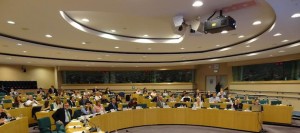
Photo : Torunn Kornstad
Contexte:
Les changements démographiques sont un problème très complexe qui exige d’être examiné avec une échelle et une vision appropriées : la situation varie entre les montagnes européennes et les tendances démographiques ne sont pas homogènes. Ceci est le résultat, d’un côté, de caractéristiques et de l’histoire des différents territoires, et de l’autre, des stratégies mises en œuvre par les autorités locales et régionales dans les dernières années pour attirer des nouveaux habitants et entreprises.
Les partenaires PADIMA considèrent le changement démographique comme un défi mais aussi comme une opportunité pour les zones de montagne. Nous avons idéntifié que les problèmes proviennent:
- D’une réflexion stratégique insuffisante sur cette question de la part des autorités nationales, régionales ou locales face à ce changement,
- De l’insuffisance des efforts faits pour l’image des territoires ou
- De l’absence d’infrastructures et de services publics à offrir aux habitants actuels des montagnes ou aux nouveaux habitants potentiels.
En réponse à ces problèmes, nous considérons que les résultats PADIMA permettent en partie de remédier à ces trois causes de la dépopulation. PADIMA fournit ainsi du matériel et des idées utiles qui ont été débattus vivement avec les représentants d’autres régions présents au Parlement le 27 juin.
Pour plus d’informations sur l’évènement, référez-vous au programme de la conférence.
Les différentes présentations faites lors de la conférence sont disponible ici:
- Présentation du projet et de ses réalisation, Maria Grazia Perdana, ERSAF, Italie
- Quelles tendances démographiques dans les zones d’étude? Federica Corrado, province de Turin, Italie
- Comment traiter la question de la dépopulation d’une manière intégrée ? Présentation d’une stratégies visant à accroître l’attractivité des zones de montagne, Rønning Dag, président du Conseil du Comté d’Hedmark, Norvège
- De la théorie à la pratique: comment transférer une bonne pratique PADIMA ? Kjerstin Spångberg, responsable de projet, Buskerud, Norvège
- Les services, une condition pour la qualité de vie en zone rurale et de montagne, Jaime Escribano Pizarro, Université de Valencia, Espagne.
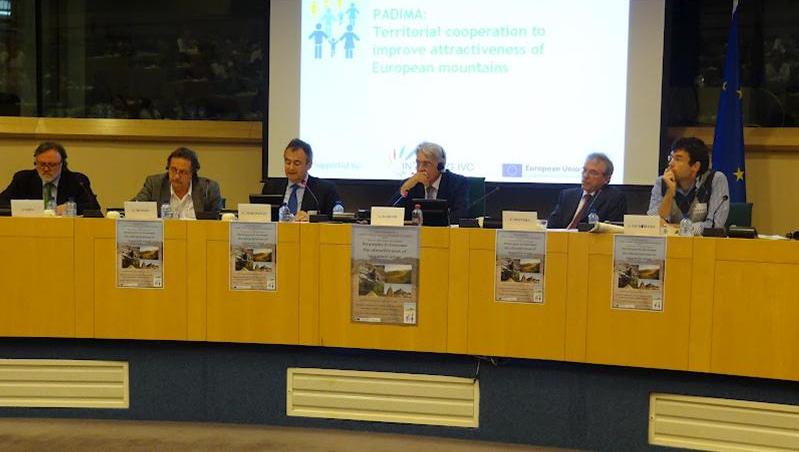
Photo : Torunn Kornstad
Les articles produits pour cette conférence sont disponibles ici :
- Le communiqué de presse annonçant la conférence (disponible en anglais)
- Article du “Diario de Teruel”, 27 juin 2012 (disponible en espagnol)
- Article du “Diario de Teruel”, 28 juin 2012 (disponible en espagnol)
- Article de “ La Comarca”, 29 juin 2012 (disponible en espagnol)
Pour consulter les enregistrements audios de la conférence, cliquez ici

Photo : le Parlement européen, Bruxelles
Padima is co-financed by the ERDF and by the INTERREG IVC programme