Mountains are “Europe’s ecological backbone”
Mountains: an asset for the benefit of all Europe
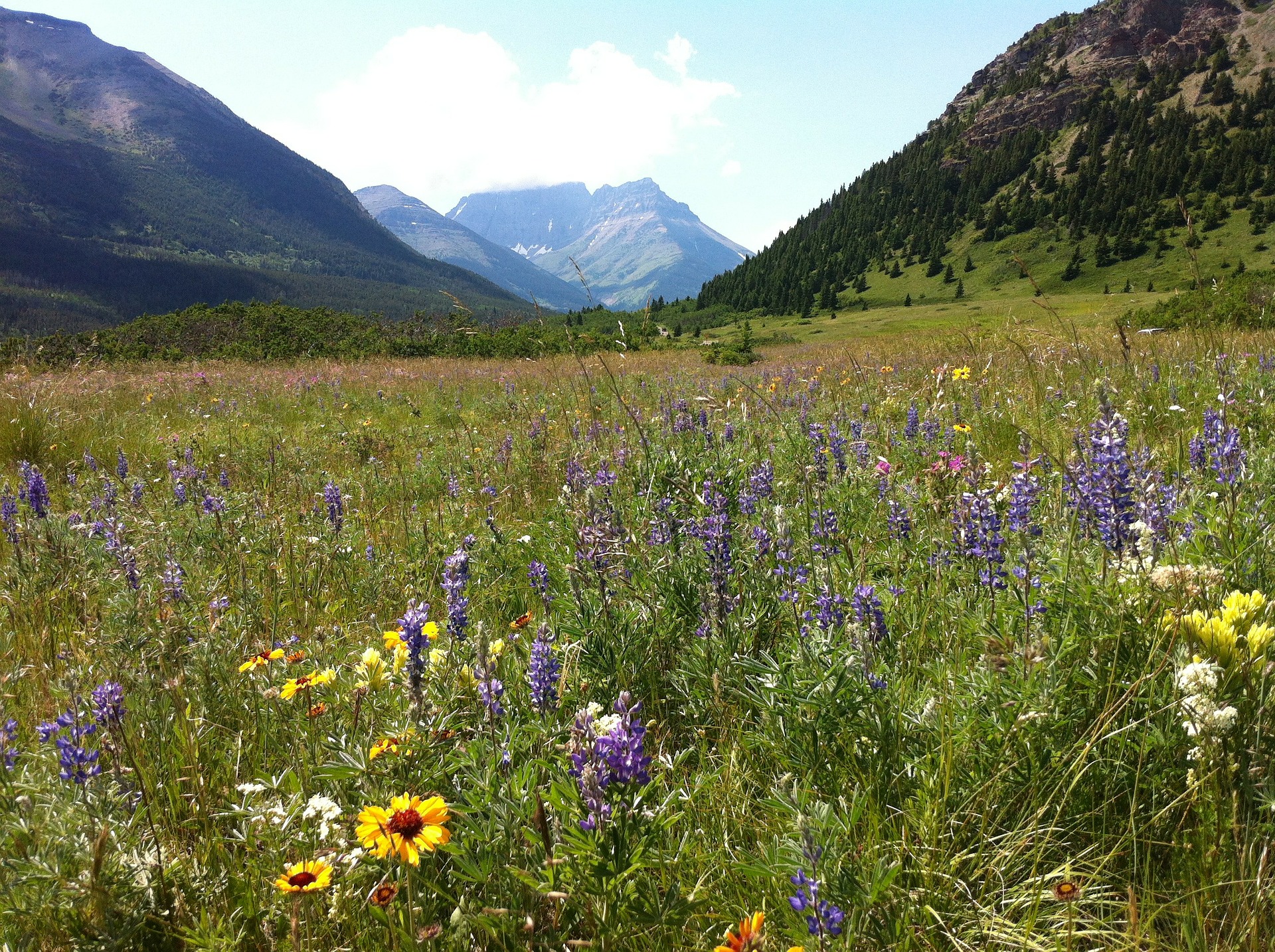 People who go on holidays in mountain areas will not contradict this statement: environment is a strong asset of those regions. The forests, the landscapes, the purity of air and water, the rich biodiversity of those areas do not only benefit mountains’ dwellers, but also Europe in its entirety. For instance, we talk about mountains as being “Europe’s water towers” because the precipitations on their summits flow downstream to provide water to the populations, for irrigation and industrial uses. The European Environment Agency is therefore right to talk about mountains as being ”Europe’s ecological backbone”.
A fragile asset
The characteristics of climate and relief of mountains explain why they have specific ecosystems. Those are often fragile and threatened in particular by human changes of activity (e.g. changes of land use) and by climate change. In fact, mountain areas are recognised by the European Commission as being amongst the most vulnerables areas sensitive to climate change: fast rising temperatures, massive melting of glaciers, changes of precipitation levels and of water courses, evolution of vegetation lines, etc.
Impacts of climate change on mountain areas
There are many impacts of climate change in mountain areas.
Agriculture – The intensification of the hydrological cycle, glacier and permafrost retreat, and the predicted increase in the scale and frequency of extreme events might lead to significant increases in soil erosion and floods, with considerable effects on mountain farming.
Water – The global increase in mean temperatures of 0.8 °C in the last 150 years (2 °C in some mountain regions) has caused glaciers to melt rapidly and new anomalous and unpredictable precipitation patterns pose a threat to the ability of lakes, reservoirs, glaciers, and seasonal ice and snow to accumulate and store water.
Biodiversity – Mountains are particularly susceptible to biodiversity loss as many mountain species can survive only in limited climatic niches. In some mountain areas, warming temperatures have started to push species from lower to higher elevations.
Tourism – Climate change will continue to decrease the availability of snow for winter sports; will increase the risks of natural disasters, affecting transport infrastructure and settlements as well as the security of tourists; and will result in changes to water regimes and the attractiveness of the landscapes on which many aspects of tourism depend.
Natural hazards – Climate change increases the frequency and the strength of natural hazards in mountain areas. Heavy rainfalls lead to floods and landslides, very dry periods lead to fires and the loss of crops and animals, and heavy snowfalls cause avalanches. Changes in local weather patterns alter biodiversity with potentially cascading effects on pest infestations and plant disease rates.
Mountain people and the European population in general must act in favour of the preservation of environment in mountain areas.
Our actions
Policy – Lobbying
Follow –up of activities at EU level. Euromontana closely follows and informs its members about the European policy regarding environment and climate change.
- Euromontana’s response to the public consultation on the EU Strategy on Adaptation to Climate Change, September 2020
- Bragança Declaration “Face the challenge of climate change: adaptation for future generations”, October 2017
- Euromontana signed the Mountain Partnership’s Declaration on Mountains and Climate Change for the COP 21, in 2015
- Article on the opportunities for the mountains under LIFE 2014-2017 program, July 2014
More information: see all the articles in the ‘Documents & Links’ section (for members only)
Events
- 3-5 October 2016 | X° European Mountain Convention, Bragança (Portugal) on the theme of climate change
- Read the press release
- Discover a selection of good practices related to climate adaptation and mitigation in mountain areas here
- 29 November 2016 | Workshop on Innovation and Circular Economy in Mountain Forest Supply Chains: How to Close the Loop?, Skrad (Croatia)
- 15-17 September 2010 | VIIth European Mountain Convention, Lillehammer (Norway) on the theme of innovation
- Read the Lillehammer Declaration
- Find out more about the good practices which were presented at Lillehammer
- 14-16 October 2009 | Conference Europe’s mountain bonus: how communities and land management produce positive externalities to European society and the related policies and opportunities, Arantzazu (Spain)
Studies
Innovation and Circular Economy in the Mountain Forest Supply Chain: How to Close the Loop?
The study, finalised in March 2017, presents the concept of the circular economy, its potential application in forestry, with a focus on the mountain forest supply chain, and the circular economy at the EU level. It also presents a series of 12 good practices in innovation and circular economy in mountain forestry to show how the concepts may be applied in practice.
Read the study “Innovation and Circular Economy in the Mountain Forest Supply Chain: How to close the loop?”
Other studies
See the studies realised in the framework of the call for project linked to the French law on the development and attractiveness of rural territories (LDTR projects)
Projects
OREKA MENDIAN (2016-2021)
Euromontana is a partner of the LIFE project “OREKA MENDIAN” coordinated by HAZI in the Basque Country, Spain.
The main objective of the LIFE OREKA MENDIAN project is to develop a common strategy for managing mountain pasturelands located in 15 Natura 2000 sites in the Basque Country and 8 Special Areas of Conservation in Iparralde, seeking a balance between conservation interests and those of the users. This project will lay the foundations to ensure that mountain pastures, which constitute threatened areas at the European level, are managed in a way that ensures the conservation of their habitats and species. In view of this situation, the LIFE OREKA MENDIAN project aims to develop a conservation strategy based on maintaining the traditional use of pastures and seeking a balance between the forage supply of these areas and the demand for utilization by the livestock farmers. For this, the owners, users, managers of natural spaces, experts and local agents will be involved in the integrated and sustainable management of mountain pastures.
PEGASUS (2015-2018)
Euromontana is a partner of the HORIZON 2020 project “PEGASUS” (Public Ecosystem Goods And Services from land management – Unlocking the Synergies) coordinated by IEEP in the UK.
EU’s agricultural and forestry land provides a wide range of public goods (PG) and ecosystem services (ESS) on which society depends, yet land use decisions and society often under-value these goods and services. PEGASUS will develop innovative, practical ways of making PG and ESS concepts accessible and operational: it will identify how, where and when cost-effective mechanisms and tools for policy, business and practice can most effectively be applied, in-creasing the sustainability of primary production in pursuit of the EU2020 vision of ‘smart, sustainable and inclusive growth’.