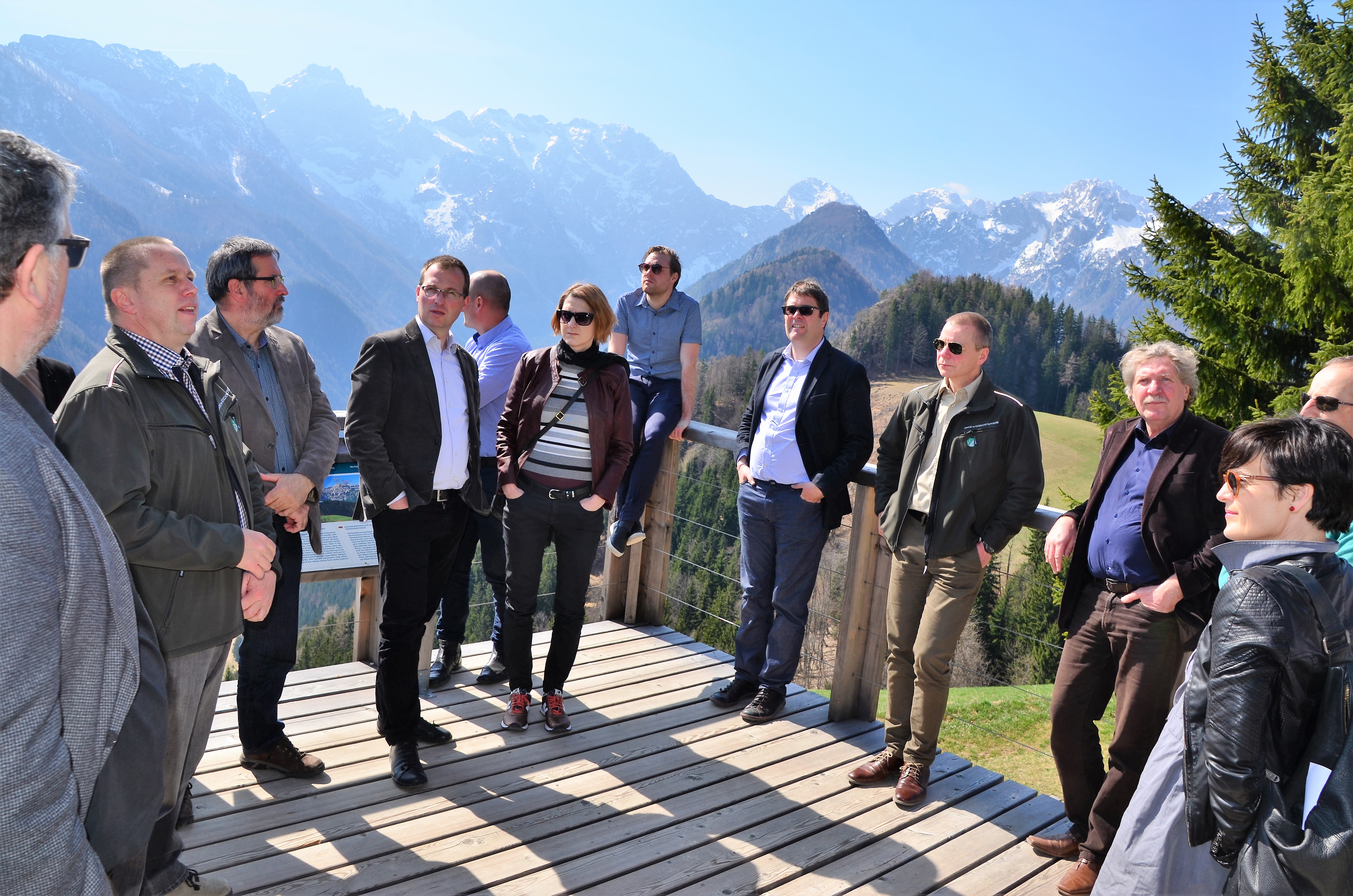
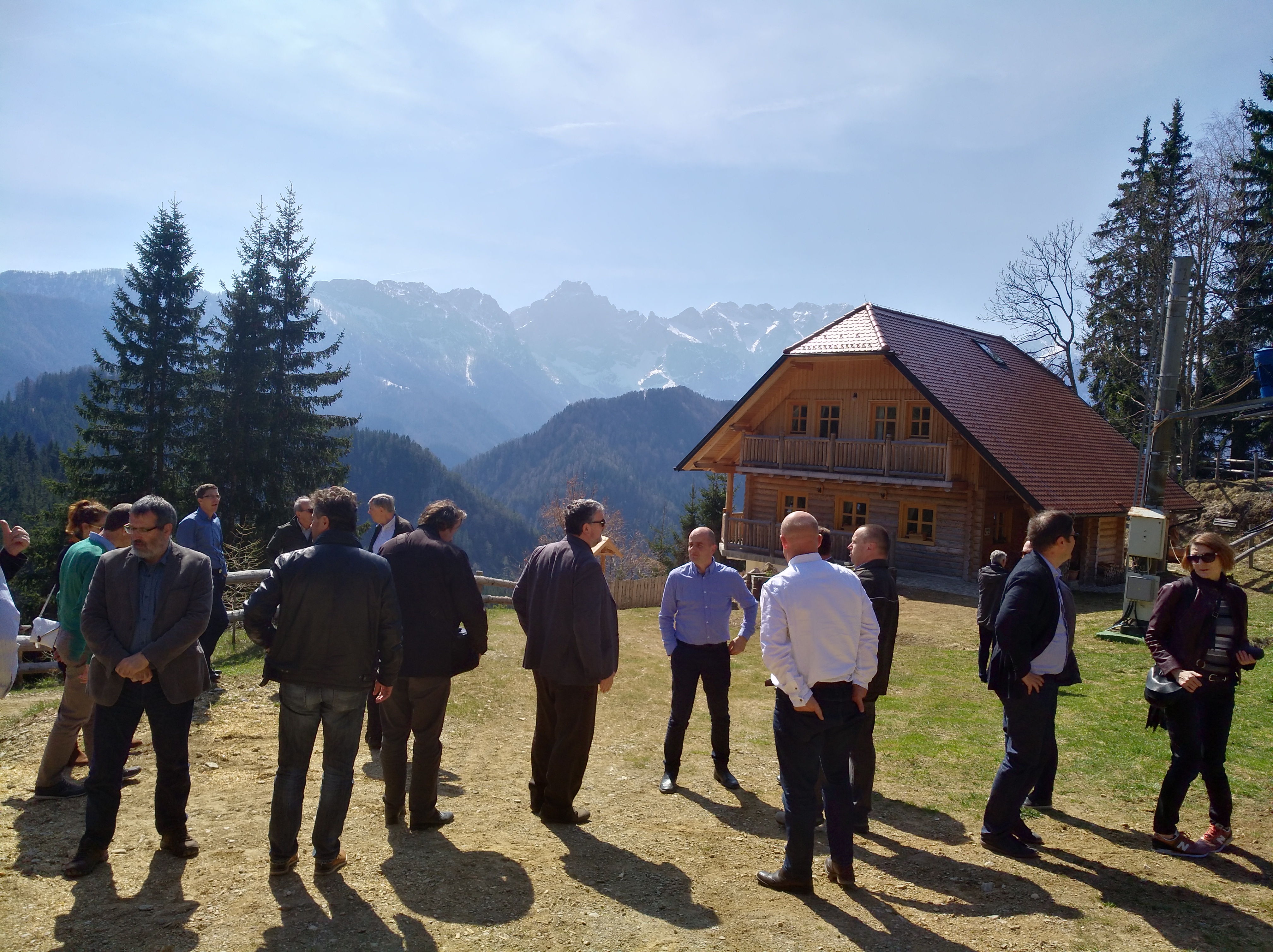
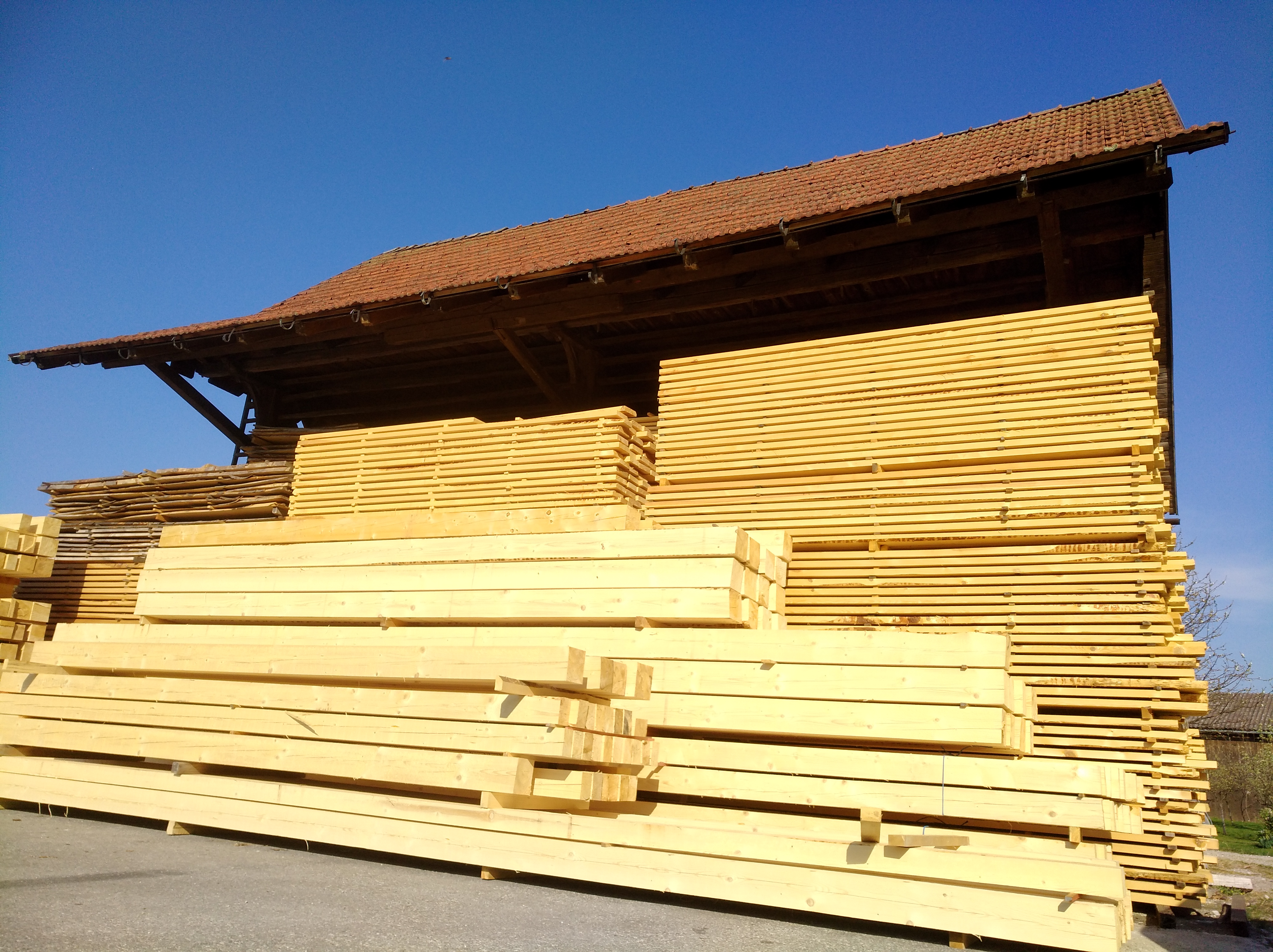
On March 31st 2017, representatives from different institutions met in Solčava, a remote village in the Upper Savinja valley in Slovenia, to publicly present their initiative to form a project consortium whose main aim will be to establish a wood value chain for Mountain wood as a developmental opportunity for Slovenian hilly and mountainous areas.
 The initiative was presented by speakers from a number of different institutions: researchers from the Biotechnical faculty (Emil Erjavec and Miha Humar) and Forestry institute (Jožica Gričar), representatives from the local community (mayor Katarina Prelesnik) and Forest service (Alojz Lipnik), entrepreneurs (Alojz Selišnik and Stanko Kopušar) and marketing (Jurij Pohar), certification (Nace Kregar) and design (Lenka Kavčič) specialists. All interested parties were also invited to sign a Letter of Intent describing the potential of this kind of wood in Slovenia and the need to cooperate in order to realise this potential. Signatories have committed themselves to participate in the project consortium, which will establish the value chain in the Upper Savinja valley as a pilot project in Slovenia.
The idea to establish a project consortium has grown out of a Horizon 2020 project called PEGASUS, whose main aim is to explore public goods and ecosystem services stemming from agriculture and forestry and find ways to increase their valorisation and sustainable provision. One of the case studies conducted by the Slovenian research team was in Solčava, and Mountain wood emerged as a currently undervalued ecosystem service provided in this locale. The material’s quality and durability is recognized by foresters and artisans, but not by the general public, i.e. by links further down the value chain. The consortium’s mission will be to rectify this to the benefit of all participants, from forest owner to final consumer, as well as society in a broader sense, since an important part of the consortium’s activities will be to promote sustainable consumption.