



Under the Action Plan for nature, people and the economy adopted in 2017, the European Commission had committed to develop and promote the implementation of EU Action Plans for two of the most threatened EU habitat types: dry chalky grasslands and European dry heaths, both protected under the EU Habitats Directive.
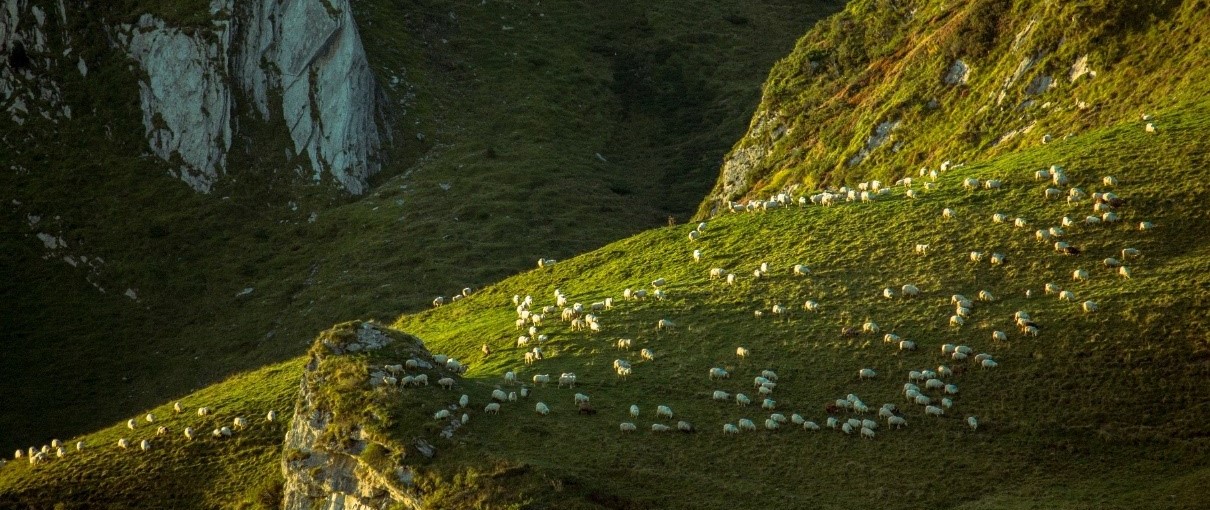
Dry chalky grasslands – i.e. calcium- rich soils covered mostly by grass and herbs – cover 17,000 km2 of the EU. They are one of the most biodiverse habitats in Europe and are extensively used for livestock grazing all over the EU, providing meat and dairy products, but also services such as pollination, soil erosion prevention, landscape management, recreational and tourism opportunities. In mountain areas for instance, pastoralism enables the development of areas with low agronomic value, often difficult of access or non-mechanizable, and thus the maintain of economic activity in these areas and the valorisation of the quality of agri-food products.
However, this habitat is degraded all over Europe and is expected to continue deteriorating, mostly due to poor management (disappearance of grazing activity or overgrazing), nitrogen pollution, invasive alien species, land use changes and habitat fragmentation. Currently, about 70% of grassland habitats within the alpine biogeographic areas have an unfavourable status of conservation (EEA, 2011).
The European Commission published a first action plan for dry grasslands in November 2019. The action plan delivers a set of long-term objectives declined into key actions to implement to ensure the maintenance and restoration of these grasslands to a favourable conservation status (extensive farming practices, prevention of land use changes, standard scientific monitoring methods, strategic planning, use of existing EU tools such as Natura 2000 and CAP measures, etc.). The action plan also issues the following recommendations:
- “There is a need to guarantee the continuity of appropriate management of dry calcareous grasslands habitat once time-limited funds such as LIFE projects are finished.”
- “Agricultural support schemes, including agri-environmental measures, could be better used for funding the management of this habitat.”
- “It is generally relatively easy to develop conservation projects and funding applications for this habitat type. Conservation needs are usually clear and the measures required are well known and easy to plan; the partial results after some years are usually visible and reportable. Nevertheless, financing of preparatory actions, as habitat surveys, mapping and assessment, as well as financing of continuous monitoring is more problematic. Surveying and monitoring measures can however be financed as part of short-term projects containing also active conservation.”
- “There is a need to more precisely track the expenditure of agri-environmental payments and its contribution to the conservation objectives of this habitat both within Natura 2000 and outside the network. Appropriate indicators should be proposed to facilitate such tracking both through the Common Agricultural Policy and through other funds.”
- “It is important that the required measures for improving the conservation status of this habitat type are included in Member States updated Prioritised Action Frameworks for Natura 2000 for the post-2020 financing period.”
The action plan is intended to help develop the necessary instruments on EU and national level and to establish, promote and implement actions in the context of the agricultural policy, projects financed by the LIFE programme, and in the context of other environmental policies. The framework developed by the European Commission intends for the action plan to be taken into account by the CAP post-2020 (through conditionality, permanent grasslands, eco-schemes, etc.). However, this new action plan is not of a binding nature and the responsibility of the implementation of these measures is clearly devolved to the Member States and managing authorities for the CAP strategic plans. Thus, we may only hope that Member States will actually pick up on these recommendations.
Referring specifically to mountain grasslands, the action plan highlights their significant vulnerability to climate change. To participate in finding solutions to this threat, Euromontana has been involved in the LIFE project OREKA MENDIAN . The project’s aim is to create a sustainable balance between the preservation and socio-economic uses of Basque mountain pasturelands. Going beyond the regional scope of the LIFE project, a report focusing on mountain grasslands – and the human activities managing these areas – within the European continent will soon be published.
10 December 2019


