




Do women (in mountains) go biking?
On 28th August, Euromontana co-organised a movie screening and a debate on green mobility and bike tourism in mountains. At the core of the discussion, how the Cohesion Policy funds and Next Generation EU can support alternative mobility in mountains.
Bike mobility: a growing and positive trend for territories
Bike tourism, and more widely, bike mobility has been skyrocketing in Europe especially since the COVID-19 pandemic. For instance, in Italy approximately 90% of touristic operators foresee a raise in their income due to a raised presence of bike travelers. In addition, a Legambiente’s study estimates that bike tourism benefits territories. In fact, bike visitor spends 75 euro on average on accommodation, restaurants, local food and wine, and it tends to visit more rural and remote areas to fully enjoy landscapes, local traditions, natural and cultural heritage.
An event on bike mobility in mountains, for tourists and inhabitants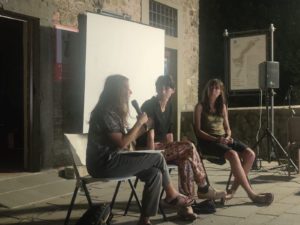
On 28th August, Euromontana co-organised an event with the association FosdiNuovo in the tiny mountain village of Fosdinovo, Italy. The scope of the event was to discuss about bike tourism and bike mobility in mountain areas seen as levers of economic development and enhanced mobility options in these territories.
To start, a provocative docu-film “Women don’t cycle” was screened in the main square of the village. The movie told the story of the Belgian citizen Manon who did about 13,000 from Belgium to Tokyo by bike. Passing though marvelous landscapes, including a 4500-high mountain peak in Central Asia, Manon interviewed women who use bikes in their daily life across Europe, Middle East and Central Asia, and reflected on biking through the gender lenses.
Then, it followed the story of another bike travel done by Carla Lostrangio, Euromontana, and Caterina Dada, FosdiNuovo, across from Belgium to Italy, passing across the Alps. The speakers linked their experience to discuss some highlights of the docu-film. Several topics were touched passing from bike tourism under a gender perspective, to the reasons behind green mobility in mountains, how to encourage bike mobility both for tourists and residents and its socio-economic benefits for mountain areas.
During the event, Carla Lostrangio highlights that bike mobility should not be enhanced only in lowlands. Mountain areas can gain a lot from bike tourism that revealed to be a growing market trends in these areas. Moreover, she underlined that biking could become a complementary option to public transport and car mobility, especially for those mountain areas closer to urban poles. This transition can make mountain citizens better connected to their job, schools, friends etc. and reduce their carbon footprint.
Focus on Cohesion Policy: sharing good practices and looking at available funds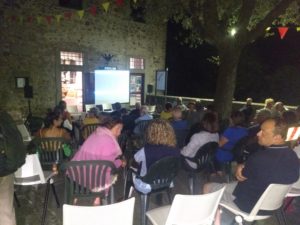
During the event, Carla Lostrangio presented some examples of how bike mobility can be enhanced in mountain areas, collected as part of the Montana174 project. For instance, she talked about the Interreg POCTEFA BICIMUGI project that connects rural and mountain territories in the French-Spanish Pyrenees along the Eurovelo 3. In particular, this project contributed to create secondary rings in the biking infrastructure to link Eurovelo 3 to surrounding villages.
Carla Lostrangio also insisted on the importance of using the funds of the Cohesion Policy and Next Generation EU to invest more on bike infrastructure and e-bikes for residents in mountain areas. In the 2021-2027 period, the Cohesion Policy specifically target greener behavior via the Policy Objective “Greener Europe”, as explained by Montana174 factsheets.


