




Young people across Europe want to stay in the mountains: between needs and opportunities
By Carla Lostrangio and Blandine Camus
At the beginning of 2022, Euromontana published its survey “Being Young in a mountain area” which offers an insight into the needs and aspirations of those young people who live or often live in the mountains. This article presents the results of the study and answers the question of how European policies, such as the Cohesion Policy and Next Generation EU, can respond to the needs emerging from this new generation of young people in the mountains.
A European survey
In 2022, Euromontana – the European Association of Mountain Areas turned 25 years old. Everyone who has passed through 25 years knows that it is an important age not only to reflect on successes, but also on the future. This gave rise to the reflection of asking how young people living in the mountains perceive their territory, the opportunities, the difficulties, and most of all, what kind of mountains they would like to see realised in their future. This reflection became the fuse of the survey that Euromontana conducted, with the collaboration of Educ’Alpes and UNITA, across 18 EU and non-EU countries. In total, 1134 young people from 18 European countries and aged between 18 and 29 sent in their contributions.
The study showed that the majority of young people living in the mountains wish to remain in the mountains (66%). Although there were differences in the responses from the various countries that participated, it did not prevail in any country that young people are willing to leave. What emerged was that one in three young people would like to leave for a period, for example to study or travel, and then return to the mountains, and only 5% answered categorically that they would like to leave. But what are the main reasons for young people wanting to leave the mountains? Scarcity of training and job opportunities, lack of dynamism of mountain areas, as well as the attractiveness of urban areas are the main reasons for leaving the mountains. This last point highlights two crucial aspects. On the one hand, the need to create new training opportunities and diversified jobs in mountain areas to attract these young people who would otherwise be forced to leave the region. On the other hand, the need to develop strategies and policies to encourage the return of young workers.
Teleworking and entrepreneurship to develop attractiveness
The acceleration in the digitisation process, also due to COVID-19, has created new job prospects in the mountains. About one in five young people are attracted by the possibility of teleworking in the mountains. However, these new forms of work require the development and enhancement of infrastructure to allow network access – amplifying internet signal coverage, increasing co-working spaces – as well as the strengthening of associated services – such as transport between rural and urban areas to allow young people to settle in mountain areas while maintaining access to the main cities. Furthermore, 18% of young people would like to launch their own businesses in various fields, from engineering to IT, communication and marketing, food chemistry and more. Mountain regions should therefore implement programmes to support rural entrepreneurship among young people, who represent the future for innovation, as well as strengthen job creation.
Voice of the young: mountains in 2040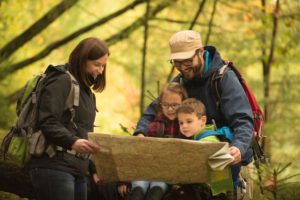
Part of our study focused on the “desire” of young people with respect to the mountain in 2040, i.e. what the ideal mountain would be for them. Young people aspire to a place where they can realise their potential and in particular where they can study, work and move around easily. Furthermore, young people are clamouring for a greater focus on sustainability: from preserving mountain environments to combating climate change. By 2040, the younger generation envisions mountain areas where habitats are better protected and where tourism is reoriented towards practices that are more respectful of the environment and its inhabitants. Finally, young Europeans would like to see mountains repopulated by 2040. The survey revealed the dream of a more dynamic mountain, inhabited by young people and families, and where repopulation brings with it the development of the territory without compromising a balance with nature.
An observation: young people change and so do their needs
This survey is not the first that Euromontana has carried out to study the needs of young people in the mountains. Back in 2012, ten years ago, an initial survey was launched on the European Mountain Convention in Chambéry, France. Ten years later, it emerges that the needs and expectations of young people in the mountains have changed considerably. New opportunities (such as digitalisation or teleworking) and new challenges (such as climate change) have played a key role in this process. The territories have also changed: some have sunk into structural demographic decline or significant ageing, while others have managed to reverse the trend through the implementation of territorial attractiveness strategies. The question that arises spontaneously is therefore: how to meet the needs of this new generation of young people?
New opportunities for new needs
Through the Cohesion Policy, the European Union funds a series of programmes and initiatives to support youth in Europe. In these programmes, ‘special attention’ is paid to mountain territories (Article 174 of the TFEU). For example, in the municipality of Tolmezzo (Friuli-Venezia Giulia), the Pole of the Mountain Economy in the Italian Alps has used these funds to create an observatory of professional needs and offers for the mountain economy and to promote school-to-work activities to help students find work in mountain areas.
In the period 2021-2027, the Cohesion Policy will continue to invest in young people in mountain areas. Specifically, one third of the total EU budget (€ 392 billion) will be channelled through the Cohesion Policy in addition to the € 776.5 billion of the Next Generation EU. These resources can respond to many of the demands made by young people in the survey conducted by Euromontana, such as creating new training courses, diversifying, and facilitating access to the world of work. Furthermore, Cohesion Policy funds can be invested to improve and enhance mobility, including sustainable mobility and multimodal services; strengthen innovation, with a focus also on social innovation and green start-ups; promote sustainable tourism and support the fight against and adaptation to climate change. Euromontana invites the actors of the territory not to waste time and to get ready to make the best use of Cohesion Policy funds in their territories to meet the needs of those who will make the future of the mountains: young people.


