



“Social Innovations In The Swiss Mountain Region” is a Swiss project (2018-2022) funded by the Swiss National Science Foundation and gathering in a consortium the Unit Economic Geography of the Institute of Geography at the University of Bern, the Tourism Research Unit at the Centre for Regional Development (CRED) of the University of Bern and the Swiss Federal Institute for Forest, Snow and Landscape Research (WSL).
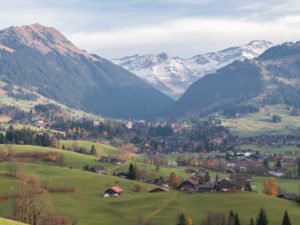 This research project focuses on mountain areas in Bernese Oberland, the highest territory of Bern County, and aims at exploring the potential of social innovations for the future economic development of the area. It examines this connection with a special focus on the tourism, construction and health care sectors.
Project partners recently published a database of social innovations in the Bernese Oberland, which were identified during the course of the project. Collected examples of social innovation were developed in the area from 1968 to 2019.
Examples of social innovation for tourism, basic services and construction
“Social Innovations In The Swiss Mountain Region” for instance investigates how sharing employees in the tourism sector, developing new forms of basic services and creating new public-private cooperation in the renovation of secondary homes can be beneficial for the region.
Kuhleasing.ch was created 35 years ago to lease cows for the summer. From 250 euros, customers can lease a cow, get trained to Alpine pastoralism practices, work in autonomy in the Alps and receive between 2 and 30kg of cheese in return. The goal is to give people an understanding of life in the mountains and strengthening the links between urban and rural populations. It also shows the importance of mountain farming and encourages its preservation.
Geburtshaus Maternité Alpine is a cooperative created in 2015 by 49 people to provide accessible basic obstetric care in response to the closure the same year of the obstetrics department at the Zweisimmen hospital. In 2017, the cooperative opened the “Maternité Alpine” birthplace in Zweisimmen and the cooperative now has over 340 members.
The Swiss Tourism Quality Label has been successfully used over 20 years. The Research Institute for Leisure and Tourism and the Frey Academy developed in cooperation the training and certification system, which aims to improve the quality in tourism enterprises. The quality program distinguishes businesses that want to continuously improve their offer and are prepared to give their best for guests.
These examples show the diversity of development opportunities thanks to social innovation, including in rural mountainous areas. For more examples in Europe and in the Mediterranean Basin you can also check SIMRA’s (Social Innovation in Marginalised Rural Areas) database of social innovation examples.
5 June 2020


