
• fr
  • en

How a dairy cooperative in Slovenia became one of the leading producers of high quality fresh milk and cheese

A dairy plant in Slovenia created a local mountain supply chain with high added value that resulted in having a positive impact on the local economy and promote the long tradition of the area in dairy production. By modernizing and improving its production technology, the dairy effectively transformed the plant from a milk powder producer to one of the leading producers of high quality fresh milk and cheese in Slovenia.

Context and creation of the dairy

Planika Dairy was established in 1995 by the Agricultural cooperative Tolmin. Its purpose was to secure the purchase of milk from farmers in Posoฤje area in western Slovenia, and to start new production. The new management faced many challenges at that time: outdated technology, premises with lack of appropriate maintenance, and above all, high level of competition on a relatively small Slovenian market. Therefore, a new product strategy had to be developed to secure the jobs of more than 50 workers and many farmers that were dependent from the dairy.
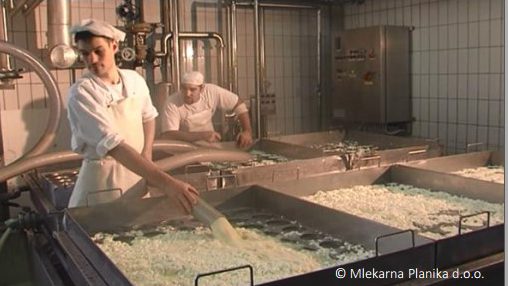
Modernization and improvementsย 

In order to secure its market competitiveness and strengthen its market position, Planika dairy decided to renovate the company premises, modernise its production technology, improve its work processes and increase awareness of visitors to the area, the local population, existing and potential customers about the farming and milk processing traditions, rural heritage and sustainable approaches on which the company builds its business today and what makes its products unique in the market.

Planika dairy applied successfully for EAFRD (Measure 123) and regional financial support. The modernisation was carried out in a step by step approach. The main measures taken were:

  • Technological and technical modernization

Planika invested to modernize as well as to improve hygiene, environment protection and safety at work. Different changes were made including adding new cooling systems, new bottling line for fresh milk, purchase of milk tanks with built in cooling systems, replacement of steam pipelines with higher capacities.
Moreover, modernisations were made in the boiler room and on the wastewater treatment plant, the roof on the building was replaced, and a roof was built over the milk tanks.

  • The creation of a museum presenting the tradition of mountain pasture

In 2010, an old building that used to serve as a truck garage was turned into a museum.

In cooperation with the Tolmin musem an ethnological collection titled โ€˜From the mountain to Planikaโ€™ (dairy) was showcased. It presents the tradition of mountain pasture farming and cheese production with numerous milk processing tools and a collection of old photos. Guided museum tours include tasting of the products and practical demonstration of traditional milk processing procedures. The museum includes a small shop where cheese and other milk products can be bought. It also provides shelves for local producers of home-made products and crafts.

The benefits of the modernization of the dairy

  • The dairy is now applying high standards of production with increased efficiency and energy savings thanks to better planning of the production processes.
  • The instalment of the cooling systems increased the efficiency and energy savings.
  • The modernisation of the wastewater treatment facilities also positively affected the environment.
  • The technological and technical modernisation secured higher quality of production.
  • Wastewater treatment facilities have also a positive impact on the environment.
  • The dairy is now one of key producers of the cheese Tolminc with protected designation of origin at EU level since 2012.
  • Thanks to the investments the dairy strengthened its operation. Around 100 farmers annually supply approximately 8 million liters of high quality milk and over the years some them significantly increased the quantity of milk they produce.
  • The museum of the dairy attracts 8 000 to 10 000 visitors per year and has become a popular attraction promoting rural heritage. It contributes to building up the positive image of the Planika brands and attracting new, informed and loyal consumers. In addition, it has created one full time job and in total three persons qualified as tourist guides combine work in the museum and the local dairy market store next to the production site.
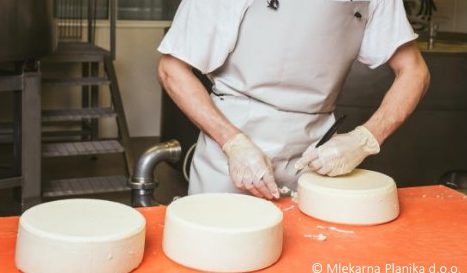
Since 2012 the dairy plant became one of key producers of the cheese Tolminc with protected designation of origin.ย The cheese is made exclusively from milk produced in the Upper Soฤa valley. ย The uniqueness of the dairy is that fresh milk is only pasteurized and not homogenized to keep its natural taste and structure to the highest possible level. No additives are added to the milk.

The Planika dairy cooperative in a good example of how improving the competitiveness of the agricultural sector.

For more information, please visit the brochure of EAFRD funded-project


Share
18 May 2017

Euromontana sur Facebook

6 days ago

Euromontana
โ„๏ธ Winter may seem to have arrived, but climate change is shortening the season and making snowfall less reliable...leaving mountain resorts with a stark choice: close or adapt?โ›ฐ๏ธ Head to Austria to discover how the Sankt Corona ski resort has responded to this challenge and turned a climate risk into a regional asset, as part of the Interreg Alpine Space - TranStat project: www.euromontana.org/sankt-coronas-response-to-climate-change-diversifying-tourism-for-a-resilient...๐Ÿ‘‰ Explore our good practices database: www.euromontana.org/good-practices-database/ Photo credits ยฉ Wexl Arena St. Corona am Wechsel ... See MoreSee Less
View on Facebook

4 weeks ago

Euromontana
๐ŸŽ„๐—˜๐˜‚๐—ฟ๐—ผ๐—บ๐—ผ๐—ป๐˜๐—ฎ๐—ป๐—ฎ ๐˜„๐—ถ๐˜€๐—ต๐—ฒ๐˜€ ๐˜†๐—ผ๐˜‚ ๐—บ๐—ผ๐˜‚๐—ป๐˜๐—ฎ๐—ถ๐—ป๐’” ๐—ผ๐—ณ ๐—ต๐—ฎ๐—ฝ๐—ฝ๐—ถ๐—ป๐—ฒ๐˜€๐˜€ ๐—ณ๐—ผ๐—ฟ ๐Ÿฎ๐Ÿฌ๐Ÿฎ๐Ÿฒ๐ŸŽ… After a year full of events, encounters, political challenges and new collaborations, it is time for the secretariat to take a short break. We will meet again soon in 2026 to continue our actions and make the voice of mountain areas heard by the EU! ๐Ÿ”๏ธ But in the meantime, let's take a step back and look at the year 2025 before it comes to an end!This year, together we: ๐Ÿ“ƒ celebrated the 30th anniversary of the Krakow Declaration, which paved the way for the creation of our network, and renewed our commitment to mountain areas ๐Ÿ”— www.euromontana.org/thirty-years-on-calling-for-a-stronger-european-commitments-to-its-mountains/ ๐Ÿค launched an Alliance for European Mountains, between elected representatives of the European Committee of the Regions and the European Parliament ๐Ÿ”—https://www.euromontana.org/press-release-alliance-for-european-mountains-launched-mountains-need-europe-and-europe-needs-mountains/ ๐Ÿ‘ฉโ€๐Ÿซ collaborated on more than seven European research projects with our members and other partners all over Europe๐ŸงŠ highlighted water-related challenges during this International Year of Glacier Preservation (hashtag#IYGP2025)๐Ÿ”— www.euromontana.org/european-manifesto-for-a-governance-of-glaciers-and-connected-resources/๐Ÿ‘‹ welcomed new members, including from Montenegro and Italy๐ŸŒฑ visited initiatives across Europe promoting resilience in our mountain territories, through research projects or by hosting our board of directors in Trento (Cooperazione Trentina) and Krakow (Maล‚opolska)โ€ข and much more!Thank you to all our partners, members and friends of Euromontana for this wonderful year! ... See MoreSee Less
View on Facebook

4 weeks ago

Euromontana
โฎ๏ธ Last week, on 11 December, we celebrated International Mountain Day, established in 2002 by the United Nations to remind us of the role mountains play in many aspects of sustainable living ๐ŸŒฑ On this occasion, we were featured in an article by the Food and Agriculture Organization of the United Nations (FAO) Liaison Office with the European Union alongside other EU regions, sharing our vision of what mountains mean to their people, cultures, and economies ๐Ÿ”๏ธ ๐Ÿ—ฃ๏ธ Our "voices form a vivid mosaicโ€”a portrait of landscapes that shape identity, heritage, and sustainable futures."Have a look ๐Ÿ‘‰https://www.fao.org/brussels/news/news-detail/international-mountain-day--voices-from-the-peaks/en ... See MoreSee Less
View on Facebook

4 weeks ago

Euromontana
๐Ÿ‘ฉโ€๐ŸŒพ We are currently attending the EU Agri-Food Days, organised by the European Commission and DG AGRI, which are taking place in Brussels over the course of three days!We heard from the president of the European Commission Ursula von der Leyen and the European Commissioner for Food and Agriculture, Christophe Hansen, and attended numerous high-level political sessions with stakeholders in the sector ๐Ÿ—ฃ๏ธ The agenda included discussions on achieving a robust and contemporary CAP to ensure food security across the EU, establishing fair remuneration schemes within the food chain, and fostering a resilient agri-food sector ๐Ÿ‘ฉโ€๐ŸŒพ ๐ŸŒฑ Euromontana will continue to play an active role in promoting a future CAP that benefits those most in need and supports the territorial development of rural areas in the face of climate change and generational renewal challenges ๐Ÿ”๏ธ ๐Ÿ‘‰ Read our policy position on generational renewal within the CAP and our other contributions to the next European budget: www.euromontana.org/meeting-the-challenges-of-generational-renewal-shaping-the-future-of-mountain... EU Food & Farming ... See MoreSee Less
View on Facebook

1 month ago

Euromontana
๐ŸงŠ Glaciers matter for water, food and livelihoods in mountains and beyond. This is what we are highlighting this year on 11 December, International Mountain Day.Every year, this day provides an opportunity to emphasise the crucial importance of these areas in terms of natural resources, biodiversity, identity, cultural heritage, ways of life, and more resilient models. However, all of this is under threat from climate change, poorly targeted funding and negative perceptions of pastoral professions.Today, we are putting the spotlight on these endangered ice giants throughout our mountain ranges!Did you know that: ๐Ÿ’งThe Alps alone provide 40% of Europe's fresh water?๐Ÿ’กGlacier retreat will reduce hydroelectric energy production by an average of 10% in the Alps and by up to 35% by 2070 compared to today?๐ŸŒฑ68% of irrigated agricultural land in the plains depends directly on water runoff from the mountains? โ›ฐ๏ธBy 2034 the Pyrenees will be ice-free?๐Ÿ“ขAn appropriate governance of glacier is needed to counteract the rapid changes!๐ŸงŠ By signing the manifesto for better European governance of glaciers alongside 80 other organisations, we are calling for immediate and targeted political responses to the economic, social and environmental impacts of climate change.Have a look ๐Ÿ‘‰ www.euromontana.org/european-manifesto-for-a-governance-of-glaciers-and-connected-resources/ #IMD2025 #InternationalMountainDay #MountainsMatterMountain Partnership ... See MoreSee Less
View on Facebook

Euromontana sur Twitter