




Education and training – methods to tackle depopulation in mountain areas
Seminar held in Torino, Italy on 24-25 November 2010
42 good practices were identified in partner regions and gathered in a collection. To see the document, click here
The list of participants is available here
The seminar report is available here
Content of the seminar
Within the PADIMA project, 8 partners from 5 European countries are engaged in a survey on the current situation regarding policies and trends of depopulation in mountain areas. With the survey, they also identify the challenges, needs and prospects they face, and highlight their contributions to successful development of their mountain areas.
The main aim of the seminar was to improve the regional policies against depopulation through the transfer of successful initiatives in the field of education and training in mountain areas.
The seminar was attended by approximately 100 participants. The discussions contributed to a better understanding of mountain areas’ needs and opportunities in term of education and training. The debates were illustrated with example of successful initiatives already implemented in the partners’ regions, which contributed to a successful development of the area, to the attraction and integration of new inhabitants.
The input from participants was expected to bring up new ideas and recommendations. Room for debates was made, especially during the in-depth parallel workshop sessions on following topics in relation with the improvement of education and training treatment in regional policies: health and care sector, integration of migrants, environment care, biodiversity, agricultural sector and life-long learning.
Programme: English, French, Spanish, Italian
Agenda and presentations from the conference
24th of November
Introductive session
Chair: Elena di Bella, Responsible in chief for mountain policies in Torino Province
9.00 Welcoming speech from the Assessore of the Torino’s Province, Marco Balagna, responsible for mountain and agriculture issues
9.20 Introduction to PADIMA– Alexia Rouby, Euromontana Director
9.30 Why a seminar on education and training? Elena di Bella, Torino Province
Main findings about Education and Training in Mountain Area
Chair: Elena di Bella, Responsible in chief for mountain policies in Torino Province
9.35 Presentation of the results of partners’ exchanges on Education and Training:
- What are the field needs in terms of education and training? Results from the surveys with pupils, municipalities and businesses Marthe Elin Hoddevik/Aage Sund, Advisers, Buskerud County Council
- How can mountain municipalities meet the challenges regarding education and training? Kay H. Bjerke, Project manager, Buskerud County Council
- Are there any differences on how responses to challenges are developed in different parts of Europe? Results from the interviews with key actors working on field, Aage Sund , Adviser, Buskerud County Council
Mountain Education and Training: a potential to exploit further
- How does the future look like for mountain areas? Results of an analysis regarding Strengths, Weaknesses, Opportunities and Threats in the mountain regions by Kay H. Bjerke, Project manager, Buskerud County Council
- First policy recommendations to foster education and training in mountain areas by Federica Corrado, Researcher, Dislivelli Association, Italy,
EXCHANGE OF GOOD PRACTICES
Chair: André Marcon, Euromontana and UCCIMAC President
11.15 Presentation of some Education and Training good practices from PADIMA partners:
1. Education on health and social care in Dalarna (Sweden)
2. Education for adults and immigrants through ICT in small villages in Teruel(Spain)
3. Training course for eco-guides in Lombardia (Italy)
4. Trysil Akademiet: courses for local business (winter-tourism) in Hedmark (Norway)
5. Education and training in environmental issues at Pracatinat in Torino region (Italy)
6. Training to enhance recruiting to wood industry in Buskerud (Norway)
7. Vocational training for adult employees and managers in Massif Central (France)
12.55 Presentation of the afternoon work in workshops (organisation, structure, focus), Elena di Bella, Torino Province
Discussions on the relevance and transferability of Good Practices
Afternoon: 2 Workshop sessions
17.30 Closing remarks – Elena di Bella
25th of November
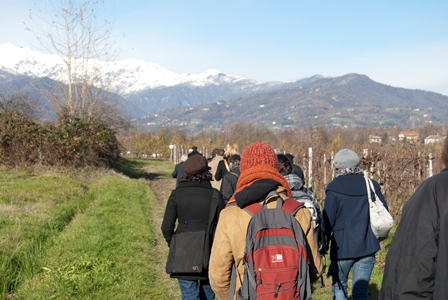
Study trips
8.30 Departure from Provincia of Torino – Piazza Castello (in front of Teatro Regio) to Val Pellice and Val Chisone
10.00 Visit of Malva School, Val Pellice, a training and experimental centre for organic agriculture and biodiversity conservation
Presentation of Osasco Institute (as example of place for “education” in mountain area)
14.30 Visit of Fenestrelle fortification (symbol of Torino Province)
15.30 Pra Catinat School, Val Chisone – training in environmental issues and high quality of life in mountain areas for teachers
17.00 Presentation of Sopriminiera Eco-museum –innovative use of one mine site
19.00 Arrival in Turin


