



Baba Residence (baba – grandmother in Bulgarian) is an initiative bringing together urban youth and elderly people in low-density and remote villages in Bulgaria. Participants spend one month living and learning in a mountain village, with the purpose to create a meeting point between the entrepreneurial spirit of young people and traditional culture of elderly people from the Rhodopes mountains in Bulgaria.
 What is Baba Residence and how does it work?
Every year, since 2015, a group of 20 young people (up to 35-years-old) has the opportunity to participate in the Baba Residence project. The group is composed of students or recently graduated (within the past two years) and still unemployed young people, that have previously applied to participate into the Baba Residence initiative.
Selected candidates go through two specific training programmes: Design Thinking and on-site ethnological research. Firstly, they undergo a training with Ideas Factory (a Bulgarian networking platform for entrepreneurs) during several months. Secondly, they spend 4 to 6 weeks in the households of elderly in remote and sparsely populated Bulgarian villages. Participants receive some private financial support, from Ideas Factory, for travel and living expenses.
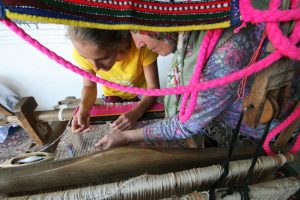
During their participation, the residents live the daily life of their hosting community. Their goal is to develop an innovative idea for a product, service or event that will attract greater interest in the village. Together with developing their concept and skills in local crafts, the young people are supported by the household in which they live.
 Why joining Baba Residence?
The objective of Baba Residence is to connect the potential of unemployed young people with the knowledge of the elderly from almost deserted villages, in an innovative social business model.
People involved in this initiative have to be motivated to work for a positive social and economic change in society.
The mission of the initiative is to preserve invaluable traditions, crafts and stories from the villages and to use them as vibrant source for innovative solutions that can meet the need of the Bulgarian villages. Those solutions could be in the form of products, services, events or initiatives that draw cultural and economic potential to these beautiful rural nooks of Bulgaria.
The project aims at proving that it is possible for people to perceive the Bulgarian village as a hub for social innovations.
 How does this initiative succeed in revitalising depopulated areas?
The interaction of the participants allows an improved quality of human relations between generations, documentation and creative utilisation of local folklore, and social entrepreneurial projects that help the villages to flourish.
Each participant in Baba Residence has an opportunity to realise their specific objective, together with the people from the village where they live. This concept is thought to have long-term benefits for rural areas and the potential to attract interest in the respective village and/or to contribute to their economic and social development.
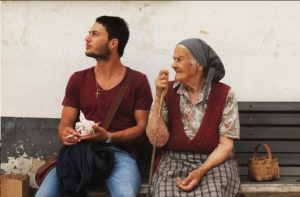
Residences enable participants to start learning some of the crafts practiced in the village. Interaction with old people gives invaluable knowledge of Bulgarian history and traditions, which may soon be lost irrevocably. Participants also receive a different experience, as a “slower” village lifestyle that is impossible in large cities. Contact with traditions and nature enriches young people and encourages them to think about new ways to gain social empathy. At the same time, elderly or lonely people receive attention and feel useful and needed. They also receive real help with their everyday work in the house from their young friends.
Since the first edition of baba residence in 2015, the residents undertook tens initiatives in and for the villages together with the local people. Some of them include:
- A professional studio recording of a CD with folklore songs from the Rhodope mountains that are about to be extinct;
- The creation of a social enterprise for export of woven products created by the grandmothers of the villages;
- Many cleaned and newly marked mountain eco-trails;
- The renovation of an old village bakery, where the residents baked around 600 little breads for the local people to celebrate this renovation together.
For more information, please visit Idea’s Factory website and SIMRA’s database
This initiative was presented as an example of social innovation for the H2020 project SIMRA -Social Innovation in Marginalised Rural Areas.
23 February 2018


