
• fr
  • en

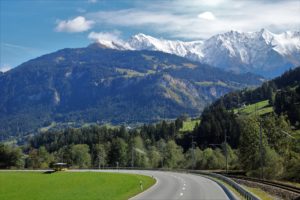
EU Strategy for a Sustainable and Smart Mobility: bringing mountain territories into the transition

In the framework of the EU Green Deal, the European Commission announced the adoption of a new Strategy for Sustainable and Smart Mobility to help reducing transport-related greenhouse gas emissions by 90% by 2050.

Euromontana welcomes such a Strategy, which objectives include better access to transport and better connectivity. In mountain areas, the lack of adequate collective transport solutions imposes social and territorial exclusion of some segments of rural inhabitants and limits the contribution of these territories to the greenhouse gas reduction objectives.

To make this new Strategy efficient, it is therefore crucial to leave no region behind. The European Commission must in particular consider the natural and geographical specificities of mountain areas to address the issue of car dependency in our territories, both for permanent residents and tourists and especially for cross-border commuters. To support the Commission in designing an inclusive Strategy, Euromontana contributed to its public consultation and shared recommendations, such as:

  • Improving rural mobility through the adoption a Rural Mobility Package, which would detail measures for the development of sustainable transport in rural areas and addressing the specific challenges in remote, mountainous and sparsely populated territories.
  • Encouraging rail transport, both for passengers and freight, as well as combined transportation and supporting the maintenance of small lines. The European Year of Rail in 2021 should be used as an opportunity to debate these issues in regions.
  • Promoting innovation in the transport sector by paying attention to multimodality, supporting social innovation in areas where public transport is not viable and experimenting innovative solutions through the Smart Villages concept.

For more details on our recommendations, see “The EU Strategy for a Sustainable and Smart Mobility: bringing mountain territories into the transition

Share
18 September 2020

Euromontana sur Facebook

1 week ago

Euromontana
Today, Euromontana had the pleasure to take part in the journalist training course “Transizione ecologica nelle aree montane: biodiversità, cambiamento climatico e sviluppo sostenibile”, organised by Università della Montagna with the Ordine dei Giornalisti della Lombardia (the Lombardy Association of Journalists 📰)The course, bringing together 65+ participants, focused on how to better understand and report on ecological transition in mountain areas, from biodiversity and climate change to sustainable development ⛰️👉This matters because the way mountain areas are reported shapes the way they are understood and, ultimately, the way they are governed!We were pleased to join our member UNIMONT in this exchange. Prof. Anna Giorgi highlighted the need to change the way mountain areas are perceived, beyond fragility and marginality. Stefano Sala then showed how issues such as depopulation, winter tourism, climate change and public policy require a more nuanced reading of mountain realities 🔍 For Euromontana, Guillaume Corradino brought a European perspective to the discussion. He stressed that :1️⃣ mountains are not Europe’s margins, but diverse and complex living territories, and 2️⃣ stronger place-based policies and European cooperation are needed to move from recognition to implementation.Thanks again for the organization, the opportunity, and to all the participants 👏 ... See MoreSee Less
View on Facebook

3 weeks ago

Euromontana
⌛ Only a few days left to benefit from the early bird prices for the 2026 XIV #europeanmountainconvention (Sallanches, 30 June - 2 July) ! We’re already eagerly awaiting your visit to discuss the future of extensive livestock farming in mountain areas! 🌄Through plenary sessions, high-level panels, interactive workshops and field visits, the Convention aims to address the following topics:· Demographic renewal in agriculture, including pastoral schools· Shared land use and access to grazing land· The contribution of extensive livestock farming to risk prevention and adaptation to climate change· The role for digital innovation in a changing world· The living and working conditions· and more 👀 Registration, programme, and practical information 👇www.mountainconvention.eu #IYRP2026 #internationalyearofrangelandsandpastoralists Afficher la traduction ... See MoreSee Less
View on Facebook

Euromontana sur Twitter