



On June 25, 2019, Euromontana attended a conference in Brussels on “Social Agriculture and Care Farm: Work opportunity, Social Partnership and Inclusion” organised by the Care-T-Farms project. Care-T-Farms is an Erasmus + programme, willing to encourage the use of farms as places promoting positive mental and physical health and wellbeing.
What is social farming?
Social farming, also known as care faming, is based on the principal of using farms as providers of social and health support services. While social farming is suitable for all ages, it mainly targets disabled and elderly persons as well as people suffering from diseases. Use of farming activities is associated with a range of benefits, including increased self-esteem and feeling of inclusion, as well as improved health and wellbeing.
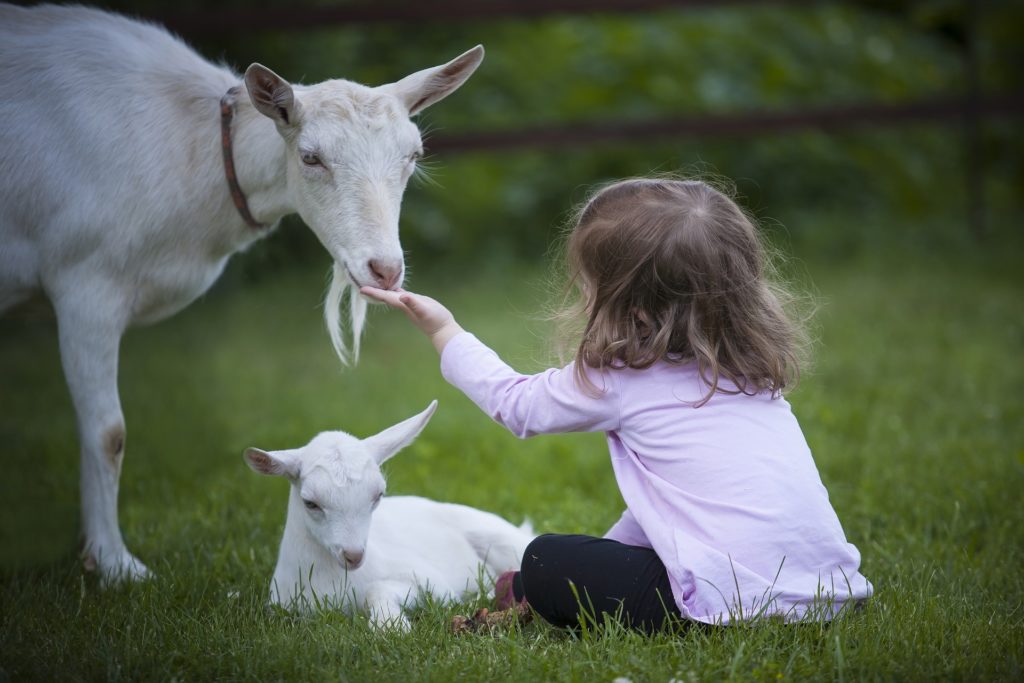
Social farms, rather than being specialized agricultural holdings, are mostly multifunctional farms. Thus, they often propose activities linked to horticulture, animal breeding – which is usually very attractive for beneficiaries – and traditional food processing. Small and multifunctional farms are the places targeted for social farming implementation since the farmers already have experience in welcoming people, for instance through agri-tourism. Moreover, in contrast to the specialised farms, the diversified farms can offer a diverse range of activities during the year, depending on seasons, .
Dr Gabrielle Rocca, President of the World Association for Psychological Rehabilitation (WAPR) presented how psychiatrist and rehabilitation centres evolved during the 20th century from using patients to carry out work as a way to reduce costs, to proposing them activities or work for their social and mental rehabilitation. However, as care is now getting more and more institutionalised, social farming offers a real opportunity to provide care outside health institutions, psychiatric centres and retirement houses.
How to become a social farm?
Social farming fits in the idea that some activities can improve social inclusion and self-confidence. During the course of the project, partners of Care-T-Farms realised a study among potential beneficiaries. Results show that the most important value of social farms, beyond the activities carried out and the natural environment, comes from the commitment and respect of farmers. Thus, partners created 3 training modules, aiming at giving farmers the basic skills to provide social and health care on the farm, with a global comprehension of beneficiaries’ needs. Each training module targets a specific audience and provides a different level of knowledge depending on farmers’ background:
- The “Care Farm Manager” module is directed towards farmers who have experience in hosting people on their farms, as part of school visits, agri-tourism or food tasting activities for instance. It gives a detailed understanding of planning care farm activities with a strong focus on suitability and accessibility for all participants.
- The “Care Farm Tutor” module will be aimed at farmers, farm workers and secondary school students without experience in hosting. It aims to give a basic understanding of the day-to-day activities associated with tutoring people on farm activities in a social farm.
- The “Care Farm Social/Health Educator” module is designed for social workers, psychologists and psychiatrists who have experience in therapeutic help and assistance. This module will provide specialist knowledge on planning social or care farm courses as an extra-clinical treatment or intervention.
How to further promote social farming?
All three modules are in line with different levels of the European Qualifications Framework (EQF). Although it was the initial idea, the courses cannot provide for now education credits through the Framework. However, the Confederazione italiana agricoltori (CIA) – member of Euromontana and partner of the Care-t-Farms project – is exploring the possibility to have in the future a Master course on social farming in an Italian university. The CIA also organised workshops on the topic in Italy, to promote the concept among farmers. Moreover, a decree on “Provisions on social farming” from August 18, 2015, was adopted to provide guidelines for care farms. It aims to promote “social agriculture, as an aspect of the multi-functionality of agricultural enterprises, aiming at developing interventions and social, health and educational services and socio-work placement, in order to facilitate adequate access to essential services to families and local communities throughout the national territory and in particular in rural and disadvantaged areas”. Social farming is defined in this decree as any agricultural practice aiming at providing therapy support, work placement for disabled persons, social services and food and environmental education. The decree states that municipalities, schools and hospitals should promote products provided by social farms through public tenders and that regions should take such products into account when shaping their rural development plans.
Other partners of the Care-t-Farms project are exploring ways to encourage the development of social farms by contacting agriculture universities, social and health services as well as agriculture decision-makers. Project partners also expressed their wish to further develop social farming through the Smart Villages concept, enhancing the various functions of farmers in rural areas while at the same time proposing innovative social and health care outside urban areas.
Social farming is one of activities to develop in a multifunctional farm. Care farms are an innovative way to provide social and health care on the farm and can be a real opportunity for mountain areas. The specificity of mountain agriculture, traditions and products is an important asset for social farming. Moreover, it is a way for mountain farmers to provide multifunctional services which go beyond the tourism sector. Care farming also offers space to improve the smartness and inclusiveness of mountain areas. It is an interesting social innovation, recalling the “Mountain Therapy” developed in Italy, which you can discover in the brochure on rural services of the SIMRA project.
For further information on multifunctional farming, please read “How can multifunctionality address the challenges of mountain farming?“, where you can also access a training module on the promotion of different landscapes, including mountains, through sustainable multifunctional farming practices. If you would like more details on social farming in the EU or in your country, please read the State of the Art national and European reports of the Care-T-Farms project.
3 July 2019


