



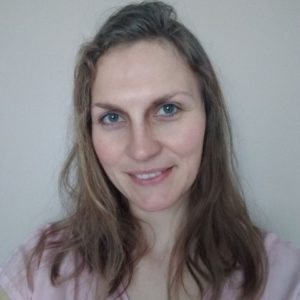
 The Western Research Norway Institute is an international research foundation created in 1985. Based in Sogndal, it carries out research mainly in the academic fields of social studies, natural sciences, technology and humanities. To better understand the objectives and scope of the Institute’s research projects, we met with Anna Maria Urbaniak-Brekke. Specialised in physical activity and tourism, she joined the Western Norway Research Institute in 2018 and is currently Senior Researcher and Adviser for EU Research.
Euromontana: Can you briefly introduce the Western Norway Research Institute?
Anna Maria: “We are a research institute located in Sogndal, in the very rural and mountainous western part of Norway. The institute was created in 1985 and currently employs 30 researchers working on three main topics: IT and big data, climate change mitigation and adaptation, and tourism.”
What are the specific challenges that your region is facing? How can research provide solutions?
“Our institute is located by the Sognefjord, it is the second longest fjord in the world and a very popular tourism destination, but our environment is endangered by climate change. Norway is already facing climate change’s consequences with a rise in temperatures and in the frequency of natural disasters such as floods.
We also encourage public organisations in taking part in applied-research projects, for example through the Horizon 2020 fund. These projects can come up with interesting recommendations for regional actors.”
What projects are you currently involved in?
“We are leading a national project called NORADAPT – Norwegian Research Centre on Sustainable Climate Change Adaptation, since 2018 for instance. Within this initiative, we seek to build knowledge on sustainable climate change adaptation through a user-oriented approach.
We also work a lot on tourism; our region lives thanks to this sector, but at the same time we need to encourage environmentally friendly practices to preserve our environment, already threatened by climate change. We work with municipalities to adapt tourism practices and promote quality over quantity. We are also trying to reach out to tourism companies to promote good practices for the sustainable development of tourism.
Those two topics – tourism and climate change – are critical because interconnected. In our research project CLIM-TOUR, we want to identify the impacts of climate change on Norwegian nature-based tourism. We will design recommendations on climate change adaption, along with “climate services” that can support the tourism industry in understanding the impacts of climate change.
Finally, we carry out research on other issues related to the environment such as bio-based products. We are participating in a Horizon 2020 project called ENABLING, which objective is to develop appropriate conditions for the development of biobased products.”
When did the Institute join Euromontana? What is the added value of our network for you, as Norwegian researchers?
“We joined Euromontana in November 2017. Euromontana is of a great support to us because we are really far North, so it is sometimes difficult to connect to others, in comparison to the Alps or the Pyrenees where a lot of networks exist. Euromontana helps us to reach out to other mountainous communities. In our research work, Euromontana’s project platform is also a useful tool to look for potential project partners.
Thanks to Euromontana, we also connected with NEMOR – the Network for European Mountain Research – which we joined in 2018. It is a very useful platform to connect researchers from different countries and be part of calls on mountain areas.”
Through your specific activities and the geographical isolation you mentioned, what do you think you can bring to other members, including non-researchers?
“I think that by being in a very different part of Europe, we can bring a very different expertise too. Moreover, Norway is already facing changes due to depopulation, climate change and tourism so we can share our experience to tackle these issues.”
Download Anna Maria Urbaniak-Brekke’s full interview in PDF.
24 September 2019


