



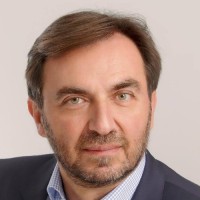
 The region of Crete is the biggest island in Greece, and the fifth one in the Mediterranean basin. High mountains ranges are a key feature of the region’s distinctiveness, which faces the specificities of both its mountainous and insular situation. George Alexakis is Vice Governor of Crete on European And International Affairs and representative of Crete within Euromontana. Given the specificities of Crete, he is also Vice President of CPMR – the Conference of Peripheral and Maritime Regions of Europe. We met with him this month to better understand the particular challenges faced by the Cretan region.
Euromontana : Can you briefly introduce the specificities and missions of the region of Crete?
George Alexakis : “The region of Crete is located on the largest and most populous island of Greece. With a coastline of 1.000 km and mountains up to 2.500 meters above sea level, Crete has the particularity to combine both insular and mountainous identities.
Our mission is to build regional policies and adapt European ones at regional level with a multilevel governance, involving municipalities, citizens, regional and national actors as well as European institutions and networks. To do so, our active representation is Brussels is of a great support to better connect the region with European policymakers and networks.”
What kind of challenges is Crete facing?
“Crete mainly lives on services, tourism and agriculture, with extensive family farms. It is crucial to encourage linkages between those main sectors. We need to refine our understanding of internal dynamics on the island, for instance to better grasp the difficulties of rural families, of famer integration on the market and of the changing relation between Cretan cities, touristic coastal areas and rural territories.
It is essential to put more efforts in strategies encouraging synergies between the agriculture sector and other economic activities such as tourism. Together, they can promote the economic, historical, social and cultural heritage of Crete.
Research and innovation is also a key element for the sustainable development of Crete and to cultivate a strong entrepreneurial spirit on the island. Projects can for instance help to develop agritourism in the region, as a more sustainable type of tourism activity.”
Could you give examples of projects contributing to the sustainable development of Crete?
“We are part of a large number of projects related for example to the environment, protected areas, climate change, energy, agriculture and social issues.
We are part of the project EMbleMatic “Emblematic Mediterranean Mountains as Coastal destinations of Excellence”, financed by the Interreg MED programme. The project’s goal is to create and test a new offer of sustainable tourism – for the 9 mountains constituting the Emblematic Mediterranean Mountains (EMM) network – by creating an eco-itinerary for each one of them.
The Region of Crete is also a partner of the InterregADRION IMPRECO project which aims at defining common strategies and best practices to improve the transnational protection of ecosystem integrity and services.”
What is the added value of joining Euromontana’s network for the region of Crete?
“As a Region, we are very interested in joining multidisciplinary partnerships such as Euromontana to collaborate with regional and local authorities, rural and farming organisations, environmental and forestry associations, as well as research institutes.
As such, we share a common vision with Euromontana and the wish to improve the quality of life of mountain communities and promote the sustainable development of mountain areas. This partnership can help the region of Crete find alternatives to rebalance tourism flows and promote more responsible tourism activities in mountain areas as well as to enhance linkages between our urban and rural areas. Euromontana is also of great support when it comes to the implementation of both the CAP and the Cohesion Policy, which are critical for mountain areas. Finally, innovation is key in the network and the association encourages news collaborations and projects which are interesting for us as a region.”
Download George Alexakis’ full interview in PDF.
11 February 2020


