



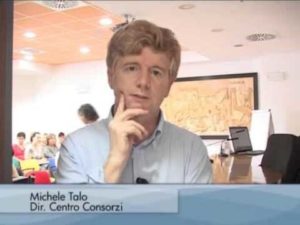
 The “Centro Consorzi” of Belluno is a consortium whose consortia members are companies. It is a training body accredited by the Veneto Region, in Italy, which works to promote training throughout the working life of the person, with particular attention to young people through professional training projects in the fields of wood, aesthetics, electrical and restoration of cultural heritage. Centro Consorzi of Belluno joined Euromontana in 2015. We met Michele Talo, Director of the Centro Consorzi di Belluno to discover more about their activities and their interest in being part of the network Euromontana.
Euromontana: What are Centro Consorzi di Belluno projects related to mountains?
Michele: ” Belluno is a mountain province of Veneto, in the North of Italy, so everything we do is, in some way, related to the mountain. Firstly, we focus on wood. One of the consortia is the Consorzio legno Veneto (Consortia Veneto Wood, in English), which wants to bring back to the wood sector a propensity to wood processing as a supply chain. We are also part of an innovative network called the Oro Veneto forest. Secondly, we work to promote local products. For example, we set up an association to try to recover physical spaces for processing and selling local products. We also have a consortium that aggregates agricultural and forestry companies to provide their assistance especially in agricultural practices. In addition, we have projects with various Universities and local authorities related to the protection of local sheep species and related typical products (mainly meat and wool). So basically, everything we do is related to mountain areas.”
What are the biggest challenges you are working on for the mountains in the Province of Belluno ?
“What is really important is to keep the attractiveness of our territories because young people face the problems of mountain depopulation. To respond to this depopulation issue, we created with the help of a local company the Fablab Belluno, a place for young people to meet in order to develop their ideas and exchange knowledge. But there is also an important aspect of mountain attractiveness that is related to quality and craftsmanship. We are working to promote small local agriculture. Their realities also include isolation and distances.”
Why did you decide to join Euromontana?
“We joined Euromontana in 2015 because there were no members coming from our region, Veneto, and so we recognised the need and the importance to join a European network in order to be able to share our knowledge. We also wanted to share and to get good practices about how to overcome the problems that mountain provinces like Belluno face. When we met Euromontana members, we realised that the problems we are facing are quite similar to many issues discussed by the members of Euromontana. Being together is very helpful. It is very great to be able to exchange ideas and practices to find potential solutions together.”
Are you involved in any European project?
“We are currently leader of a project called “Sheep Al.l. Chain”, from EIP-AGRI, for the protection of two local sheep breeds, and we have preparing a territorial project called P.i.a.v.e. (Landscape Identity Welcoming Travel Experience) to create a touristic package along the river Piave. We would be very interested in joining other European projects and we would appreciate to meet Euromontana’s members in this regard.”
To download the interview, click here
10 October 2018


