



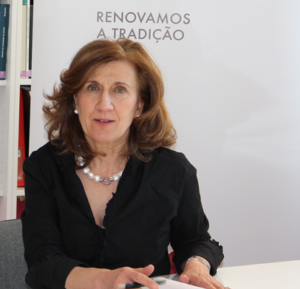
 The ADVID (the Association for the Development of Viticulture in the Douro Region) is a non-profit organisation established in 1982 in Portugal to contribute to the modernisation of viticulture and to promote the quality of wine productions in the region. In 2016, the organisation became a national association, extending its scope to the national Portuguese level. To better understand the objectives and activities of the association, we met with Rosa Amador, Executive Director of the ADVID.
Euromontana: Can you briefly introduce the ADVID?
Rosa: “The Association for the Development of Viticulture in the Douro Region – ADVID – has 179 members, 90% of which are wine-growing companies, 6% are suppliers and 4% research bodies. Our mission is to promote the sustainable development of viticulture in Portugal. To do so, we promote increased research and innovation investments in the sector, and we disseminate knowledge; we also create business support services based on the needs of the sector and work on the attractiveness of viticulture for private and public investments.”
What are the specific challenges for viticulture in the Douro Region?
“The Douro Region has 45,000ha of vineyards and is one of the largest mountain wine regions in the world. Vineyards are located on very variable slopes, with 45% of the vineyards installed between a 15 and 30% slope, 40% on steep slopes (30 to 45%) and 15% on very steep slopes (over 45% slope). Slopes are a comparative handicap, negatively affecting the farmers and winemakers’ income, increasing human and mechanic work as well as facing more uncertain climate conditions.
In addition to the natural constraints of this mountainous region, viticulture faces different challenges such as climate change and health-food issues. Moreover, in the Douro Region, we face a lack of manpower in the sector.
How do you support your members in their transition towards a more sustainable viticulture?
“We provide technical assistance on the ground, particularly regarding sustainable production methods. We also support our members on their involvement in national, European or international research and innovation projects. Of course, we also play an important role in disseminating knowledge through newsletters and manuals and thanks to the organisation of workshops, open days and study visits in other European farms, to exchange experiences and foster innovation in the wine sector.”
When did the ADVID join Euromontana? What is the added value of our network for your association?
“The ADVID joined Euromontana in 2014. Our membership at Euromontana derived from a common philosophy. In addition to networking activities, Euromontana gives us the possibility to contribute to the development of policies taking into account the specificities of wine production in the Douro Region – a mountain area classified as World Heritage since 2001 by the UNESCO for its cultural landscapes.
Euromontana is a driving force in Brussels to create a positive differentiation for peripheral regions, especially mountain areas. The natural constraints faced by winemakers must for instance be recognised through specific support measures to ensure an equality of opportunities on the global market.”
Through your specific activities, what do you think you can bring to other members?
“By being an association specialized in viticulture, ADVID helps in the recognition of the specific needs of permanent crops in mountain farming. Our experiences can be shared with similar sectors such as agroforestry, with which we have similarities.
Mountain areas are regions promoting and preserving diversity. This wealth can be secured through conservationism, but it must also be supported and encouraged through a life-giving, evolutionary approach that promotes healthy economic activity in mountain territories while respecting the environment. ADVID can provide examples of sustainable activities in mountain areas and share strategies with other members.”
Download Rosa Amador’s full interview in PDF.
19 November 2019


