



 The Deputacion of Lleida (Diputacio de Lleida, in catalan) is a supramunicipal entity in the Catalonia region. The Deputacion de Lleida recently joined Euromontana and is very participative in the association’s activities.
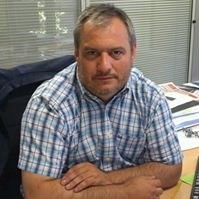
We met Joan Buchaca, Director of the Economical Promotion Board of the Deputacion of Lleida, to discover more about their work and their involvement at a local and European level and to discuss about their motivation in joining Euromontana.
Euromontana: Could you introduce the Deputacion de Lleida and your main activities related to regional development and mountain areas?
Joan: “The Deputacion de Lleida is a supramunicipal entity – a local government – that works for the economic development and well-being of citizens through the deployment of multiple initiatives that are carried out in direct collaboration with the councils, the regional councils, the Generau d’Aran Council and the Generalitat; and through investments that reach the entire territory. The governmental action focuses on the development of policies in favour of the integrated development of the territory, with specific attention to services and actions that strengthen the community. It gives unconditional political and financial support to the local world. 25 years ago, the Deputation of Lleida created its own agency, the Economical Promotion Board, independent from the deputation itself and very specialized in local development areas. This agency started working on raising European funds and developing local public policies. In addition, several centres of research and transfer of technology were developed in themes such as forestry or the recovery of the brown breed of the Pyrenean. Some actions were also carried out with the typical sheep of the Pyrenees and also in tourism issues.”
What has your deputacion done to develop mountain territories in Lleida?
“Since the creation of the Economical Promotion Board, we have identified more than fifty institutions in our province which are working on rural development. 95% of our province’s territory is rural and mostly mountainous. We coordinate them under the patronage of an economic chamber, aiming both at facilitating the development of projects but also confronting precisely the challenges. In rural areas and specially in mountains, we try to have an holistic approach and not a thematic one. Indeed, these areas face similar challenges, but you can deal with them from different point of views. For this reason, it is very important to be part of a network where different members can share their own experiences.”
Talking about networking, you are among the newest members at Euromontana. Why did you decide to join the network?
“Yes, we joined in autumn 2017 precisely. We decided to join because we have always believed that networking is very useful, not only to share good experiences but also, and it might be even more important, to share bad ones. This is how we can learn together, to analyse together the global opportunities and challenges. Even if we are now working more at a local level, developing local networks, we also want to start working at the European level.
Since we joined Euromontana we’ve been trying to participate in all the network’s activities and to be present at all the workshops and conferences organised by Euromontana. This involvement helps us to develop our knowledge about mountain territories issues and helps us to understand how other members analyse these problems and share solutions.”
What do you think you can bring to Euromontana and its members?
“I believe we can contribute to Euromontana thanks to our capacity of adaptation, our project proposal capacity, and also with our territorial capacity-building skills. Often networks include only the big partners, the institutions, and it is difficult to make the results trickle down to the local actors and to the people living in our territory. This is what we aim to do because in the end it is the impact of the projects on the people which what make sense in projects and activities you carry out.”
Download Joan Buchara’s full interview in PDF!
27 February 2019


