



 By Lars Hustveit, Vestland County Municipality
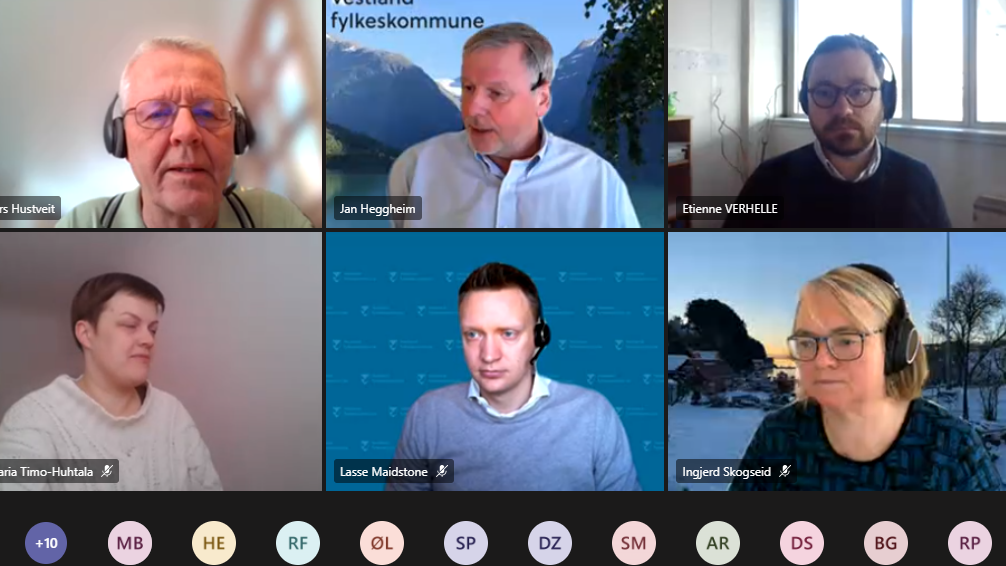
The Interreg Europe P-IRIS project, focused on policies to improve the efficiency of innovation networks in rural areas, held its final conference on February 11, 2021 to present the work achieved during the project and introduce the key lessons learned and some policy recommendations.
Why P-IRIS?
P-IRIS was based on the demand from Managing Authorities (MAs) to better support rural innovation in these regions. The initiative to address the issue through a project was taken during Euromontana’s General Assembly in November 2015. P-IRIS includes several members of our network: the County of Vestland (Norway), the Province of Burgos (Spain), Poliedra (Italy) and the Local Development Agency PINS (Croatia).
P-IRIS was born out of the need to build a vision of the management of rural innovation networks that would be different from the concepts and lessons learned from urban clusters. Rural innovation networks are about building the invisible ‘knowledge bridges’ in order to share knowledge.
The specificity of rural and mountainous areas was also underlined by Danijel Bertovic, President of the Local Development Agency PINS and member of Euromontana’s Board of Directors. Having worked during the project on the study of rural co-working spaces and on how to efficiently develop them, he reminded that there is no one model that can fit all local contexts and that existing places in urban areas cannot simply be replicated in rural regions: people already have the space to work at home in rural areas, co-working spaces should therefore not only offer space but also equipment (3D printers, high-speed connection) and be real places creating innovation networks and boosting creativity.
7 key messages for Managing Authorities
During the project’s final conference, partners presented the lessons learned from this 4-year project and introduced 7 key messages to their Managing Authorities:
- Recognise and take advantage of the digital skills of young people as a changemaker for rural areas
- Rural areas can take advantage of the approach “living labs” for innovation
- Co-working spaces (also enabling remote workplaces) provide an entrepreneurial environment. Develop cooperation between coworking spaces
- Include rural innovation networks in the cluster policies
- Give priority to test- and demonstration infrastructure to benefit from creating fruitful cooperation between people with practical tacit knowledge and people with theoretical expertise
- Develop skills in innovation-network management
- A proactive public sector is more important for the rural innovation system than for the urban one
Managing Authorities discussed these suggestions in a roundtable session, during which speakers expressed their interest for the creation of co-working spaces adapted to the needs of the rural population. Several speakers also stressed that the digital skills of younger generations are an asset for the future of rural regions. Dr Dario Sciunnach, from the Managing Authority of region Lombardy (Italy), has also underlined the usefulness of P-IRIS’s toolbox “innotool” for the development of innovation networks managing skills.
More information
The complete position paper from the P-IRIS project is available here. More information about the event is available in this report and recordings from the conference are also available here.
You can find examples on rural innovation networks in P-IRIS’ collection of good practices. For more information on this project, please contact Lars Hustveit, from Vestland County Municipality, P-IRIS Lead Partner.
23 February 2021


