



 Region Małopolska is situated in the southern region of Poland. It is divided into 19 country districts, 3 townships (Kraków, Nowy Sącz, Tarnów) and 182 municipalities. It covers the area of 15,183 km² (which constitutes 5 % of Poland) and it is one of the smallest in Poland (it ranks 12th in the country). It is also one of the largest Polish regions with respect to the number of inhabitants – 3.4 million citizens make Małopolska the second most densely populated region, after Silesia.
The region capital is Kraków– a city whose history dates back to the beginnings of the Middle Ages. Retained urban layout and numerous monuments, Wawel and the Main Square, among others, attract numerous tourists each year. Kraków also belongs to Euromontana’s history as this is where it was decided to officially create the association in 1995.
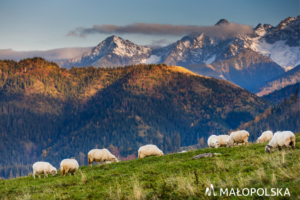 Exceptional landscape, unique nature, an impressive number of historical monuments and a unique atmosphere are the reasons why the region is visited by over a dozen million tourists from Poland and abroad each year. For this reason, consistently for years Małopolska has been ranking high among the topmost visited regions of Poland. It is worth to add that Małopolska Region is also a leader with respect to the number of mountain guide certificates and the leader in the number of hospitality facilities.
Małopolska has multiple dozens of tourist attractions and picturesque mountain ranges. The High Tatras mountaintops shrouded in clouds, the white rocks of the Kraków-Częstochowa Upland with castle ruins, historic towns with beautiful market squares and old tenement buildings, wooden churches, health resorts with mineral waters, thermal pools, over 300 ski lifts and 250 km of ski slopes – these are only some of the attractions which await every visitor.
 Małopolska encourages tourists to benefit from its offer with care for the sustainability of the natural environment. Among the initiatives taken in the region, the project of bike paths development deserves particular attention. Over a 1000 kilometres of bike paths, well-developed, labelled and constituting an integrated network allows cycling enthusiasts to reach the most interesting tourism and natural regions in Małopolska.
When it comes to sustainable tourism, the region also counts many protected areas, including 6 national parks, 11 landscape parks, 10 protected landscape areas, 85 natural reserves. The area is home to over 2,200 natural monuments. In effect, 53% of the total area of the region is under protection, which makes of Małopolska the region with the most protected areas in the country.
An increasing number of initiatives aiming to support mountain regions and ensuring them with the possibility of sustainable growth are being taken in Małopolska. Due to their unique socio-environmental characteristics, the Carpathian Mountains constitute an important element of the landscape. They also represent specific challenges and development possibilities. Considering the unique specificities of this area, including in terms of protection of the natural environment, Małopolska actively participates in actions aiming at developing the fifth European Union Macro-Regional Strategy: the Carpathian Strategy. Małopolska wants to make of the Carpathian Strategy a tool to increase the quality of life of inhabitants, to widen the access to social services, to strengthen the economic cooperation and the cohesion within the macro-region, including cross border networks.
Region Małopolska trusts that joining Euromontana will help increasing their knowledge and experience for the development for mountain areas.
8 December 2021


