



During the 2019 European Week of Regions and Cities, the session on “Smart Villages: overcoming the divide between urban and rural areas” organised by DG REGIO was an opportunity to discuss what the concept can bring concretely to local initiatives. For instance, smart villages should provide prompt support to the local population where the public services are overloaded. Smart villages should also act as knowledge brokers between local know-how and global knowledge (such as Brussels decision-making) to empower local people in their transition. And to mention a third function, smart villages should set up or facilitate flexible systems for financial support of local experiments.
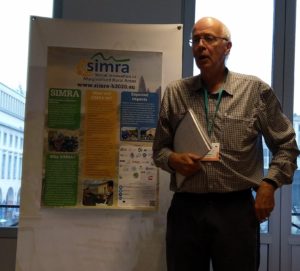 The concrete implementation of these functions was illustrated and applied to four different sectors during the workshop: digitalisation, mobility, renewable energy and social innovation. To take an example, in the thematic corner on social innovation, led by Bill Slee from the Horizon 2020 SIMRA project, the discussion focused on the role of volunteers in rural areas. Due to the decrease in the number of jobs on the agricultural sector and in rural-based jobs in general, there are very few active people available in villages to animate rural life so many initiatives are flourishing thanks to young retired people to revitalise rural communities such as community shops or time banks to exchange little services between neighbours.
However, what are the obstacles to overcome to ease the implementation of smart villages in rural areas? For MEP Franz Bogovic, supported by DG AGRI and DG REGIO policy officers, the solution lies in a better integration of policies at the different levels (local, regional, national), possibly facilitated by tools such as LEADER or CLLD. In this case, the opportunities for smart villages would need to be clearly earmarked to facilitate the take-up of these instruments by local communities. Marie-Noëlle Neuven from Ruralité-Environnement-Développement gave the example of the recently adopted French Rural Agenda as a possible framework for better integrating these different levels.

To complete the picture, Marie Clotteau, Director of Euromontana explained how they strategies should not simply benefit to those who are “already quite smart” with the risk this has of widening disparities between rural areas in Europe. She reminded the participants of the importance of having digital tools to facilitate the implementation of basic services and attract inhabitants. Nonetheless, she insisted on the fact that these tools are uncompleted without a common vision in rural communities to strengthen networks, social capital and the sense of empowerment. According to Euromontana and based on results of the SIMRA project, social innovation and social capital are the crucial elements to nurture thanks to policy support because they give communities the energy to spark up Smart Villages. To concretely do so, the managing authorities within the regions could for instance encourage technical advisors to come locally and explain how to use the funds and develop a strategy, they could develop animation, capacity-building and thus build human capital locally.
For more information on the Smart Villages initiative, discover the ENRD Smart Villages portal.
24 October 2019


