



The European Union institutions have reached an agreement in early May on non-agricultural geographical indications. The protection of European craft and industrial products has been discussed for several years, with reports and studies published from 2015 to assess the benefits of such protection. In 2020, the European Commission announced its intention to create these new geographical indications (GI), in parallel with the revision of the legislation on agricultural GIs, and presented its legislative proposal in 2022.
Inter-institutional negotiations, which started last March, led to a provisional agreement between the European Commission, the European Parliament and the Council, and non-agricultural GIs are now ready to be introduced.
The legislative proposal foresees that craft and industrial products can be protected by a GI, in the same way as agricultural GIs, if the product originates in a specific place, region or country, if it’s given quality, reputation or other characteristic is essentially attributable to its geographical origin, and if at least one of the production steps of the product takes place in the defined geographical area.
The provisional agreement between the institutions is subject to formal approval by the Member States in the Council and by the Members of the European Parliament.
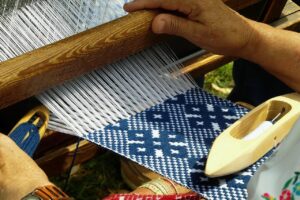
Why protect craft and industrial products?
There was no European framework for non-agricultural GIs. However, some European countries already had national rules, such as France, which introduced non-agricultural GIs in a 2014 law. Laguiole knives, for example, which are traditionally made in Auvergne and Aubrac and have suffered from the import of copies, are protected since 2022. The Mountain Parliament of the Occitanie region has also set up a working group to consider how to enhance the value of these non-agricultural GIs, such as Caunes marble, Pyrenean wool and cork and wood products, and to encourage producers to take advantage of this French law.
The introduction of these new GIs will therefore protect both producers and consumers from possible counterfeiting or fraud. It will also contribute to the valorisation of local know-how and traditions, which, as underlined by the 2015 European Parliament resolution, are crucial for the economy and cultural heritage of rural areas.
For more information on the revision of GIs, you can refer to our brief “The revision of Geographical Indication schemes: what will change for agricultural and non-agricultural products?” (for members only).
15 May 2023


