



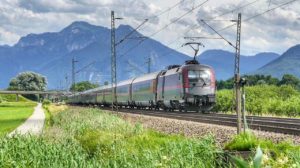
 On March 4, 2020, the European Commission proposed to make 2021 the European Year of Rail. The proposal aims at enhancing the objectives of the Green Deal in terms of sustainable mobility by focusing on rail mobility next year through the organisation of events and campaigns in 2021. This proposal comes when a Strategy for Sustainable and Smart Mobility should be presented by the end of 2020 in the framework of the Green Deal and when the EU wishes to revise its greenhouse gas emissions’ reduction target.
Euromontana welcomes the European Commission’s proposal, which could be an opportunity to reopen the debate on the need to maintain a dense rail network, including in mountain areas, and encourage innovation in the mobility sector, particularly in terms of multimodality. Successful pilots – such as the ones implemented by the AlpInnoCT project- have already demonstrated that combined transportation and harmonised rail networks, including between cross-border countries, can positively affect people’s life. Promoting rail transportation for freight is also a real opportunity to decrease greenhouse gas emissions, especially in the most polluted valleys where mountain biodiversity is affected by carbon emissions.
Therefore, the European Commission must consider all territories in the implementation of this proposal in order to make 2021 a successful and useful European Year of Rail. In its contribution to the currently open consultation on this proposal, Euromontana reaffirmed the need to leave no one behind in the transition towards sustainable mobility and recommended to:
- Involve DG REGIO in the work of DG MOVE to ensure the organisation of events in all territories, including in the most rural and remote mountain areas, in close collaboration with regional authorities and local communities and to reflect on the opportunities for rail under the post-2020 Cohesion Policy objectives for a greener and more connected Europe.
- Build on the OECD study, expected for late 2020, on the cost of public services in rural areas, to explore opportunities to improve the viability of rural train lines, such as mixed passengers/freight train lines, to maintain quality of life and protect the environment.
- Organise debates with citizens addressing the issue of rail freight transport in mountain areas to reduce the pollution in valleys.
- Organise events in mountain areas to debate the issue of sustainable mobility in the tourism sector with last mile transport thanks to rail and combined transport.
- Encourage the organisation of cross-border events to accelerate the harmonization of rail transport schemes between mountainous regions.
- Propose solutions for mountain rail in the expected Smart and Sustainable Mobility Strategy.
- Presenting data on rail networks at NUT3 level in its assessment of the European Year of Rail.
Find more background information on rail transportation in mountain areas and recommendations in our contribution to the consultation “The European Year of rail: make it work for mountainous regions”.
The European Commission’s to make 2021 the European Year of Rail still has to be adopted both by the European Parliament and the Council. The online public consultation on the proposal is still open until May 4, 2020.
8 April 2020


