



By Isabeau Ottolini, Environmental Social Scientist
“With every 0,002€ invested in territorial management, we save 1€ otherwise spent on extinguishing forest fires”. With this phrase Marc Castellnou – head of the Catalan Firefighters – opened the Territorios Pastoreados Conference in Girona celebrated in September.
For the fourth year in a row, the Spanish Entretantos Foundation together with the Pau Costa Foundation organised the Territorios Pastoreados conference on 26 to 28 September 2019. . For three days 200 participants talked, learnt, and discussed about forest fire prevention and the future of pastoralism.
Pastoralism, a tool against forest fires
Forest fires are on the rise in Europe, including Scandinavia, Portugal, and Greece. Largely fuelled by climate change, in Mediterranean regions these disasters are also driven by land abandonment and afforestation. A common hope of both citizens and politicians is that, if you just put enough men and machines to it, the fires can be controlled and put out.
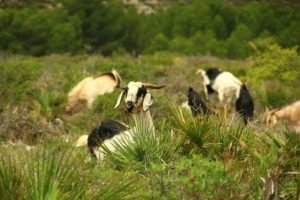 Well, Marc Castellnou put a quick end to this hope: no matter how much you invest in firefighting, giant forest fires contain so much energy that no man-made machine can control them. Hence, there is an increasing call to stop spending more money on fire extinction, as this paradoxically increases the risk of giant forest fires. Instead, investments must be made in sustainably managing lands, by creating resilient landscapes where fires cannot escalate into uncontrollable infernos. Here pastoralism plays a key role: through grazing, animals like sheep and goats eat plants (including bushes and small trees) that otherwise would serve as fuel for fires, thereby maintaining open and fire-resilient landscapes. Beyond this key environmental service, pastoralism also plays a role in mitigating climate change and providing many other socio-environmental benefits
Overcoming challenges of pastoralism through policy and practice
Pastoralism is coping with many challenges, including its low economic viability, excessive bureaucracy, and low generational renewal, leading to its progressive disappearance across Europe.
To economically compensate for the environmental services of pastoralism, including preventing forest fires through grazing, two complementary pathways were extensively discussed: on one hand, the need for more support from the CAP, and on the other hand innovative (public or private) initiatives.
With regards to the CAP, extensive livestock systems are negatively affected by the lack of a definition on pastures that fully recognises the rich variety of grasslands, including woody pastures. So far, the CAP has excluded many pastures that could otherwise have benefitted from direct payments, and therefore has insufficiently helped to economically support these sustainable food systems.. However, regarding the new CAP, the conference’s participants also voiced their hope for new opportunities, such as strategic plans, eco-schemes and the performance based delivery model
 On the other hand, innovative initiatives are emerging. A first example is the Fire Flocks (Ramats de Foc) seal, which is used on local products – meat and dairy – made from herds grazing in forest areas, thereby decreasing forest fire risk and promoting livestock activity. Many more initiatives were discussed during the conference, such as pastoral schools, land access and generational renewal (for instance, Espacios Test), valorisation of international transhumance routes by the Asociación de Trashumancia y Naturaleza, knowledge and experience exchange through different projects such as the Erasmus+ project FireShepherds and Interreg projects AlberaPastur and Open2Preserve.
Final conclusions: how can each and every one of us support pastoralism?
The conference ended with a clear message towards the general public: instead of choosing cheap – but unsustainable – products from intensive livestock systems that cause great impacts on the planet, chose products from extensive livestock. That is, every time you buy a local product, produced sustainably and by rural people, you have a smaller ecological footprint and help farmers, shepherds, and small producers to get a decent income and keeping sustainable food systems alive.
The conference outcomes is reflected in the recently adopted opinion on Pastoralism by Jacques Blanc at the European Committee of the Regions, which is stressing the need to support and promote pastoral activities through the CAP and EU funds in order to preserve its environmental and social benefits for mountain local communities. Other initiatives are also discussed, such as putting transhumance on the UNESCO list of Intangible Cultural Heritage in order to protect pastoral traditions and know-hows.
29 October 2019


