



 What does cultural heritage represent in mountain areas? How to better preserve and valorise this place-based resource? How can it be a driver for socio-economic changes in mountain areas? These are the questions to which Marie Clotteau, Director of Euromontana, answered during an online conference on “Cultural heritage in mountain areas”, organised on 9th November 2021 by Interreg Europe’s Policy Learning Platform.
Marie Clotteau insisted on the fact that of a tangible (like sites, museums, monuments,) or intangible nature (like agronomic, forestry and food practices), cultural heritage is particularly rich and diversified in mountain areas in Europe. This cultural richness is an integral part of the identity and pride of mountain people.
Mountain areas do not only have a rich cultural heritage, they also have a very rich natural heritage. Many natural sites have cultural aspects, and physical, biological or geological characteristics have influenced the lives of mountain people. This is what we called “Cultural landscapes”. They reflect and reveal specific techniques of land use and the great diversity of interactions between humans and their environment.
In the face of today’s globalisation, cultural and natural heritage is one of the few resources with the potential for socio-economic development directly linked to mountain areas, their inhabitants and their way of life. It is a place-based resource that cannot be relocated. It can create more jobs, including in more remote areas, and increase the attractiveness of our mountains.
This rich cultural mountain heritage has also a very strong potential for innovation that can revitalise mountain areas and encourage the development of new entrepreneurial ideas For instance, and according to the REACH project, digital technology is disruptive, challenging, has limitations, but is a driver of growth and creation of new business models. It has great potential for the way heritage is curated, presented, digitised and shared through 3D visualisations or 3D impressions notably.
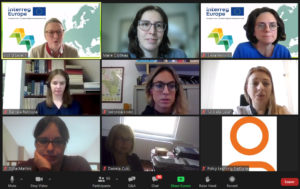 To conclude, the Director explained that cultural heritage should be used as a factor that fosters integration and attractiveness, to welcome new inhabitants, especially in depopulated mountains; but also to promote the transmission and the revitalisation of cultural heritage through intergenerational dialogue and exchange programmes between young and old, and between inhabitants of large urban areas and small villages as it was done in the Baba Residence in Bulgaria for instance.
Based on the Declaration from the Vatra Dornei European Mountain Convention on cultural heritage, Marie Clotteau recommended :
- To better recognise not only the intrinsic value of mountain areas, but also their socio-economic contribution to the well-being of all citizens (including those in urban areas) and to bring closer people living in urban and rural areas through better knowledge and sharing of mountain cultural heritage.
- To better support collective mountain projects linked to the protection and enhancement of cultural heritage in order to strengthen the structure of resilient supply chains (including of food, gastronomy, forestry…).
- To better recognise the intrinsic links between cultural and natural heritage in mountains (for example through designations as Biosphere Reserves by the UNESCO) and that Europe’s cultural landscapes have been shaped by human activity, in particular agriculture and livestock farming.
- To maintain an adequate level of funding to help preserve and better develop this place-specific resource and thus create jobs, including in remote mountains.
- To strengthen the connections between actors in research and innovation and stakeholders on the ground, so that innovations can be directly implemented to better preserve and valorise the cultural heritage
The Director’s interview was followed by several presentations of projects: the IALP experience to create online interactive alpine museums, EPICAH to better promote the cross-border Carpathian culinary experience; the Lubovna Museum in Slovakia to improve access to cultural heritage sites for disadvantaged people and the RAMSAT project that helps to better valorise a natural footpath in Alto Alentejo in Portugal. Presentations and more information are available on the event webpage.
17 November 2021


