
• fr
  • en

Invisible pollution travelling to the mountains: microplastics in the Pyrenees


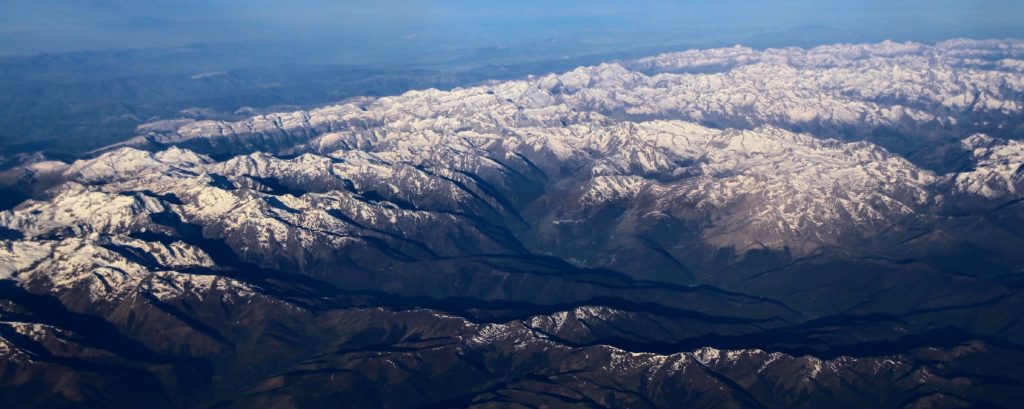
Imagine walking through the Pyrenees. Snow lying on the mountaintops, insects buzzing around the flowers, sheep grazing the pastures, an icy river fed by the last Pyrenean glaciers. Such a pristine environment, seemingly far away from all human impact.

But appearances can deceive. Last April an article was published in the Nature Geoscience journal by researchers from Scottish and French Universities. This article indicates not even the Pyrenees are remote enough to escape plastic pollution. Plastic degrades until forming tiny pieces, called microplastics. While their presence in water bodies and soils have received increasing attention over the past years, for example by the National Geographic, up till now the microplastic’s occurrence in the atmosphere was largely unknown.

The research site was the Bernadouze meteorological station, located in southwest France (Ariège department) at 1425 metres above sea level. Research there has confirmed that microplastics can be transported by the atmosphere and deposited far away from their source. Meaning that microplastics become airborne, travel some distance on the air currents, and then are deposited mostly through rain- and snowfall. Specifically, about 365 microplastic particles per square metre were found daily at the research site. This level of concentration came as a surprise, as it is comparable to big cities like Paris, known for its air pollution issues.

However, it is still unclear where these microplastics come from, and why in such high concentration, as there are no industrialized and densely populated cities in at least a 100-kilometre radius. Hence, more research is necessary, both to understand more on the atmospheric dynamics of microplastics, but also on the effect to the environment and human health, still unknown. But it is now beyond doubt that microplastics are a novel form of air pollution. While previously it was thought to just affect at the local level (within buildings and cities), now it is clear microplastics are capable of being transported far away by atmospheric dynamics to reach even the remotest of places.


Share
2 May 2019

Euromontana sur Facebook

1 week ago

Euromontana
Today, Euromontana had the pleasure to take part in the journalist training course “Transizione ecologica nelle aree montane: biodiversità, cambiamento climatico e sviluppo sostenibile”, organised by Università della Montagna with the Ordine dei Giornalisti della Lombardia (the Lombardy Association of Journalists 📰)The course, bringing together 65+ participants, focused on how to better understand and report on ecological transition in mountain areas, from biodiversity and climate change to sustainable development ⛰️👉This matters because the way mountain areas are reported shapes the way they are understood and, ultimately, the way they are governed!We were pleased to join our member UNIMONT in this exchange. Prof. Anna Giorgi highlighted the need to change the way mountain areas are perceived, beyond fragility and marginality. Stefano Sala then showed how issues such as depopulation, winter tourism, climate change and public policy require a more nuanced reading of mountain realities 🔍 For Euromontana, Guillaume Corradino brought a European perspective to the discussion. He stressed that :1️⃣ mountains are not Europe’s margins, but diverse and complex living territories, and 2️⃣ stronger place-based policies and European cooperation are needed to move from recognition to implementation.Thanks again for the organization, the opportunity, and to all the participants 👏 ... See MoreSee Less
View on Facebook

3 weeks ago

Euromontana
⌛ Only a few days left to benefit from the early bird prices for the 2026 XIV #europeanmountainconvention (Sallanches, 30 June - 2 July) ! We’re already eagerly awaiting your visit to discuss the future of extensive livestock farming in mountain areas! 🌄Through plenary sessions, high-level panels, interactive workshops and field visits, the Convention aims to address the following topics:· Demographic renewal in agriculture, including pastoral schools· Shared land use and access to grazing land· The contribution of extensive livestock farming to risk prevention and adaptation to climate change· The role for digital innovation in a changing world· The living and working conditions· and more 👀 Registration, programme, and practical information 👇www.mountainconvention.eu #IYRP2026 #internationalyearofrangelandsandpastoralists Afficher la traduction ... See MoreSee Less
View on Facebook

Euromontana sur Twitter