



Euromontana held its first webinar on Smart Mountains on October 1, 2020 to discuss good practices and experiences of mountain resilience since the outbreak of the COVID-19. Co-organised by Euromontana, and some Italian members: ERSAF, CIA Agricoltori Italiani, EURAC and Città Metropolitana di Torino, this first webinar gave the floor to mountain stakeholders, researchers and policymakers to collectively draw the lessons from this crisis and shape the future of smarter mountains.
“The organisation of this series of webinars is a way to adapt to the current sanitary constraints, we collect feedback and interesting experiences from mountain people and it helps us to collectively prepare the XII° European Mountain Convention (EMC) in 2021” recalled Juanan Gutierrez, President of Euromontana.
This major 3-days event will be held in Sila Natural Park and Biosphere Reserve in Italy, explained Mario Grillo from CIA Agricoltori Italiani. He invited mountain stakeholders and other interested actors to join and make of this European Mountain Convention a real political event paving the way towards a smarter future for mountain areas.
Resilience experiences in mountain communities
 Gianluca Lentini, Researcher at Poliedra – Politecnico of Milan, illustrated the relevance of the Smart Village concept for mountain areas to boost IT connectivity, infrastructures and attractiveness. During the lockdown, in the Municipality of Campo Ligure, Italy, a small filigree museum has been transferred fully online with the collaboration of local schools, which continued to receive the courses in such a way. On one side, this promoted the promotion of filigree craftmanship and tradition at wider national level, and the continuity of educational activities on the other side.
For G. Lentini, the COVID-19 crisis was an opportunity for mountain communities to show how innovative and creative they can be. Further examples from the “Coping COVID Strategies” of the Alpine Space Smart Villages project can give inspiration. Through the implementation of the Smart Village concept, G. Lentini is certain that mountains can be smarter and more attractive, including towards youth, by providing better access to digital infrastructures and services.
Keeping vibrant mountain areas also means supporting local farmers, for Adele Ravasio, from the Valtaleggio Stachìtunt consortium (Italy). In the past months, the consortium developed e-commerce with the support of its local network, including public organisations and authorities. Online sales were organised to facilitate the sale of Stachìtunt cheese. Moreover, to use the excess of milk on the market, the consortium started to produce a new low maturation cheese, which keeps longer.
 The use of digital tools to market foods was also experienced by Devis Bonanni, who settled as mountain farmer in 2003 in Carnia (Italy). Accessing to food supply in cities have become difficult for communities living in remote areas since the COVID-19 outbreak. From March 2020, D. Bonanni supported the food resilience by commercialising its food surplus and by establishing a network which supported food self-production of other mountain inhabitants (e.g; sharing information, machinery). Through social media, D.Bonanni organised the delivery of products to local inhabitants.
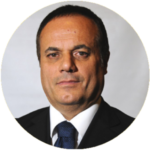 Local supply for food but also access to services was also the key message of Mauro Carena, Mayor of Moncenisio, a village of 40 inhabitants within the Metropolitan City of Turin (Italy). “Mountain areas should be vibrant and must not become museums or giant playgrounds” M. Carena expressed during the webinar before adding “therefore we need services such as shops and grocery stores for our population”. After the COVID-19 outbreak, the Mayor helped the village’s bar-restaurant-grocery to adapt to the lockdown by maintaining the shop open for accessible basic products and by organising home delivery for the most fragile segment of the population.
This capacity to be flexible and to adapt to the difficult circumstances was underlined by Enrico Camanni, journalist and moderator of the discussions. Nonetheless, he argued that we will lose “our reaction capacity if we destroy our environment”.
A mix of policy instruments for smarter mountains
 Herbert Dorfmann, member of the European Parliament’s commission for Agriculture and Rural Development, was also invited to share his vision for smarter mountains. MEP Dorfmann stressed the existence of different situations in European mountain areas, with some regions being highly productive and offering a good quality of life and some others being marginalised areas. These differences call, for MEP Dorfmann, for a smart mix of policies combining European, national, regional and local levels to better address the needs of each mountain region.
Mr Dorfmann also warned against a bucolic vision of the mountain, sometimes seen only as a place to farm and to travel to. “The quality of life is crucial” affirmed the MEP explaining “agriculture is crucial, but mountains go beyond that, we also need tourism, craftsmen, services and industry. People love mountain areas, but they leave because there is no kindergarten, no infrastructures, no services which allow a young family to make its life with dignity.” Agriculture is of course a key sector in mountain areas, recalled MEP Dorfmann, but he also stressed that Pillar II of the CAP is a major policy for the development of mountain territories. With CAP rural development pillar currently being discussed at the European Parliament, he reaffirmed “I refuse to accept that the quality of life in mountainous regions is lower than in urban areas”. Calling for policies that can increase the quality of life of mountain communities, MEP Dorfmann welcomed the Smart Villages concept as a tool for territorial development and called for its integration into Pillar II of the CAP.
To leave no one behind, the MEP also called for smarter linkages with urban areas and urged cities to reflect on their connections with the surrounding region – as done by policymakers in Munich for instance who invested outside the city to maintain the pre Alpine area attractive despite the natural constraints.
This first webinar of the Smart Mountains series was an opportunity to address long known challenges exacerbated during the coronavirus crisis, such as access to broadband, services and basic goods. Experiences from stakeholders demonstrated that mountains are innovative and attractive, but that efforts remain needed to keep a good quality of life for mountain communities. The new opportunities arising, such as teleworking, could for example be integrated into strategies for more attractive areas, including for young people. We now need to turn the wishes we have for our future mountains into reality.
9 October 2020


