



Biodiversity has recently been in the spotlight mainly due to news about biodiversity loss and species going extinct (see the latest IPBES Global Assessment report published on 06/05/2019).
But for the first time since 1843, a brown bear has been spotted in Portugal, where it is officially considered extinct by the IUCN. It was a beekeeper in the Montesinho Natural Park, Bragança (northwest Portugal) who noticed the bear’s presence after it damaged his beehives. The beekeeper informed the Institute of Conservation of Nature and Forests (ICNF), which in turn sent experts to examine the site and take samples of footprints, fur, and scats. Based on this evidence, the ICNF confirmed the news.
Male bears can wander for long distances in search for food and new territories. The bear sighted in Portugal probably comes from the western population of the Cantabrian Mountains (Spain). There, the brown bear population has increased to around 280 individuals at present according to the Spanish Fundación Oso Pardo. During the past few years males from the Cantabrian Mountains have occasionally been observed wandering along the Spanish – Portuguese border. In the transboundary collaboration, the ICNF and Spanish conservation authorities monitor the movements of bears as these spread into new territories.
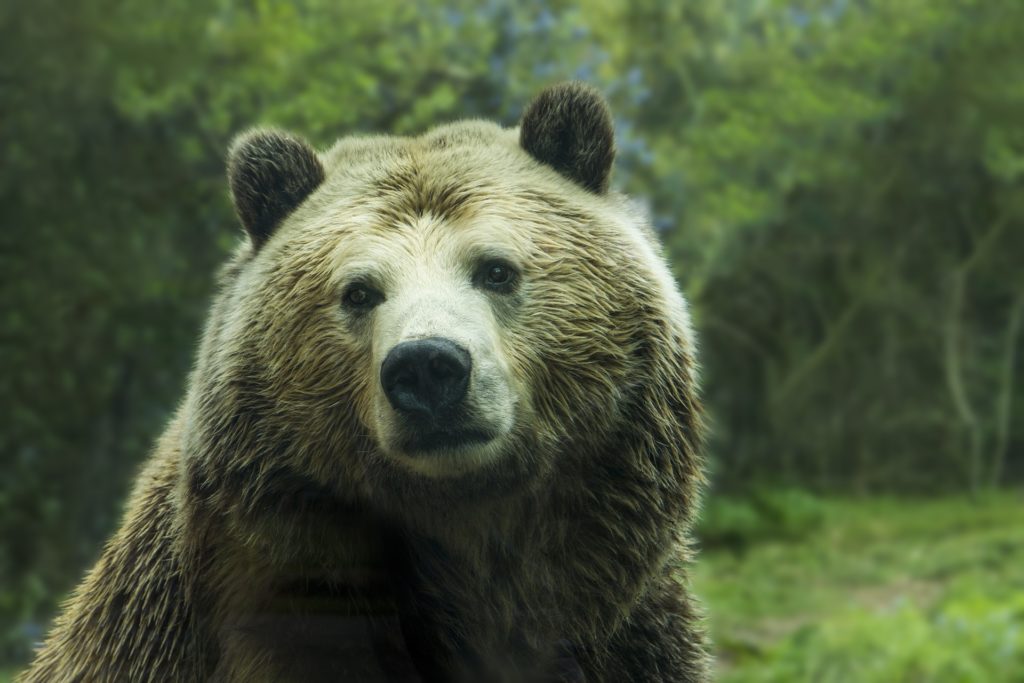
The brown bear’s return in Portugal is important for multiple reasons. Firstly, the bear is part of the Portuguese natural and cultural heritage, and the public reacted with great excitement to the sighting. Secondly, the scientific aspect is important as well. As a Euromontana member João Azevedo from Centro de Investigação de Montanha says, it is interesting to “see how bears will use the habitat and landscape, and how the ecosystems and landscapes will be affected. It is important also in the analysis of depopulation-abandonment-rewilding of mountains in Portugal and other parts of Europe”. Depopulation and land abandonment have many negative effects, such as an increase in forest fires. But there are also positive aspects, such as an increase in ecosystem services and the return of iconic wildlife species like bears. This is linked to the third aspect – economic opportunities. As many European citizens are interested in bears, Portuguese mountain communities can use such interest to generate sustainable incomes through, for instance, bear-watching, or creating product labels and brands from bear territories.
However, for the time being it is just one bear, and Portuguese experts are unsure whether a stable bear population is possible in Portugal. Bears require large areas of continuous habitat for food and shelter. In fact, the bear’s extinction in Portugal was driven by land cover change and habitat fragmentation. In addition, potential bear habitats need to offer enough natural food sources to avoid bears from approaching human settlements in search for food like beehives or garbage. As currently only a framework exists on wolf damage evaluation and compensation in Portugal, the ICNF recommends using electric fencing to protect the beehives until further knowledge is available on the bear presence in the area.
Euromontana will continue to monitor the situation and keep you informed about future developments.
23 May 2019


